Table of Contents
- The 2026 ADA Accessible Medical Equipment Compliance Landscape
- Understanding the ADA's 2026 Medical Equipment Accessibility Mandate
- The DOJ and HHS Rules: Impact on Mobility Specialists and Equipment Standards
- Achieving Compliance: Actionable Steps for Healthcare Providers and Equipment Suppliers
- Beyond 2026: The Future of Accessible Medical Diagnostic Equipment
- Frequently Asked Questions About the 2026 MDE Compliance Deadline
- Preparing for July 2026: Your Next Steps Toward Accessible Care
The 2026 ADA Accessible Medical Equipment Compliance Landscape
The 2026 ADA accessible medical equipment deadlines mark a major shift in healthcare accessibility, requiring providers to upgrade or replace diagnostic tools to better serve patients with disabilities. The U.S. Department of Justice’s final rule on ADA medical diagnostic equipment rules establishes specific requirements for exam tables, scales, mammography equipment, dental chairs, and other medical diagnostic equipment (MDE). The rule applies to newly purchased, leased, or substantially altered equipment; existing equipment may follow different timelines. These new standards are a key part of the ADA’s goal to eliminate barriers in medical settings.
The DOJ medical diagnostic equipment rule addresses Title II entities (such as public hospitals and government health clinics) and Title III public accommodations (including private medical practices and clinics). Accessible exam table requirements mandate height adjustability, transfer supports, and sufficient clear floor space to allow independent access. Key compliance deadlines include:
- Title II: All new MDE must be compliant by 2026.
- Title III: New MDE in certain categories, such as exam tables and scales, must meet standards by 2026; other categories may have later dates.
- Existing MDE: Facilities must implement a transition plan for phased-in compliance.
We at MedEquipped understand that navigating these deadlines can be complex, and healthcare providers should consult the U.S. Department of Health and Human Services and the official ADA.gov resources for detailed guidance. Understanding these deadlines is the first step; the following section outlines practical actions facilities can take to achieve compliance. For patients seeking greater independence, custom motorized wheelchairs can complement accessible exam rooms, and MedEquipped’s rapid turnaround helps ensure that mobility solutions are in place well before deadlines.
Understanding the ADA’s 2026 Medical Equipment Accessibility Mandate
The ada accessible medical equipment deadlines 2026 mark a significant advancement in healthcare civil rights. The U.S. Department of Justice has issued a final rule, titled “Nondiscrimination on the Basis of Disability; Accessibility of Medical Diagnostic Equipment of State and Local Government Entities and Public Accommodations,” that requires covered medical facilities to make their diagnostic equipment usable by individuals with disabilities. This rule applies to both public entities (Title II) and private health care providers (Title III).
Under the DOJ medical diagnostic equipment rule, facilities must evaluate their existing equipment and replace or retrofit non-compliant devices. The rule’s technical specifications are based on the U.S. Access Board’s Medical Diagnostic Equipment Accessibility Standards, originally published in 2017. The accessible exam table requirements, for example, specify that examination tables used for patients in a supine or semi-supine position must be height-adjustable to allow independent transfer from a wheelchair. Accessible weight scales must have a platform that accommodates a wheelchair and allow a patient to weigh while seated. Mammography equipment must permit examinations in a seated position. Other diagnostic machines—such as those used for blood draws, ultrasound, or gynecological exams—that require a patient to assume a specific position also fall under the mandate.
Key compliance milestones include:
- Existing medical facilities must have the required accessibility features in place by January 1, 2026. New construction and alterations must meet the standards at the time the facility is first occupied or the alteration is completed.
- Covered equipment types: height-adjustable exam tables, accessible weight scales, mammography machines, and any other diagnostic equipment used when a patient is lying down or in a fixed position.
- Affected entities: all public hospitals and clinics (Title II) as well as private medical practices, specialty centers, and healthcare providers (Title III).
These requirements foster greater independence and reduce the risk of injury during transfers. For patients, accessible equipment means they can participate in their own healthcare without relying on staff to lift or carry them, preserving dignity and improving diagnostic accuracy.
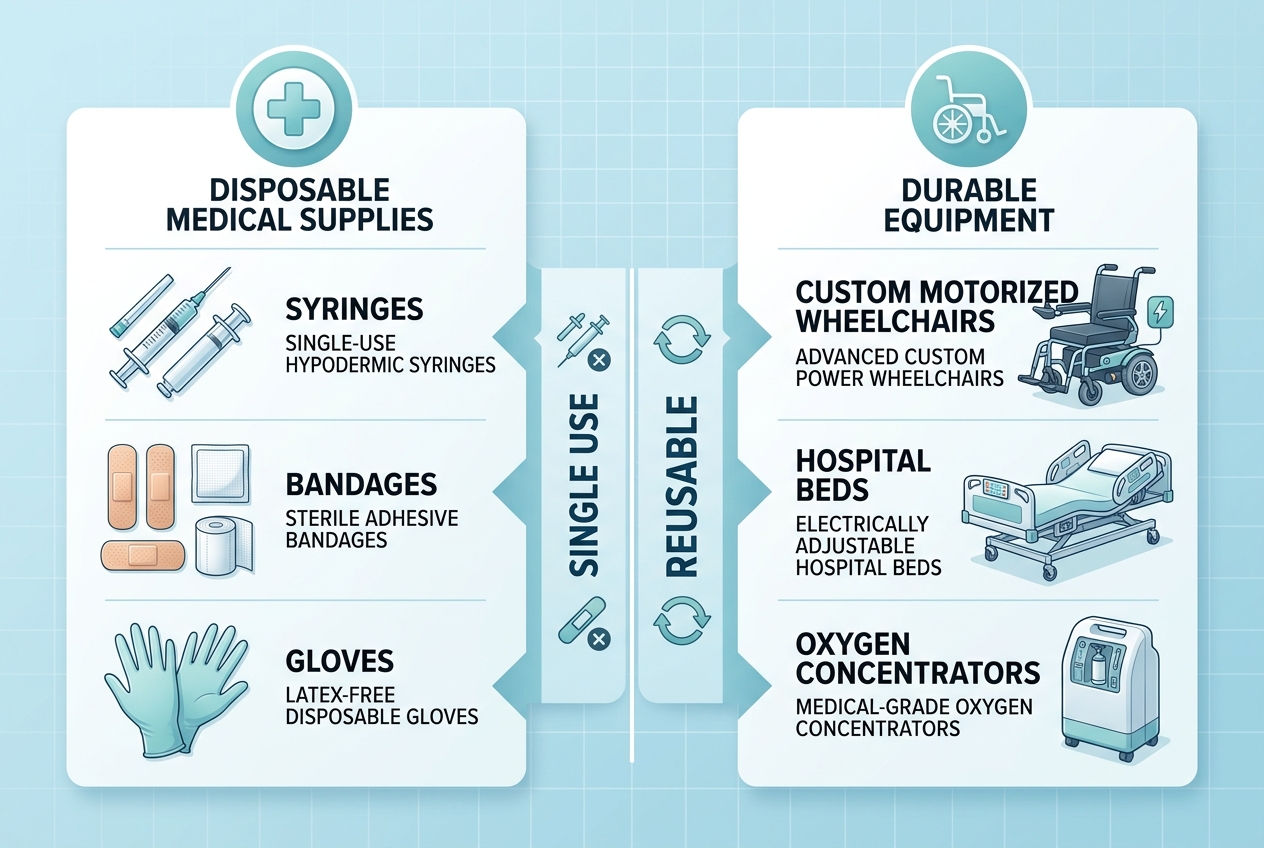
Understanding what is DME is important in the context of this mandate. Durable medical equipment includes items like power wheelchairs that are medically necessary for daily mobility. A person who relies on a custom motorized wheelchair will need exam tables that lower to wheelchair height, and scales that accommodate a wheelchair base—otherwise, routine checkups can become unsafe or impossible. By aligning diagnostic environments with the capabilities of DME users, the DOJ rule ensures that patients with mobility disabilities can receive thorough medical evaluations comparable to those of non-disabled individuals.
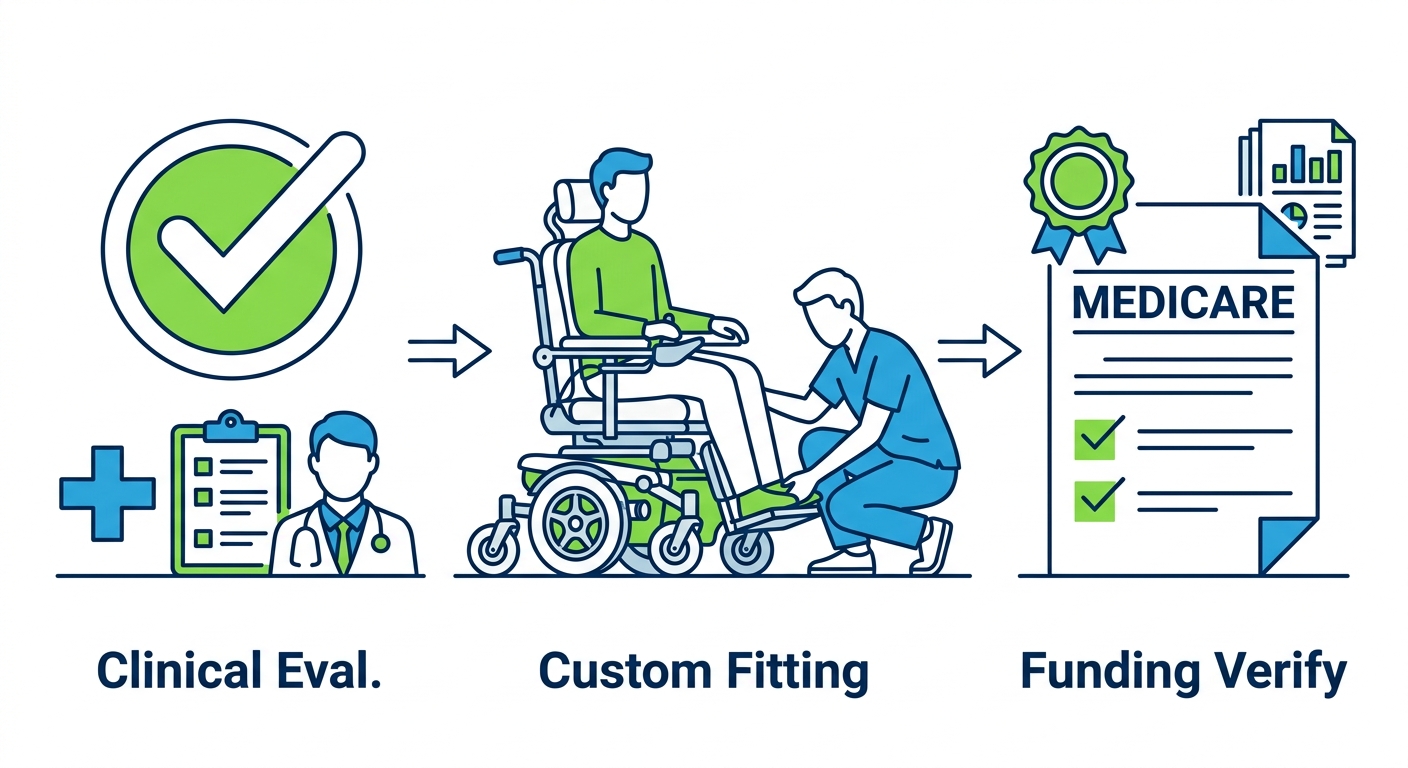
Meeting these accessibility requirements often begins with selecting a wheelchair that provides stable positioning and maneuverability. At MedEquipped, we assist individuals in Spring Valley, NY by evaluating their clinical needs, fitting them with custom motorized wheelchairs, and managing the Medicare funding process so they can access the medical care they deserve with greater independence. Results may vary. Verify Medicare/insurance coverage; supplier does not guarantee coverage. Consult treating healthcare professional for medical necessity.
The DOJ and HHS Rules: Impact on Mobility Specialists and Equipment Standards
The U.S. Department of Justice (DOJ), together with the U.S. Department of Health and Human Services, has jointly released new Medical Diagnostic Equipment (MDE) rules that establish enforceable accessibility standards for healthcare providers. The ada accessible medical equipment deadlines 2026 mark the date when facilities must ensure that exam tables, weight scales, and procedure chairs fully accommodate patients with disabilities. This shift moves many previously voluntary guidelines into mandatory requirements, compelling clinics and hospitals to re-evaluate their equipment and patient-handling workflows.
How the DOJ Medical Diagnostic Equipment Rule Redefines Accessibility Standards
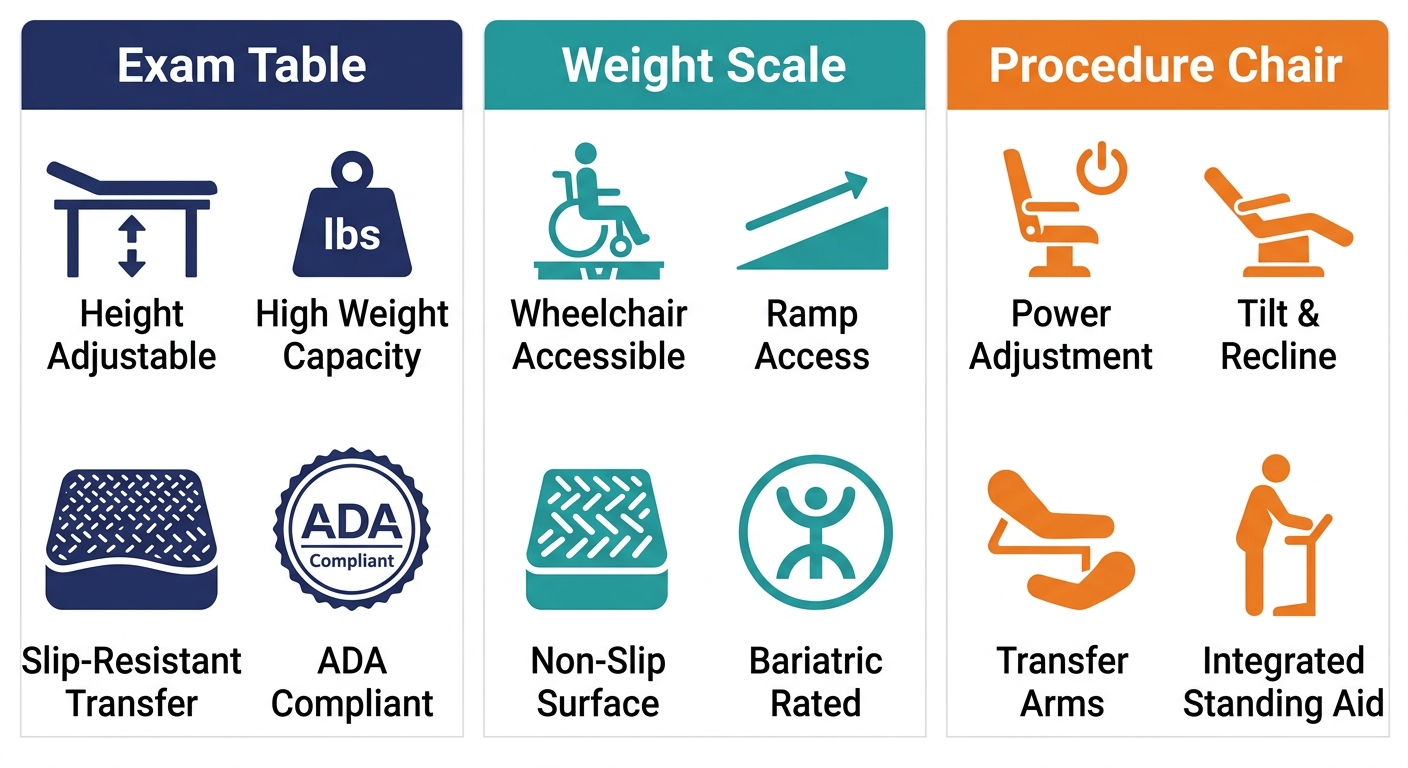
The doj medical diagnostic equipment rule sets precise technical specifications that directly affect clinical environments. Exam tables must now offer slidable height adjustment—typically between 17 and 19 inches—so that patients who use wheelchairs can transfer safely. A weight capacity of at least 400 pounds is required, though many standards from the DOJ and HHS recommend up to 600 pounds to serve bariatric individuals. The transfer surface must be slip-resistant to reduce fall risks, one of the most critical accessible exam table requirements for patient safety.
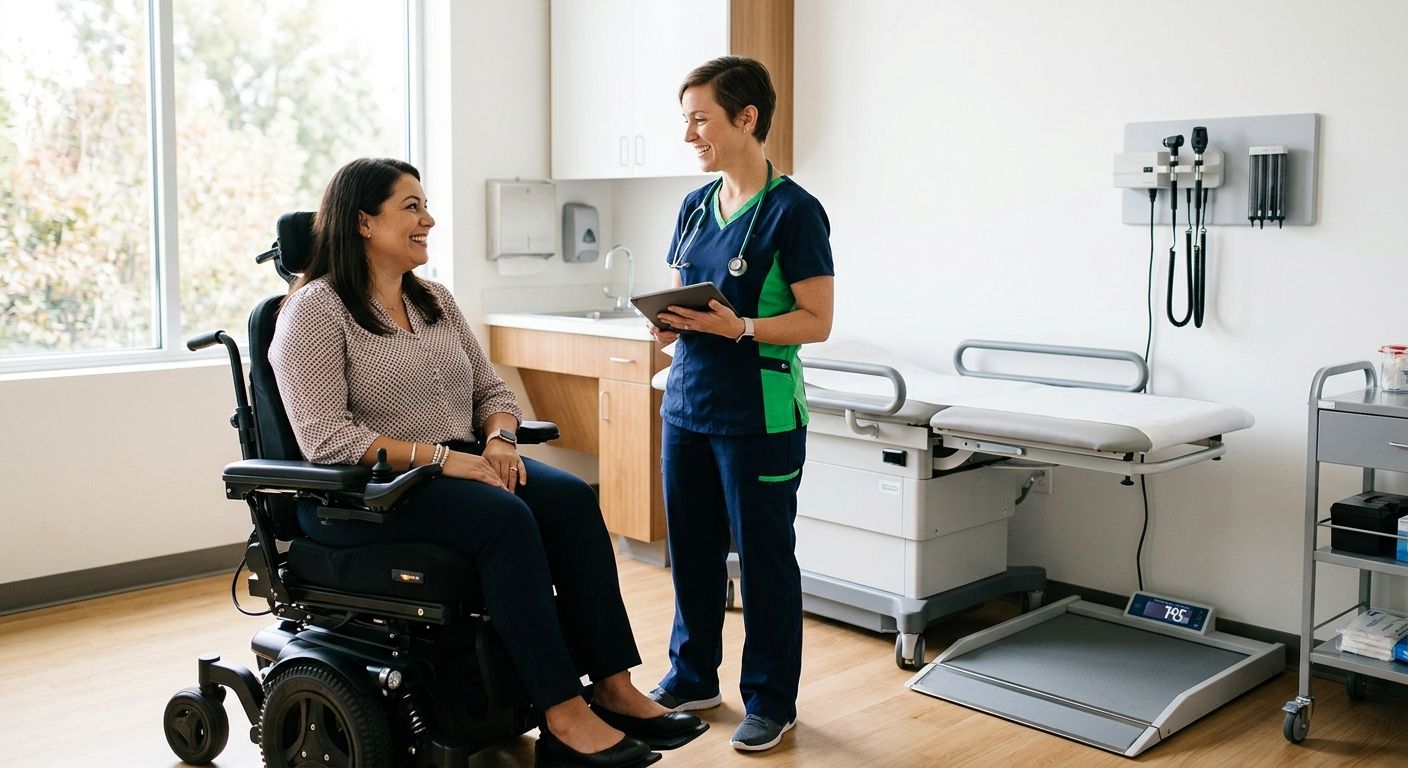
Weight scales also face new mandates. The platform needs to accommodate wheelchair occupancy without requiring a separate transfer, and it must feature a non-slip surface with ramp access. A weight capacity rated for bariatric patients—generally 600 pounds or more—is the expected benchmark. Procedure and exam chairs are held to equally strict guidelines: full power height adjustment with tilt and recline capabilities, a minimum weight capacity of 350 pounds (ideally up to 500 pounds), and integrated transfer arms or standing aids that facilitate independent or assisted movement. Many of these specifications had existed only as voluntary recommendations under earlier ADA guidelines; the 2026 deadline makes them legally enforceable for every covered entity.
Accessibility Standards for Weight Scales, Exam Tables, and Chairs — A Comparative Overview
The following table distills the key accessibility specifications that healthcare providers must address before the enforcement date.
| Equipment Type | Height Adjustability | Weight Capacity | Transfer Surface | Compliance Standard |
|---|---|---|---|---|
| Exam Table | Slidable height adjustable, minimum 17–19 inches | Minimum 400 lbs (some standards at least 600 lbs) | Slip-resistant transfer surface | ADA 2010 Standards, 2026 MDE rule |
| Weight Scale | Platform must accommodate wheelchair occupancy | Rated for bariatric patients, typically ≥ 600 lbs | Non-slip surface, ramp access | ADA MDE standards |
| Procedure / Exam Chair | Full power height adjustment, tilt/recline | Minimum 350 lbs (ideally up to 500 lbs) | Transfer arms, integrated standing aid | ADA MDE standards |
These standards were once advisory but are now obligatory under the 2026 mandate. The required weight capacities and transfer surfaces directly support the accessible exam table requirements that form a core part of the DOJ rule. Meeting these specifications will not only ensure legal compliance but also improve patient outcomes and dignity. The visual below illustrates the key accessibility features mandated across the three equipment categories.
For mobility specialists and DME suppliers, these rules present new opportunities to collaborate with healthcare providers on custom wheelchair fittings that integrate seamlessly with diagnostic workflows. As the 2026 ada accessible medical equipment deadlines approach, the need for coordination between clinical equipment upgrades and the wheelchairs that patients rely on during exams becomes urgent.
The Practical Implications for Mobility Specialists and Custom Wheelchair Fittings
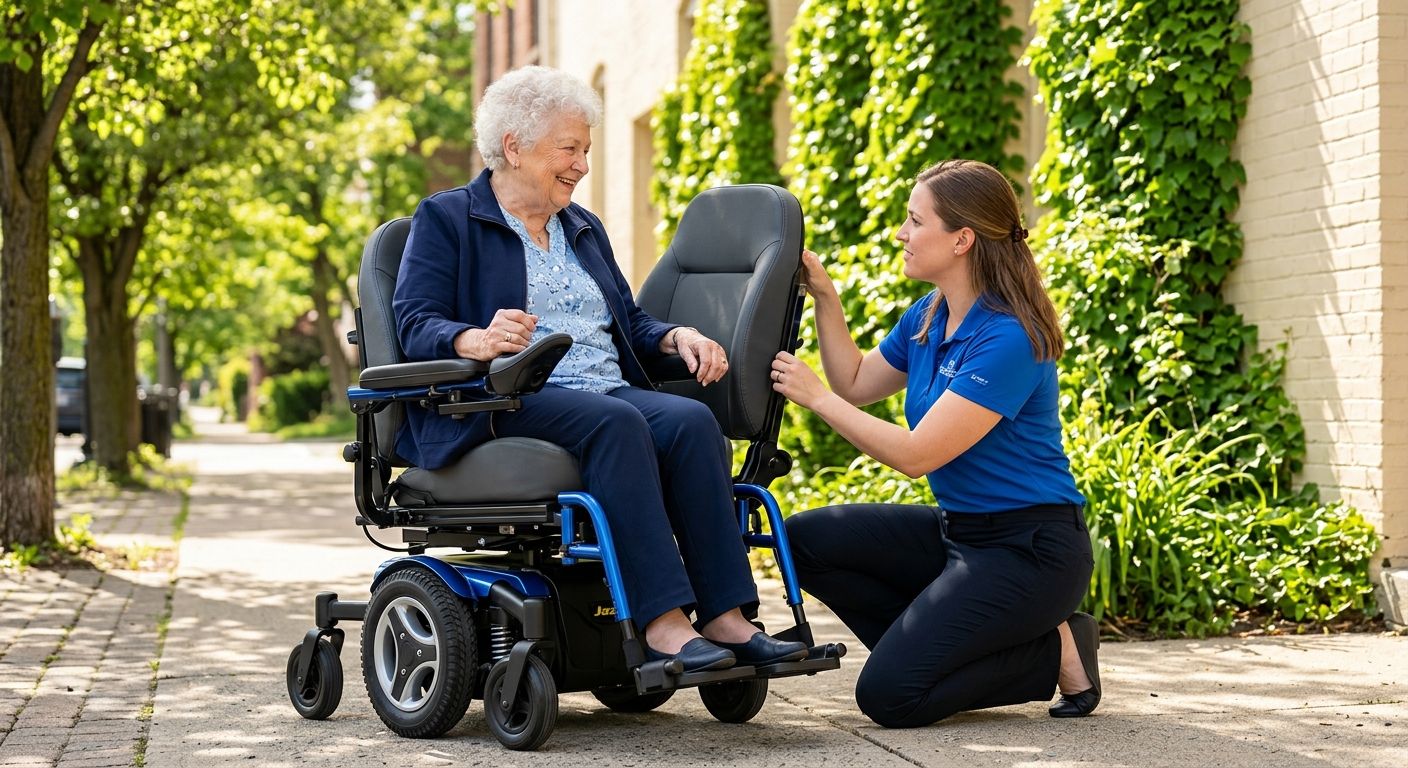
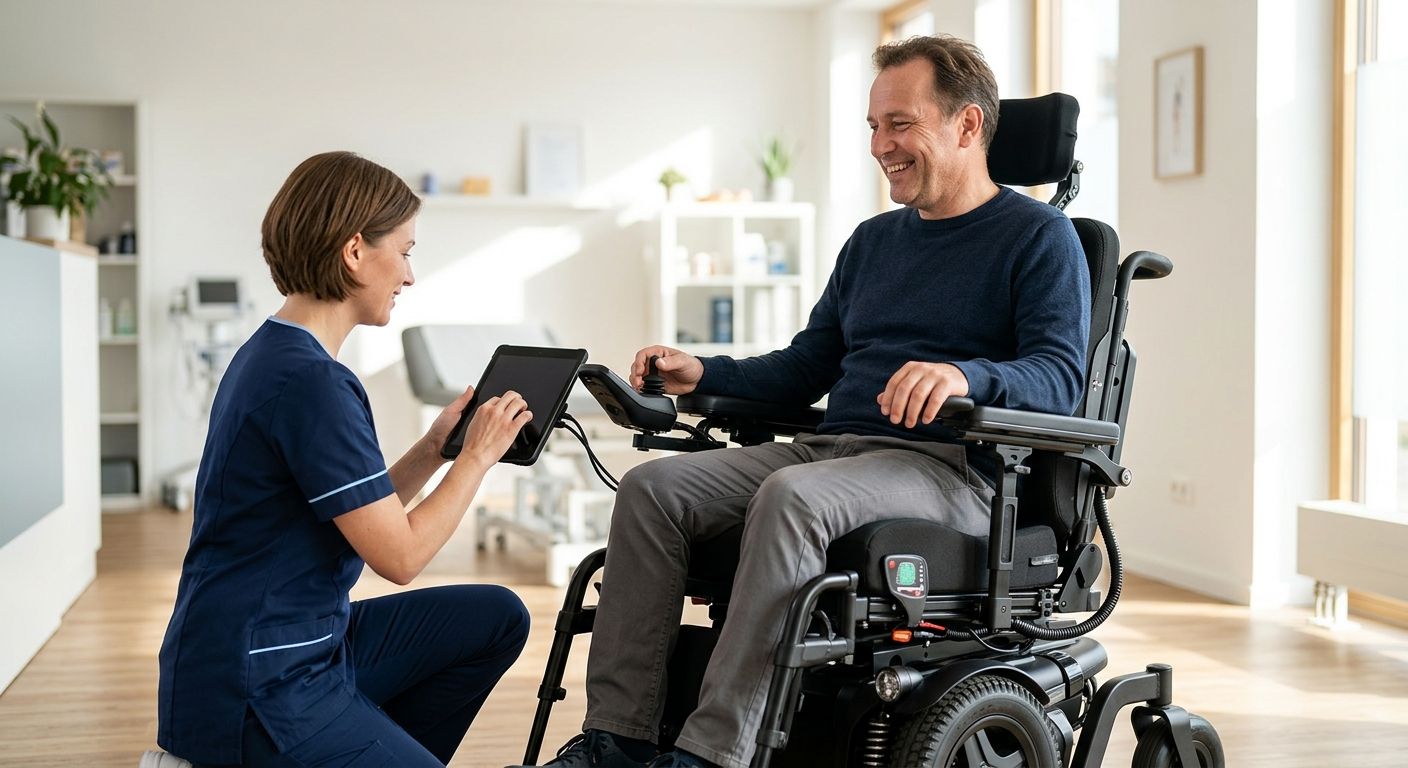
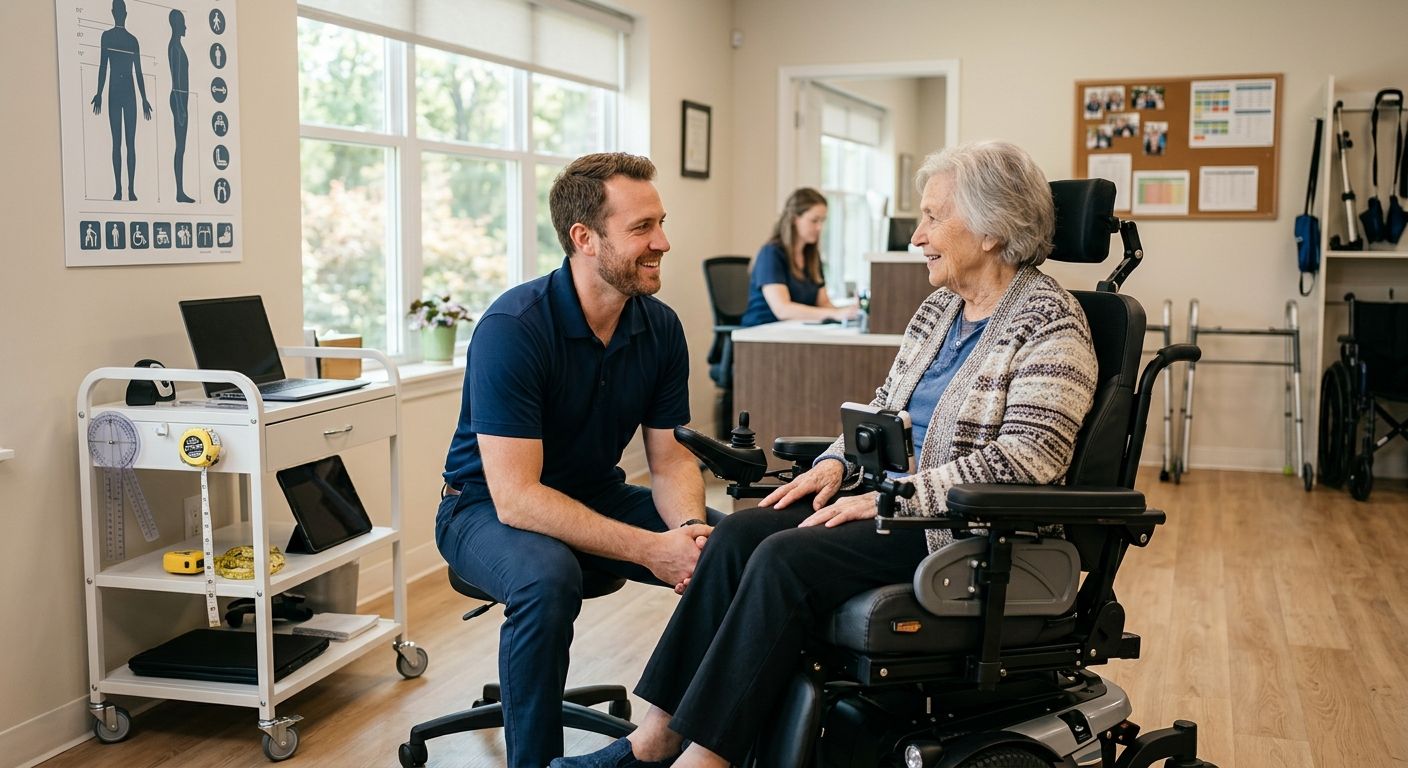
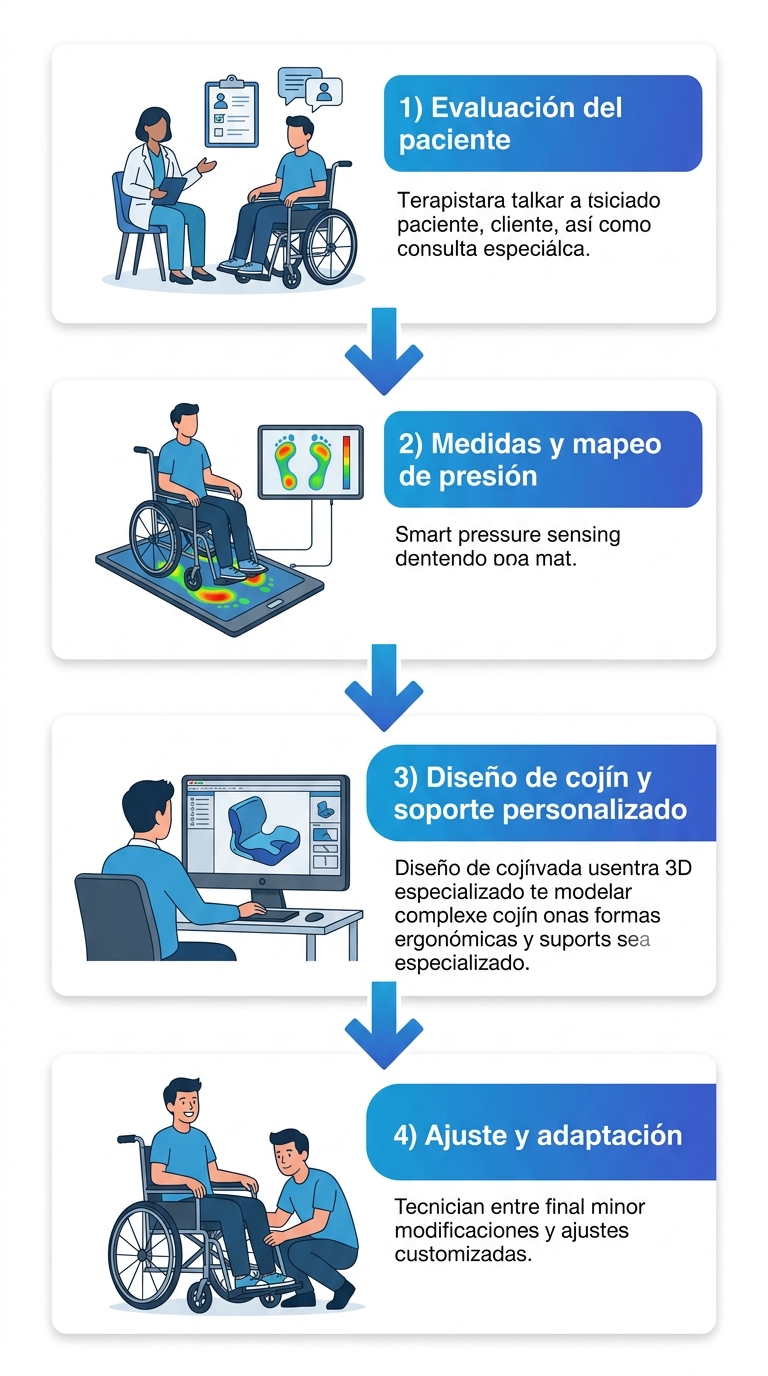
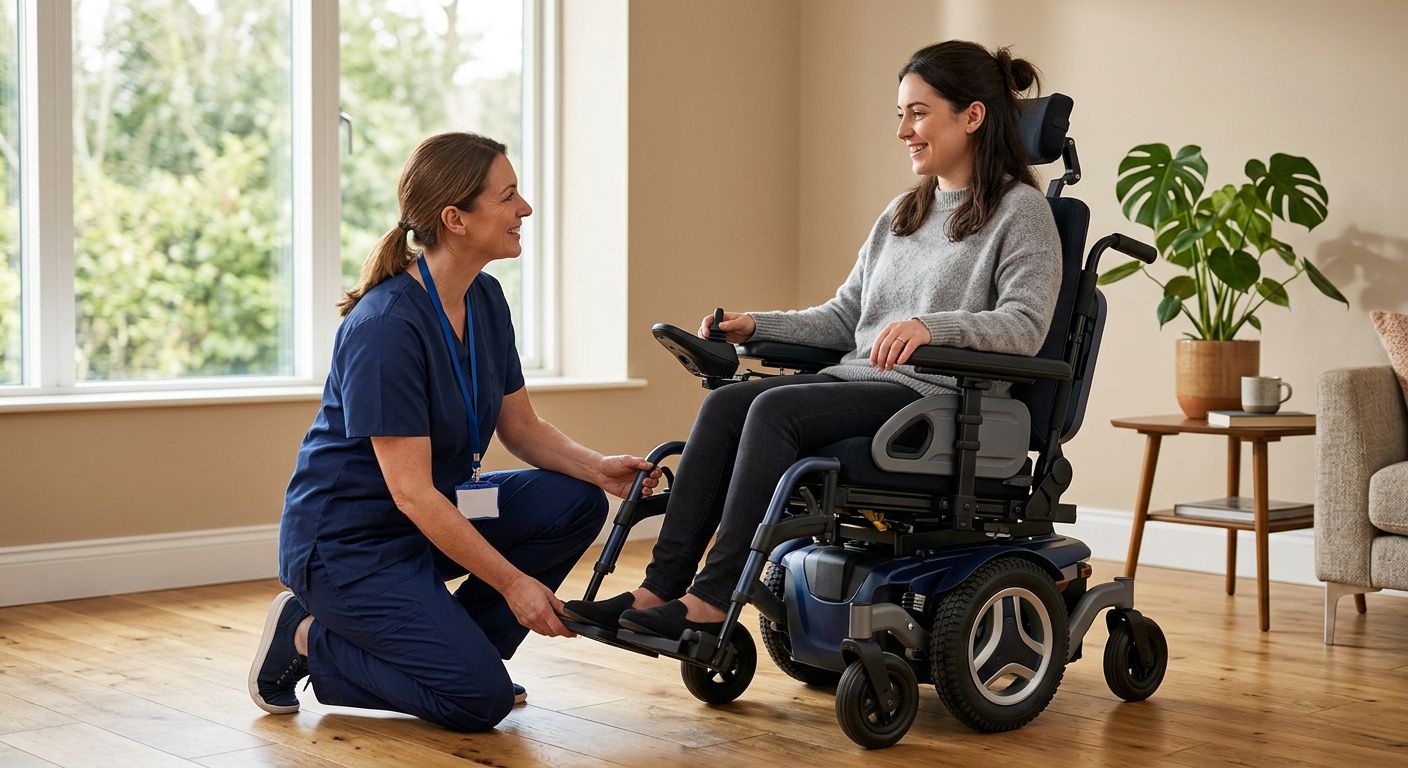
Mobility specialists like MedEquipped are uniquely positioned to help healthcare providers meet the new federal standards. When a facility invests in a wheelchair-accessible weight scale, for example, it must also consider whether the patient’s custom motorized wheelchair can remain safely positioned on the platform during a measurement. Our team evaluates each powered wheelchair’s dimensions, stability, and turning radius to ensure it can navigate exam rooms and interface with the required diagnostic equipment. We conduct personalized fittings that account for both the user’s physical needs and the environmental demands of the clinical setting.
Beyond equipment configuration, MedEquipped assists with the administrative side of acquiring custom motorized wheelchairs. We verify Medicare benefits, manage the Certificate of Medical Necessity, and help patients navigate the often-complex funding paperwork so that they can receive the right chair without unnecessary delays. Results may vary. Verify Medicare/insurance coverage; supplier does not guarantee coverage. Consult your treating healthcare professional for medical necessity. By acting as a partner in compliance, MedEquipped helps clinicians in Spring Valley and beyond integrate mobility solutions that support both patient dignity and the rigorous demands of the DOJ/MDE rule.
Achieving Compliance: Actionable Steps for Healthcare Providers and Equipment Suppliers
With the ADA accessible medical equipment deadlines 2026 approaching, healthcare providers and equipment suppliers must act methodically to ensure their diagnostic inventories meet the new federal standards. To help you navigate these requirements, we have outlined three actionable steps that connect facility auditing, procurement alignment, and compliance verification into a practical roadmap.
Step 1: Conduct a Facility-Wide Equipment Audit
Begin by systematically reviewing every piece of medical diagnostic equipment against the criteria set forth in the DOJ medical diagnostic equipment rule. Use the Department of Justice’s published checklists to identify gaps in exam table heights, wheelchair-accessible scales, and transfer surfaces. Document each deficiency with clear photographs and compile a formal deficiency report that quantifies the scope of needed upgrades.
A well-structured audit report not only clarifies the facility’s current state but also serves as the foundational documentation for funding requests and procurement justifications.
Once the audit reveals gaps, facilities must decide how to verify compliance. The following table compares three pathways, each offering different levels of documentation and Medicare alignment.
| Pathway | Description | Documentation Required | Typical Timeline | Medicare Alignment |
|---|---|---|---|---|
| Self-Audit with Checklist | Facility uses DOJ-provided checklists to inspect existing equipment | Completed checklist, photos, deficiency report | 1–2 weeks | Does not guarantee Medicare coverage; may flag gaps |
| Third-Party Compliance Audit | Hire certified accessibility consultant to perform on-site evaluation | Detailed audit report, remediation plan | 3–4 weeks | Stronger Medicare documentation for equipment acquisition |
| Mobility Evaluation Center Partnership | Work with a center like MedEquipped to evaluate patient-specific wheelchair and diagnostic equipment needs | Custom wheelchair prescription, fitting report, Medicare benefits verification | 30–60 days (MedEquipped standard turnaround) | Direct MPower; DME is processed under Medicare B with complete paperwork |
The partnership pathway is the only one that simultaneously addresses equipment compliance and funding. By embedding Medicare-ready documentation directly into the verification process, facilities can accelerate reimbursement timelines and avoid prolonged procurement gaps.
Step 2: Align Equipment Purchases with Medicare and ADA Requirements
Integrating accessibility specifications into procurement cycles ensures that every future purchase supports compliance. When drafting RFPs, include accessible exam table requirements alongside traditional clinical criteria so that vendors understand the mandatory nature of these features. Cross-reference Medicare coverage codes, such as K0813-K0899 for custom wheelchairs, with the accessibility specs of diagnostic equipment to create a unified funding and compliance strategy.
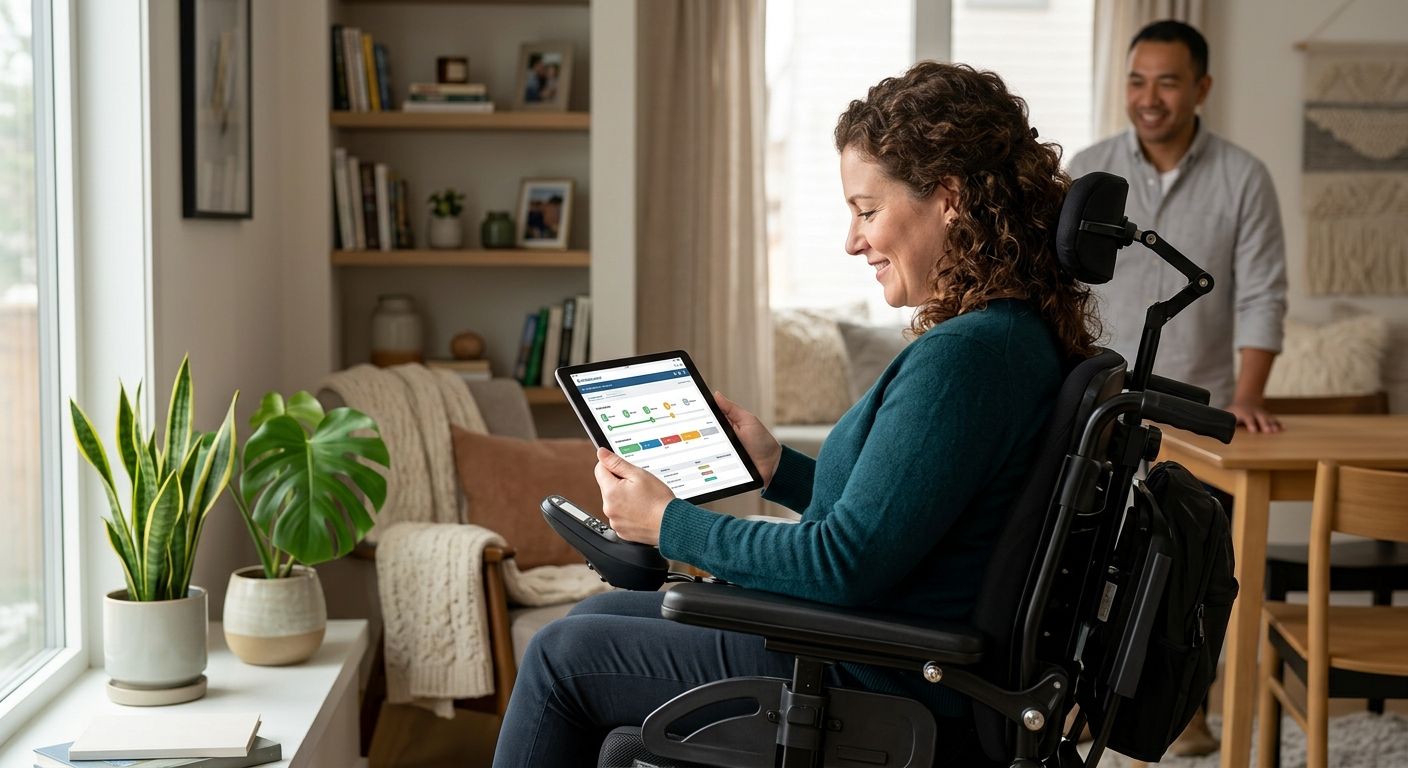
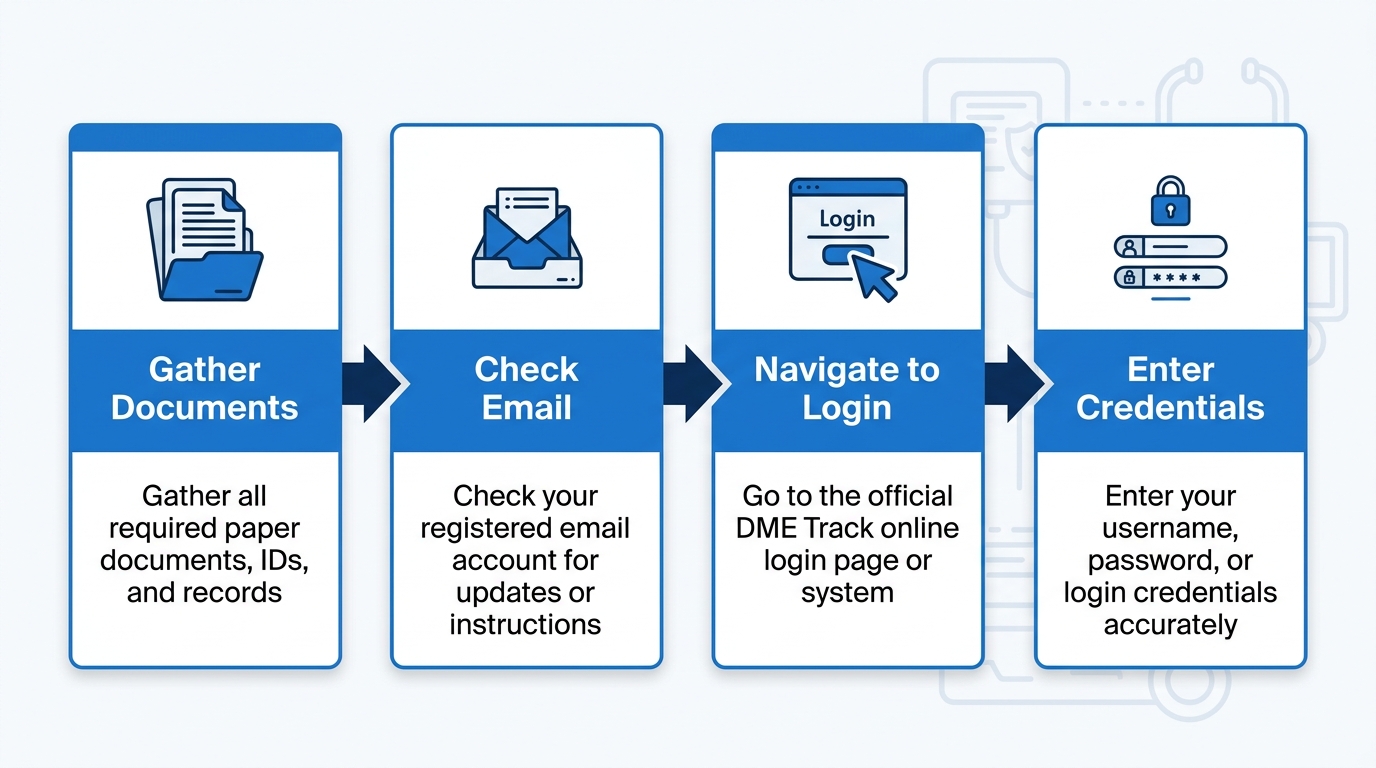
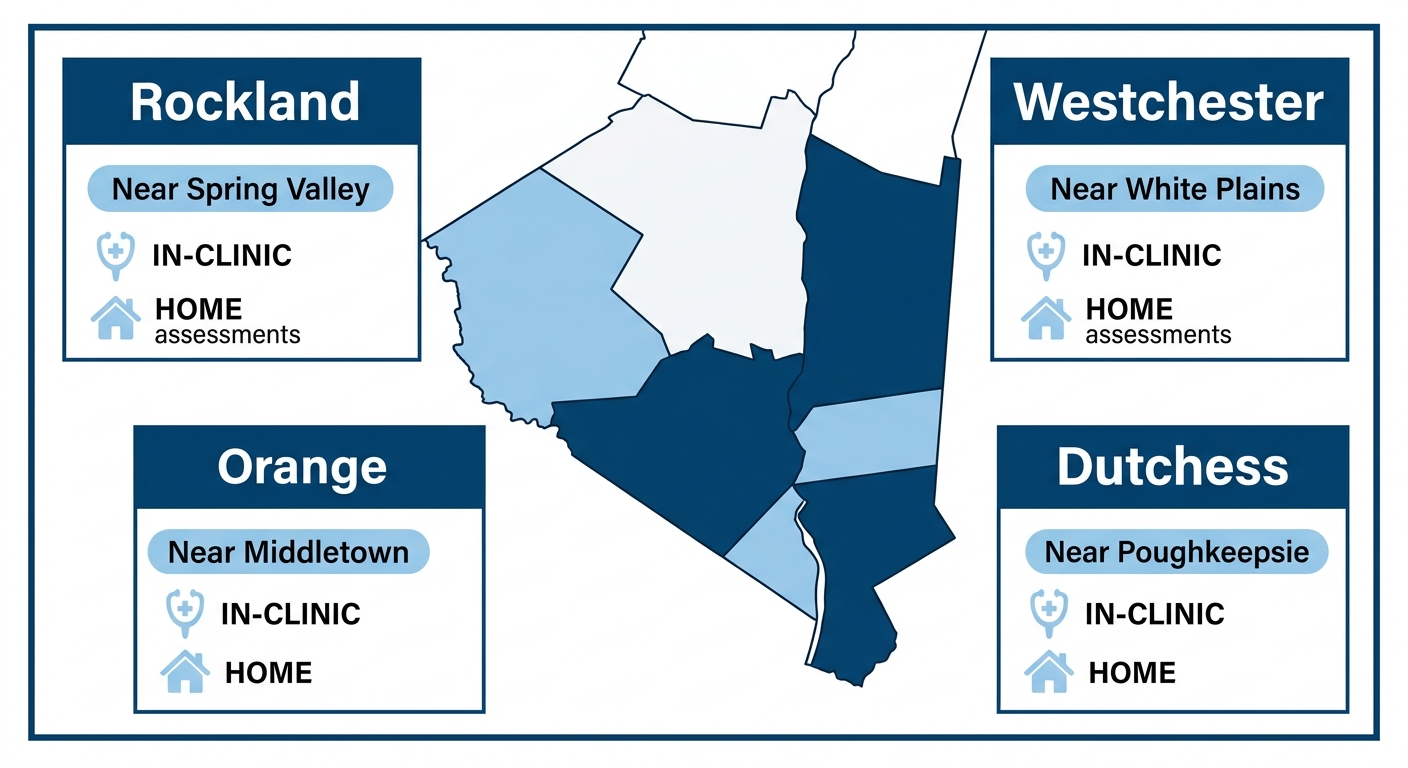
We serve as a turnkey partner in this alignment. Partnering with mobility equipment evaluation centers in Hudson Valley can streamline the evaluation and fitting process while our team manages the funding documentation. According to our internal Medicare guidance, a valid prescription following a face-to-face assessment and a Medicare-enrolled supplier are both mandatory, and we handle both the Certificate of Medical Necessity and benefits verification on your behalf. Through the DME Track portal, you can monitor order progress in real time, adding a layer of transparency that supports internal planning.
Step 3: Verify Compliance and Secure Funding
Choosing the right verification pathway directly influences both regulatory standing and fiscal outcomes. A self-audit is quick but leaves Medicare reimbursement uncertain; a third-party audit produces stronger paperwork; a mobility-center partnership, however, delivers fully integrated compliance documentation that seamlessly feeds Medicare Part B claims. This partnership typically completes the full evaluation and documentation cycle within 30–60 days, far shorter than the industry norm.
Leveraging MedEquipped’s approach can help ensure that every piece of equipment meets ADA standards while simultaneously unlocking funding. Please verify Medicare/insurance coverage; supplier does not guarantee coverage. Consult a treating healthcare professional for medical necessity. Results may vary. By treating compliance as an ongoing process rather than a one-time project, facilities can sustain accessibility improvements and deliver better patient care well beyond the 2026 deadline.
Beyond 2026: The Future of Accessible Medical Diagnostic Equipment
While the ADA accessible medical equipment deadlines in 2026 mark a pivotal regulatory milestone, we recognize that the accessibility landscape continues to evolve. Understanding what is DME—including diagnostic equipment such as exam tables and scales—helps clarify the impact of these standards. This milestone sets the stage for ongoing improvements that will directly benefit patients with mobility challenges.
The DOJ Medical Diagnostic Equipment Rule requires healthcare facilities to ensure that exam tables and scales are accessible to individuals with disabilities. Under this rule, accessible exam table requirements mandate features such as height adjustability and transfer supports, which significantly reduce physical strain during medical examinations. These regulations, tied to the ADA accessible medical equipment deadlines in 2026, catalyze a shift toward more inclusive healthcare environments.
Beyond regulatory mandates, we anticipate a range of advances poised to improve diagnostic accessibility. Future exam tables may incorporate even more refined adjustability features, while integration with telehealth platforms could expand remote evaluation capabilities. These patient-friendly designs will make transfers and positioning easier for people using wheelchairs, enhancing overall comfort and dignity.
MedEquipped notes that DME encompasses exam tables and scales essential for diagnosis, which helps clarify how these devices fit into the broader durable medical equipment category. Because DME classification influences Medicare coverage rules, patients should verify their benefits with MedEquipped to understand which diagnostic equipment components may be covered.
Custom motorized wheelchairs from MedEquipped can be designed to complement a patient’s needs when using accessible diagnostic equipment, supporting Greater Independence. Our experienced staff helps with Medicare benefits verification for DME components involved in medical appointments, ensuring you have the right equipment for every visit.
As we navigate these evolving standards, we remain committed to helping patients achieve greater mobility. We’re here to help you prepare for the future with custom wheelchair solutions and funding assistance. By staying informed about regulatory changes and working with our team, you can approach medical appointments with confidence. Results may vary. Verify Medicare/insurance coverage; supplier does not guarantee coverage. Consult your treating healthcare professional for medical necessity.
Frequently Asked Questions About the 2026 MDE Compliance Deadline
We’re here to help you navigate the 2026 ADA MDE deadline.
What is the 2026 MDE compliance deadline?
The doj medical diagnostic equipment rule establishes ada accessible medical equipment deadlines 2026, requiring covered healthcare facilities to ensure exam tables, scales, and dental chairs are accessible. (ADA.gov)
What equipment must comply with the rule?
Covered equipment includes adjustable-height exam tables, wheelchair-accessible scales, dental chairs, and similar tools. For instance, accessible exam table requirements mandate that tables can be lowered to wheelchair transfer height. (HHS.gov)
What happens if a facility misses the deadline?
Non-compliance may lead to DOJ enforcement, including lawsuits and consent decrees. Facilities should act now to avoid penalties. (ADA.gov)
For help with funding or selecting compliant equipment, We’re here to help. Consult a treating healthcare professional for medical necessity.
Preparing for July 2026: Your Next Steps Toward Accessible Care
With the ada accessible medical equipment deadlines 2026 approaching, the DOJ medical diagnostic equipment rule mandates accessible exam table requirements. Taking action now is critical. A mobility equipment evaluation in the Hudson Valley is the first step. MedEquipped’s evaluation centers offer personalized fittings and assistance with funding sources and Medicare paperwork, helping you determine if a custom motorized wheelchair is right for you. Contact MedEquipped today to schedule your evaluation. Results may vary. Consult your treating healthcare professional for medical necessity. Verify Medicare/insurance coverage; coverage not guaranteed.