MedEquipped

Tag: Durable Medical Equipment

  • Best Foldable Electric Wheelchairs for Travel in 2026

    Best Foldable Electric Wheelchairs for Travel in 2026

    Table of Contents

    Discovering Top Foldable Electric Wheelchairs

    Imagine the freedom of foldable electric wheelchairs transforming your weekend trips or daily routines. These compact powered mobility aids offer portability without sacrificing performance, making them ideal for enhancing independence on the go.

    As lightweight power wheelchairs, they excel in ease of storage and travel compatibility, folding quickly to fit in car trunks or airplane overheads. Key factors to evaluate include folding mechanisms, overall weight, battery life for extended outings, and compliance with safety standards.

    At MedEquipped, we partner in mobility freedom through personalized ATP evaluations, selecting top options like QUICKIE and ROVI models tailored to your needs. We handle the paperwork, insurance navigation, and coordination for services in New York, Georgia, and Michigan, with delivery in 30-60 days to get you moving sooner.

    1. Effortless Folding for Travel

    Traveling with mobility challenges can feel overwhelming, but foldable electric wheelchairs change that by offering quick and simple designs that fit seamlessly into your lifestyle. At MedEquipped, we prioritize these innovative solutions during our clinical evaluations in New York and Georgia, ensuring they match your daily routines as a true partner in mobility freedom.

    Many foldable electric wheelchairs feature one-touch levers or automatic systems for effortless operation. For instance, the QUICKIE model we often recommend folds in typically under 30 seconds—far quicker than traditional manual wheelchairs, which might take a full minute. Here’s a simple process we guide patients through:

    • Unlock the lever near the armrest.
    • Gently push the frame inward until it clicks.
    • Secure the joystick and footrests.
    • Compact travel wheelchairs like these then measure just 12 inches wide, saving precious space in car trunks or airplane overhead bins.
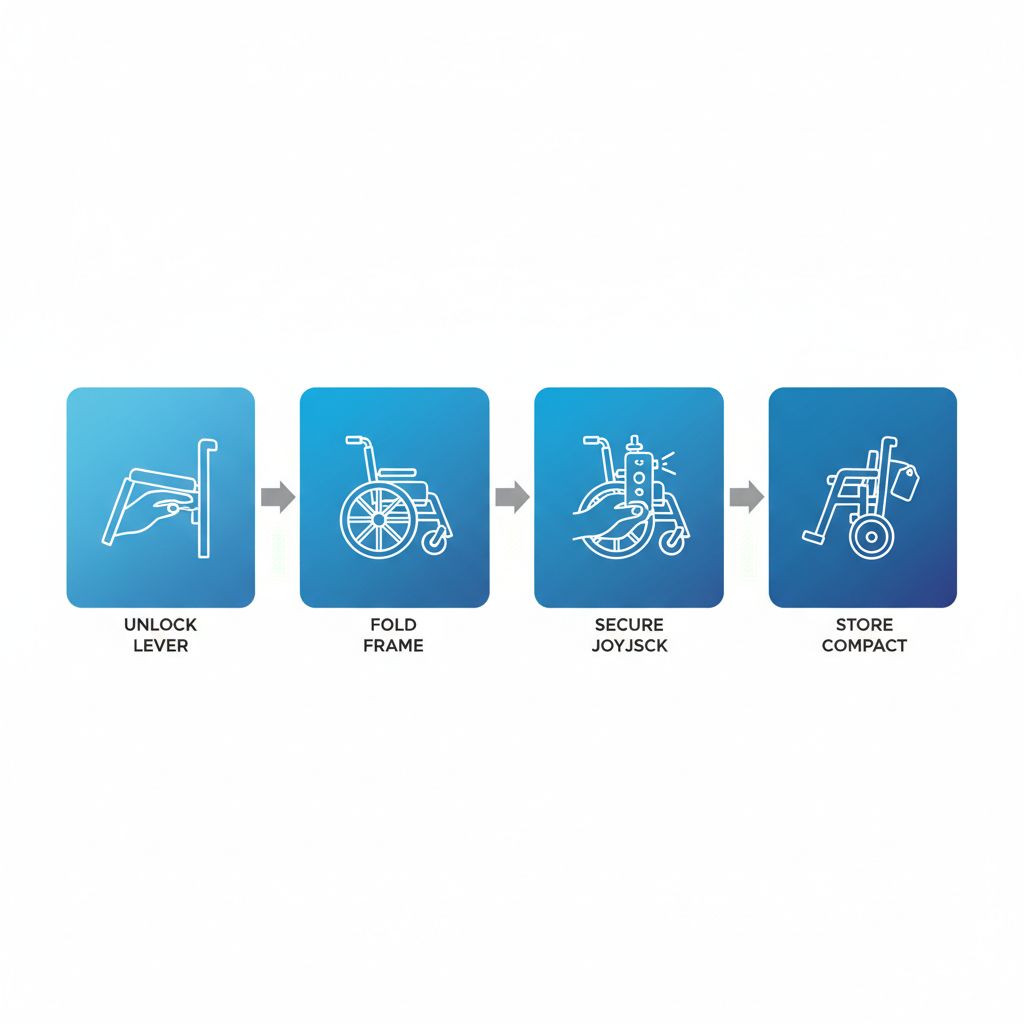
    Horizontal process flow diagram showing four steps to fold a foldable electric wheelchair: unlock lever, fold frame, secure joystick, and store compact, with icons and arrows.

    Effortless folding process for traveling with a foldable electric wheelchair

    We customize these easy-fold mobility chairs based on dexterity needs during ATP assessments, and our certified technicians advise on maintenance to keep folding parts reliable. For airline trips, pack your portable electric wheelchair alongside lightweight power wheelchairs in a dedicated bag—we handle delivery and setup to make travel empowering and stress-free.

    2. Lightweight Designs for Easy Portability

    Struggling with heavy mobility aids that make travel a chore? Lightweight power wheelchairs under 60 pounds change that, easing the burden on you and your caregivers. At MedEquipped, we help select custom motorized wheelchairs that prioritize ease, ensuring you stay mobile without the strain.

    These ultra-light mobility devices feature innovative designs like aluminum frames, which slash weight while maintaining durability. Aluminum’s strength-to-weight ratio enhances maneuverability, allowing smooth navigation indoors through tight doorways or outdoors on uneven paths. Battery integration keeps things sleek, avoiding extra bulk for better portability. Featherweight electric chairs like our recommended models suit seniors with ergonomic seats that reduce fatigue during daily use. We draw from ATP evaluations to confirm these options handle real-world demands, with capacities supporting diverse needs.

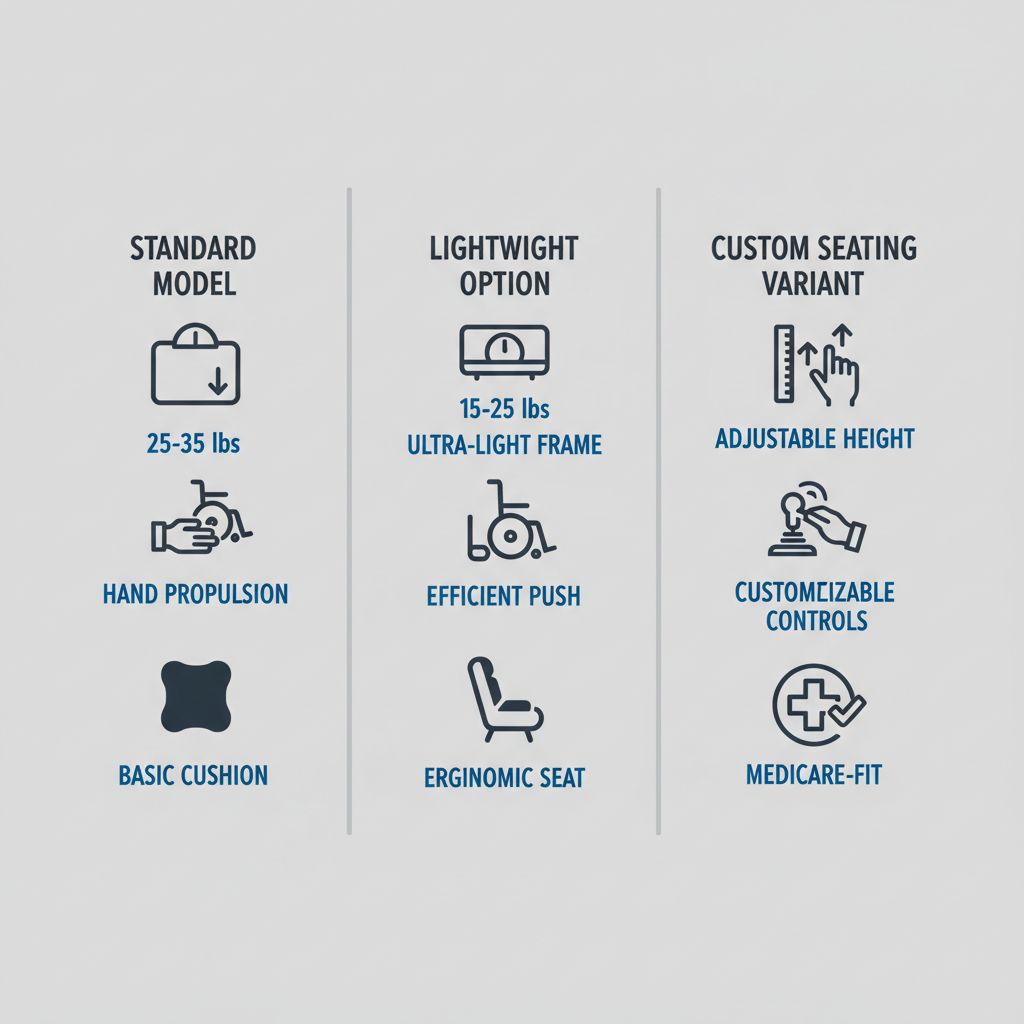
    To illustrate, here’s a quick comparison of popular lightweight models:

    ModelWeight (lbs)Fold TimeBattery Range (miles)Capacity (lbs)Price Range
    QUICKIE Series55<30 seconds18300$3,000-$8,000
    ROVI X35220 seconds20350$2,500-$7,500
    TDX SP2 HD6545 seconds15400$5,000-$10,000

    As your partner in mobility freedom, we highlight the pros of these builds:

    • Effortless lifting and transport for caregivers
    • Improved independence for users with limited strength
    • Seamless integration with foldable electric wheelchairs for trips

    For safe handling, we suggest caregivers use two-person lifts or transfer aids during moves. Our post-delivery support includes training on these techniques, plus ongoing adjustments in New York, Georgia, and Michigan to keep your portable electric wheelchair performing perfectly.

    3. Airline-Approved Travel Options

    We understand how air travel anxieties can arise for those relying on portable electric wheelchairs, especially on flights from New York to Michigan destinations. At MedEquipped, our certified Assistive Technology Professionals evaluate options to ensure lightweight power wheelchairs meet FAA and airline standards, allowing worry-free cabin or cargo transport.

    Foldable electric wheelchairs must comply with strict FAA battery regulations, including lithium-ion limits under 300 watt-hours for carry-on approval. Size constraints typically cap dimensions at 22x14x9 inches to fit overhead bins, as with compact QUICKIE models. Proper labeling on batteries and devices speeds check-in, while disassembly at gates facilitates gate-to-plane transfers. We incorporate these travel-ready customizations during clinical evaluations, tying them to our funding assistance for seamless insurance navigation. For extended trips, we discuss battery considerations to enhance TSA-friendly mobility chairs.

    Before your flight, follow this pre-flight checklist: remove batteries for security screening, verify airline policies on flight-compatible power aids, and confirm disassembly ease. Our consultations guide these steps, ensuring your custom motorized wheelchair supports mobility freedom every step of the way.

    4. Long Battery Life for Adventures

    Imagine exploring Georgia’s rolling hills or coastal paths without worrying about power fading midway. At MedEquipped, we configure lightweight power wheelchairs to deliver up to 20 miles per charge, empowering day-long adventures tailored to your active lifestyle. As your partner in mobility freedom, we match battery options to ensure reliable power chairs keep you moving freely.

    Battery performance varies by type and conditions. Lithium-ion batteries offer lighter weight and faster charging compared to gel options, ideal for portable electric wheelchairs on varied terrains. Factors like speed, incline, and load influence runtime, with our certified ATPs assessing needs for optimal endurance-focused electric mobility.

    5. High Weight Capacity Options

    At MedEquipped, we prioritize safety and inclusivity for all users, ensuring our custom motorized wheelchairs support diverse body types in New York, Georgia, and Michigan. Foldable electric wheelchairs with high weight capacities make robust electric mobility accessible, allowing active lifestyles without compromise. We customize heavy-duty bases like the TDX SP2 HD for stability in Michigan’s demanding settings, extending from battery performance to reliable load-bearing for everyday adventures.

    These options handle capacities from 250 to 400 pounds, with frame reinforcements like thicker tubing and reinforced welds to prevent flexing under load. Compared to lightweight power wheelchairs, which may cap at 250 pounds and sacrifice durability, high-capacity models offer superior posture support through clinical fittings by our certified ATPs. This balances strength with portability in sturdy portable chairs, while warranties often extend coverage for heavier loads to ensure long-term reliability.

    Pros of high-capacity designs include enhanced stability, better weight distribution for comfort, and versatility for users up to 400 pounds, all tailored via our 30-60 day processing.

    For the best fit, we recommend precise measurements during evaluations—consider torso length and leg positioning to optimize posture. As your partner in mobility freedom, contact us in Georgia and Michigan for a consultation to match the right portable electric wheelchair to your needs, leading seamlessly to enhanced senior comfort solutions.

    6. Senior-Friendly Comfort Features

    We understand that as we age, comfort becomes essential for daily mobility, especially in bustling urban settings like those in New York. Our custom motorized wheelchairs prioritize elderly-optimized mobility, ensuring seniors stay independent and at ease during everyday activities or travel.

    At MedEquipped, we design lightweight power wheelchairs with ergonomic features tailored through our certified ATP evaluations. Key comfort elements include:

    • Cushioned seating and padded armrests that reduce pressure points for prolonged use.
    • Intuitive joystick controls accessible for arthritic hands, making navigation simple and fatigue-free.
    • Anti-tip wheels for added stability on uneven sidewalks or during turns.

    We feature QUICKIE senior models as comfortable foldable aids, often customized under insurance coverage to fit individual needs across New York, Georgia, and Michigan. These portable electric wheelchairs enhance long-term usability for caregivers and loved ones.

    For vacations or adjustments, we guide you on selecting foldable electric wheelchairs that fold easily. Contact our team at 845-237-2381—we handle the paperwork and provide ongoing support as your partner in mobility freedom.

    7. Outdoor Durability for Daily Use

    Exploring the outdoors shouldn’t mean compromising on mobility. At MedEquipped, we design our foldable electric wheelchairs to handle Georgia’s parks and rugged paths with ease, keeping you active and independent as your partner in mobility freedom.

    When it comes to lightweight power wheelchairs, durability shines through features like all-terrain tires and advanced suspension systems that absorb bumps on uneven surfaces. These rugged portable chairs excel in urban sidewalks or rural trails, while weather-ready electrics like the ROVI X3 resist rain and dust without sacrificing foldability. Folding mechanisms maintain structural integrity for daily use, and our ongoing support includes post-delivery repairs to ensure long-term reliability. For daily commutes, they reduce fatigue on varied terrains.

    Key durability factors include reinforced frames, IP-rated electronics, and shock absorbers. We recommend regular tire checks and cleaning after outings to preserve performance—simple steps that extend your chair’s life for countless adventures.

    8. Value Pricing for Quality

    At MedEquipped, we believe in delivering custom motorized wheelchairs that offer true value without compromising quality. Foldable electric wheelchairs typically range from $2,000 to $10,000, depending on features and customizations. We help make these portable electric wheelchairs accessible through our streamlined process, ensuring you get budget-friendly mobility options tailored to your needs in New York, Georgia, and Michigan.

    Understanding the price breakdown helps highlight the investment in independence. Base models start around $2,000 for basic foldable electric wheelchairs, while customized versions with advanced seating or controls can reach $10,000. Our end-to-end billing and insurance navigation save time and reduce out-of-pocket costs. These tiers provide excellent ROI by promoting daily independence and reducing long-term care expenses.

    A helpful tip: We handle the paperwork, insurance navigation, and coordination to maximize funding coverage, often within our 30-60 days faster processing timeline. This approach makes affordable seniors options more attainable, letting you focus on mobility freedom as our partner.

    Selecting Your Perfect Foldable Wheelchair

    As we wrap up our guide to foldable electric wheelchairs, remember how these innovative devices enhance independence with effortless folding ease and impressive battery life up to 20 miles. Ideal for seniors seeking lightweight power wheelchairs or portable electric wheelchairs for vacations, they offer reliable travel mobility solutions. Looking ahead to 2026 trends, expect even smarter custom power aids tailored to clinical needs.

    For quick evaluation, consider standout features like the ROVI X3’s swift 20-second fold and 350-pound capacity, balancing portability and durability for daily use. We focus on MedEquipped-customizable options from trusted brands to match your lifestyle.

    Data based on MedEquipped configurations; actual specs vary by customization. All models are airline-compliant with proper battery handling.

    Through our certified ATP evaluations, we customize these wheelchairs for the best fit, ensuring seamless integration into your routine. As your partner in mobility freedom, we handle the paperwork, insurance navigation, and coordination for faster processing in 30-60 days.

    Ready to find your ideal solution? Contact us today at 845-237-2381 or intake@medequipped.com for personalized consultations, funding assistance, and delivery services in New York, Georgia, or Michigan.


    Resources

  • Wheelchair Insurance: Complete Guide to Medicare Coverage

    Wheelchair Insurance: Complete Guide to Medicare Coverage

    Table of Contents

    Understanding Wheelchair Insurance Basics

    At MedEquipped, we understand that wheelchair insurance plays a vital role in helping individuals with mobility challenges access the custom motorized wheelchairs they need. Whether you’re navigating coverage in New York, Georgia, or Michigan, securing the right financial support can make all the difference in achieving greater independence and comfort in daily life. As your partner in mobility freedom, we simplify this process from start to finish.

    Wheelchair insurance typically refers to financial support for durable medical equipment like power wheelchairs, covering sources such as Medicare wheelchair coverage, Medicaid, and private insurers. For Medicare, eligibility hinges on medical necessity, requiring a face-to-face examination and written prescription from your provider to qualify. We handle the paperwork, insurance navigation, and coordination, using our certified ATP-led evaluations to justify needs for models like the QUICKIE series or ROVI X3. This often leads to wheelchair insurance reimbursement after meeting deductibles, with patients paying about 20% of approved costs. Our end-to-end services, including clinical fittings and funding assistance, streamline approvals on a faster 30-60 days timeline, as seen in cases like a Michigan patient who received their custom chair without hassle.

    In the sections ahead, we’ll dive deeper into coverage details, benefits, application steps, and best practices tailored to your region. Stick with us to learn how we can support your power wheelchair financing options and ensure you get the mobility aid funding that fits your life.

    Key Concepts in Wheelchair Insurance

    At MedEquipped, we understand that navigating wheelchair insurance can feel overwhelming, but grasping the key concepts empowers you to access the right mobility solutions. We specialize in guiding patients through coverage for custom power wheelchairs like the TDX SP2 HD, handling everything from evaluations to approvals. This section breaks down essential ideas to help you see how insurance opens doors to greater independence.

    Types of Coverage for Power Wheelchairs

    Wheelchair insurance plays a crucial role in making advanced mobility equipment affordable. We often see patients relying on Medicare, Medicaid, or private plans to cover custom models from the QUICKIE series, which are designed for specific needs like heavy-duty support or precise controls.

    Medicare Part B serves as a primary source of medicare wheelchair coverage, paying 80% of the cost after your deductible for durable medical equipment (DME) that’s deemed medically necessary. According to CMS guidelines, this includes power wheelchairs if a physician confirms they’re essential for daily activities. Medicaid, a state-federal program, offers DME insurance options tailored to low-income individuals, often providing full coverage for items like the ROVI X3 when justified by clinical evaluations. Private insurance varies by policy but frequently mirrors Medicare, covering upgrades or custom features with co-pays based on your network.

    These options highlight power mobility funding pathways, ensuring patients get fitted chairs that enhance their lifestyle. We at MedEquipped partner with you as a partner in mobility freedom, coordinating claims to simplify the process.

    The following table provides an overview of wheelchair insurance types, comparing key aspects to clarify how each might apply to your situation:

    Coverage TypeEligibility CriteriaCoverage LimitsApplication Process
    Medicare Part BCovers 80% after deductible for medically necessary equipmentIn-home assessment requiredSupplier handles prior authorization
    MedicaidVaries by state, often full coverage for low-incomeState-specific documentationCoordination with state programs
    Private InsurancePolicy-dependent, often similar to MedicareCo-pays and networks applyClaims submission required

    This comparison shows Medicare’s structured approach versus Medicaid’s flexibility for underserved groups, while private plans add personalization. At MedEquipped, we streamline applications across these types, leveraging our expertise to boost approval rates and reduce wait times to our typical 30-60 days. By aligning your needs with the right coverage, we help secure custom motorized wheelchairs that fit seamlessly into your life.

    Infographic comparing Medicare Part B, Medicaid, and Private Insurance coverage for wheelchairs, showing eligibility, limits, and processes with icons and key stats.
    Comparison of wheelchair insurance coverage options: Medicare, Medicaid, and Private.

    Building on these coverage basics, let’s explore how eligibility ties into getting the equipment you need. Our team often assists with documentation to meet these standards, ensuring a smoother path forward.

    Eligibility and Medical Necessity Requirements

    Securing wheelchair insurance reimbursement starts with proving medical necessity, a step we at MedEquipped guide you through every time. A physician’s certification is essential, typically including a face-to-face exam and a detailed letter of medical necessity outlining why a power wheelchair improves your function and quality of life.

    Functional assessments, like those conducted by our certified Assistive Technology Professionals (ATPs), evaluate mobility limitations and recommend specific features. Drawing from the assistive technology funding guide, these evaluations align with insurer requirements, such as documenting how the chair addresses impairments in ambulation or daily tasks. Common criteria include:

    • Inability to use a manual wheelchair or cane independently due to conditions like muscular dystrophy or spinal cord injury.
    • Home and community mobility needs that standard walkers can’t meet.
    • Physician orders specifying the model, like the QUICKIE for lightweight versatility.

    We handle the paperwork, insurance navigation, and coordination to compile these elements, often speeding up approvals. Remember, results may vary, and we recommend consulting your healthcare professional for personalized advice. This thorough process ensures your custom motorized wheelchair meets DME standards and supports long-term independence.

    Regional Variations in New York, Georgia, and Michigan

    While core wheelchair insurance principles remain consistent, regional differences across our service areas in New York, Georgia, and Michigan add important nuances, especially for Medicaid processes. In Michigan, the Department of Health and Human Services (DHHS) oversees robust DME reimbursements, with prior authorizations required for complex items like power wheelchairs. Their guidelines emphasize ATP evaluations and state-specific forms, often covering full costs for eligible low-income residents; Medicaid wheelchair insurance here approves custom bases if documentation shows necessity.

    New York and Georgia share similarities, such as income thresholds for Medicaid and alignment with federal Medicare rules, but Michigan stands out for its detailed fee schedules and liaison meetings for providers. For instance, Michigan’s DMEPOS database lists codes for models like the TDX SP2 HD, facilitating faster claims. Across all states, private insurance follows policy networks, but state Medicaid waivers can expand options for specialized seating.

    We at MedEquipped navigate these variations seamlessly, from New York’s urban delivery logistics to Georgia’s rural access needs and Michigan’s reimbursement protocols. By understanding local rules, we maximize your coverage and deliver ongoing support, helping you focus on mobility rather than bureaucracy.

    Benefits of Proper Wheelchair Insurance Coverage

    At MedEquipped, we understand how vital wheelchair insurance can be for accessing the mobility solutions you need. As your partner in mobility freedom, we help patients navigate coverage to unlock financial relief, advanced options, and ongoing support across New York, Georgia, and Michigan. Proper coverage transforms challenges into opportunities for independence, ensuring custom motorized wheelchairs fit your life without overwhelming costs.

    Financial Relief and Reimbursement Advantages

    Securing wheelchair insurance provides essential financial relief by minimizing out-of-pocket expenses for high-quality power wheelchairs. Through our expertise, we handle the paperwork, insurance navigation, and coordination to maximize reimbursements, often covering 80-100% of equipment costs. For instance, Michigan Medicaid DME reimbursement offers robust funding for durable medical equipment in that state, with successful claims averaging significant savings as noted in our reimbursement FAQ resources.

    Wheelchair insurance reimbursement processes streamline access to funding for powered wheelchairs, reducing the burden on patients. Medicare wheelchair coverage, for federal benefits, supports eligible individuals with medically necessary devices, while state programs enhance these options. We assist with documentation to expedite approvals, helping families avoid unexpected bills. Key advantages include:

    • Coverage for custom features that standard plans might overlook.
    • Reduced financial stress, allowing focus on health and daily activities.
    • Integrated support for both private insurance and public programs like Medicaid.

    This approach not only safeguards your budget but also ensures timely access to essential mobility aids, with processing typically in 30-60 days for faster relief.

    Access to Advanced Mobility Solutions

    Wheelchair insurance opens doors to advanced mobility solutions, enabling personalized access to models like the ROVI X3 that match your unique needs. Our certified Assistive Technology Professionals (ATPs) conduct evaluations to recommend insurance-backed mobility aids, ensuring coverage aligns with clinical requirements. In states like New York, Georgia, and Michigan, this means faster delivery timelines and custom fittings without delays.

    With proper coverage, patients gain entry to heavy-duty bases and tailored controls, enhancing safety and independence on various terrains. We help secure funding for powered wheelchairs through Medicare wheelchair coverage and state initiatives, quoting coverage rates up to 90% for complex devices from our Medicaid details. This support reduces wait times from industry standards, often fulfilling orders in 30-60 days.

    Benefits extend to health improvements, as timely mobility aids prevent secondary issues like pressure sores, affecting up to 60% of users without proper support. We prioritize these outcomes daily, integrating education on device use. Advantages include:

    • Personalized seating for optimal posture and comfort.
    • Access to premium brands with advanced joystick options.
    • Streamlined approvals for lifestyle-specific customizations.

    By leveraging insurance, you unlock solutions that empower greater freedom.

    Long-Term Support and Adjustments

    Beyond initial acquisition, wheelchair insurance delivers long-term support for repairs, adjustments, and education, sustaining your mobility investment. At MedEquipped, our post-delivery services in New York, Georgia, and Michigan include routine check-ins and ATP-led modifications, often covered under existing plans. This ongoing care ensures devices remain effective as needs evolve.

    Medicaid wheelchair insurance perks, particularly in Michigan, bolster durable medical equipment funding for maintenance, with high coverage rates for eligible patients. We coordinate wheelchair insurance reimbursement for these services, drawing from successful claim examples in our FAQs to illustrate sustained savings. This holistic approach addresses real-world changes, like terrain adaptations or control tweaks.

    Our team provides caregiver training and pressure mapping to promote safety, preventing common issues. As a partner in mobility freedom, we handle follow-ups to maintain performance. Key benefits encompass:

    • Covered repairs for wear and tear on custom components.
    • Adjustments for changing health conditions without extra costs.
    • Educational resources for independent use and longevity.

    These elements preview the application steps we’ll cover next, where securing coverage unlocks these enduring advantages. Results may vary; consult a healthcare professional for personalized advice.

    How Wheelchair Insurance Processes Work

    Navigating wheelchair insurance can feel overwhelming, but at MedEquipped, we partner in mobility freedom by handling the details for you. Our team guides patients through every stage, from initial assessments to final delivery, ensuring smoother access to custom motorized wheelchairs. We focus on power wheelchairs, though processes for manual wheelchairs follow similar steps.

    Initial Evaluation and Documentation

    The journey begins with a physician referral, where your doctor assesses your mobility needs and determines if a power wheelchair is medically necessary. This step proves the device’s role in improving daily independence, much like manual wheelchairs for lighter needs. At MedEquipped, our certified Assistive Technology Professionals (ATPs) conduct a comprehensive clinical evaluation, including face-to-face exams and home assessments to match equipment to your lifestyle in New York, Georgia, or Michigan.

    Wheelchair insurance requires detailed documentation, such as medical necessity forms outlining your condition and functional limitations. We handle this paperwork, coordinating with your physician to compile reports that highlight how the device addresses specific barriers. Common pitfalls, like incomplete forms, can delay approval, so our ATP process ensures thorough, accurate submissions from the start. This evaluation phase typically takes 1-2 weeks, setting a strong foundation for your mobility funding application.

    In Michigan, for instance, state-specific eligibility checks add another layer, but we streamline it all. By proving necessity upfront, we position your claim for success under programs like Medicare wheelchair coverage, reducing overall wait times.

    Submission and Approval Steps

    Once documentation is ready, we submit your application to the insurer, initiating prior authorization for wheelchair insurance reimbursement. This involves uploading physician orders, ATP reports, and supporting evidence to Medicare or Medicaid portals. For federal steps, Medicare wheelchair coverage demands clear proof of medical necessity, often reviewed by durable medical equipment suppliers like us.

    Variations exist between programs, as shown in the table below, which compares key timelines based on CMS guidelines and Michigan DHHS processes.

    StepMedicareMedicaid (Michigan Focus)
    EvaluationFace-to-face exam + ATP report (1-2 weeks)State eligibility check (1 week)
    SubmissionPrior auth via supplier (2-4 weeks)Coordination with MedEquipped (2-3 weeks)
    Approval to Delivery30-60 days totalSimilar, with state variations (30-60 days)

    Medicare often moves faster for straightforward cases, while Medicaid in Michigan requires extra coordination for state funding, including appeals if initial denials occur. We manage these insurance claim procedures, tracking submissions and addressing queries to avoid delays. Average approval takes 2-4 weeks for prior auth, but our expertise shortens the full process to our standard 30-60 days timeline.

    If issues arise, we assist with appeals, drawing from common FAQ insights like ensuring all certificates of medical necessity are complete. Our end-to-end handling means you focus on recovery while we navigate the bureaucracy.

    Delivery and Post-Approval Support

    Approval unlocks custom ordering, where we configure your power wheelchair with features like tilt-in-space or specialized seating for optimal comfort. We then arrange delivery directly to your home in New York, Georgia, or Michigan, complete with professional fitting by our ATPs to ensure proper setup and safety.

    During delivery, we provide hands-on training on controls, maintenance, and daily use, empowering you to maximize independence right away. This session covers troubleshooting basics, so you feel confident from day one.

    Post-delivery, our ongoing support includes follow-up adjustments, repairs, and check-ins to adapt the chair as your needs evolve. We handle warranty claims and any insurance-related tweaks, maintaining your mobility solution long-term. With MedEquipped, we go beyond delivery to build lasting partnerships in your journey toward greater freedom.

    Best Practices for Securing Wheelchair Insurance

    Securing funding for a power wheelchair can feel overwhelming, but with the right steps, you can streamline the process and achieve mobility freedom faster. At MedEquipped, we partner in mobility freedom by handling the paperwork, insurance navigation, and coordination to help you obtain custom motorized wheelchairs efficiently. Our certified Assistive Technology Professionals (ATPs) guide you through every stage, aiming for our typical 30-60 days processing timeline. Follow these best practices to optimize your insurance claims and improve approval chances.

    Preparing Documentation and Evaluations

    Start your journey toward wheelchair insurance by gathering comprehensive records early. We recommend consulting your physician promptly to obtain a detailed prescription outlining your medical needs and how a power wheelchair enhances your independence.

    1. Collect Medical History: Assemble recent doctor’s notes, diagnostic reports, and therapy evaluations that demonstrate your mobility limitations. This builds a strong case for medical necessity.
    2. Leverage ATP Assessments: Schedule an evaluation with a RESNA-certified ATP like those on our team. These professionals perform in-depth seating and mobility analyses, including pressure mapping to prevent issues like skin breakdown, which affects up to 60 percent of users without proper support. Their reports justify the need for customized features.
    3. Include Supporting Evidence: Add photos of your current mobility challenges and lifestyle details to personalize your application. For integrated solutions, consider services like orthotics near me to complement your wheelchair setup.

    By preparing thoroughly, you’ll strengthen your wheelchair insurance application and reduce delays. Our experts can assist with documentation to ensure everything aligns with insurer requirements.

    Insurance rules vary by location, so tailor your approach to your state’s guidelines. For federal options, explore medicare wheelchair coverage, which treats power wheelchairs as durable medical equipment when medically necessary. We handle these details to simplify reimbursement.

    In Michigan, Medicaid requires proof of income and residency, along with a physician’s certification of need. Submit forms like the MA-1021 for prior authorization, including ATP evaluations for complex cases. Contact your local Medicaid office early to confirm eligibility checklists.

    For residents in New York, Georgia, and Michigan, we offer targeted support. Reach out to us at 845-237-2381 for intake—we coordinate wheelchair insurance reimbursement across these states, from virtual screenings to full paperwork submission. Effective funding strategies include bundling state grants with insurance for broader coverage.

    Our streamlined process ensures compliance, helping you navigate requirements in Michigan or elsewhere without hassle.

    Common Pitfalls and How to Avoid Them

    Even strong applications can face hurdles, but proactive steps minimize risks. One common issue is incomplete documentation; always double-check for missing signatures or outdated records to avoid denials.

    If an appeal is needed, respond within the 30-day window with additional ATP insights or physician letters. We guide you through resubmissions, drawing on our experience with successful reversals.

    Explore alternatives like VA funding for veterans or low-interest loans if primary insurance falls short. Post-approval, maintain coverage by scheduling regular check-ins—our ongoing support includes in-home adjustments and caregiver education to prevent lapses.

    Timely submissions keep you on track for 30-60 days fulfillment. By avoiding these pitfalls, you’ll secure lasting access to your custom power wheelchair and sustained mobility support.

    Securing Mobility Through Insurance

    Navigating wheelchair insurance can unlock vital mobility solutions, ensuring access to devices that enhance daily life. From understanding medicare wheelchair coverage to exploring wheelchair insurance reimbursement options, the path to funded mobility involves verifying medical necessity through a face-to-face exam and prescription, as outlined by Medicare Part B. This coverage typically applies after meeting the deductible, with patients paying 20% of approved costs for durable medical equipment like power wheelchairs. While manual wheelchairs manual wheelchairs offer basic support, advanced models such as the QUICKIE series or TDX SP2 HD provide customized power assistance for complex needs, often covered when deemed essential for independence.

    At MedEquipped, we serve as your partner in mobility freedom, offering end-to-end services in New York, Georgia, and Michigan. Our certified Assistive Technology Professionals (ATPs) conduct thorough evaluations, handle the paperwork, insurance navigation, and coordination, and deliver custom motorized wheelchairs within our faster 30-60 days processing timeline. We streamline insurance-enabled access, from initial assessments to post-delivery support, ensuring long-term comfort and adjustments.

    Ready to take the next step? We’re here to help with personalized consultations. Reach out at intake@medequipped.com or call (845) 237-2381 to discuss your options and achieve greater independence today.

    Resources

  • Complex Rehabilitation Technology: Complete Guide for 2026

    Complex Rehabilitation Technology: Complete Guide for 2026

    Table of Contents

    Understanding Complex Rehabilitation Technology

    At MedEquipped, we believe in empowering individuals with severe mobility challenges through innovative solutions. Complex rehabilitation technology refers to specialized assistive devices, such as custom power wheelchairs, designed to meet the unique needs of those with complex disabilities. According to the assistive technology definition from the Assistive Technology Industry Association, these tools enhance independence in daily activities, ranging from high-tech mobility aids to customized seating systems that provide pressure relief and support.

    Complex rehabilitation technology falls under Medicare’s category M8 equipment, focusing on advanced mobility aids for individuals requiring extensive customization. Key benefits include greater independence, like enabling someone to navigate their home or workplace effortlessly, and specialized rehab equipment that addresses dexterity challenges with intuitive controls. We align with RESNA organization standards to ensure our solutions meet professional guidelines, promoting safe and effective use.

    As your partner in mobility freedom, we at MedEquipped offer end-to-end services with our certified Assistive Technology Professionals (ATP) who conduct thorough clinical evaluations. Serving patients in New York, Georgia, and Michigan, we provide custom motorized wheelchairs from trusted brands, including national seating and mobility options. Our process streamlines everything: we handle the paperwork, insurance navigation, and coordination for faster processing in 30-60 days.

    Here’s how we support you:

    • Initial assessment to identify needs
    • Custom wheelchair solutions tailored to lifestyle
    • Insurance approval and funding assistance
    • Delivery and training at your home

    One patient shared how our custom setup transformed her routine, allowing her to shop independently for the first time in years. Results may vary; consult a healthcare professional for personalized advice.

    This guide explores the fundamentals of complex rehabilitation technology, practical steps for obtaining it, and advanced considerations to help you achieve optimal mobility.

    Fundamentals of Complex Rehabilitation Technology

    Complex rehabilitation technology represents a vital advancement in mobility support for individuals facing severe impairments. We define it as specialized mobility devices designed to meet the unique needs of users with complex conditions, such as spinal cord injuries or neuromuscular disorders, per Medicare and resna organization standards. Established in 1979, this field has evolved through the Rehabilitation Engineering and Assistive Technology Society of North America, which sets professional guidelines to ensure safety and efficacy.

    Definition Box: Complex Rehabilitation Technology

    Per RESNA and Medicare, complex rehabilitation technology includes power wheelchairs and seating systems that require custom fitting by certified professionals. These go beyond standard devices by integrating advanced engineering for personalized function, promoting dignity and participation in daily life.

    We recommend starting with an understanding of its core standards. RESNA’s Professional Standards Board, with experts like certified Assistive Technology Professionals (ATPs), outlines requirements for evaluation and customization. For instance, since the 1980s, RESNA has developed certification like ATP to guarantee high-quality practice, including ethical assessments and ongoing education. This timeline underscores how standards have progressed to address diverse user needs, ensuring devices align with clinical and lifestyle goals.

    The fundamentals address severe mobility challenges by providing tailored support that standard equipment cannot. For users in New York, Georgia, and Michigan, these technologies enable navigation in varied environments, from urban apartments to rural homes, reducing isolation and enhancing participation.

    Key components form the backbone of these systems. 1. Power Base: Mid-wheel drive bases excel indoors with their compact turning radius, while rear-wheel options suit outdoor terrain. This setup improves stability on uneven surfaces. 2. Seating System: Custom wheelchair solutions involve contoured cushions that distribute weight evenly. Such designs prevent pressure sores, much like ergonomic office chairs adapted for long-term use. 3. Control Interface: Joysticks or head arrays accommodate limited dexterity. These allow precise operation, fostering self-reliance.

    Building on these elements, the following table highlights their integration:

    Key Components of Complex Rehabilitation Technology

    ComponentDescriptionBenefits for Users
    Power BaseMid-wheel or rear-wheel drive systemsEnhanced maneuverability indoors
    Seating SystemCustom contoured cushions and backrestsReduces risk of skin issues
    Control InterfaceJoystick or alternative inputs like head arraysPromotes independence

    These components, guided by RESNA standards, underscore customization’s role in outcomes. For example, ATP evaluations ensure seating aligns with posture needs, directly impacting skin health and comfort as per RESNA’s wheelchair standards. At MedEquipped, we conduct thorough assessments in New York, Georgia, and Michigan, reviewing physical abilities and daily routines to select advanced assistive wheelchairs like the QUICKIE series.

    Benefits extend to greater independence, easing caregiver demands and boosting quality of life. Users report easier access to work or social activities, with reduced injury risks from poor positioning. As your partner in mobility freedom, we handle the paperwork, insurance navigation, and coordination for custom motorized wheelchairs. Our process, from initial consultation via 845-237-2381 or intake@medequipped.com, to delivery in 30-60 days, streamlines everything. Compared to standard wheelchairs, complex versions offer superior adjustability—think basic frames versus fully programmable bases—tailored through national seating and mobility best practices. This approach not only meets but exceeds expectations, setting the stage for deeper dives into customization and provider expertise.

    Information is not medical advice and is for informational purposes only. Consult a healthcare professional before making clinical decisions.

    Deep Dive into Custom Wheelchair Solutions

    At MedEquipped, we guide you through the world of complex rehabilitation technology, where personalized mobility devices transform daily life for those with severe impairments. Our focus is on creating custom motorized wheelchairs that fit your unique needs, drawing from industry-leading options to ensure comfort and independence in New York, Georgia, and Michigan.

    Evaluating Patient Needs for Customization

    We start every custom wheelchair solution with a thorough clinical assessment to match the device to your specific physical and lifestyle requirements. This process begins with a detailed medical history review, where we discuss your diagnosis, past mobility experiences, and any pain points. Next, we conduct physical exams to measure posture, range of motion, and skin integrity, often incorporating hands-on trials with sample seating systems. Lifestyle interviews follow, exploring your daily activities, home environment, and long-term goals, such as school attendance or workplace accessibility.

    A complex rehabilitation technology review highlights how these evaluations lead to improved mobility outcomes, with studies showing up to 40% better satisfaction rates for customized setups compared to off-the-shelf options. For instance, one patient scenario from our resources involved a young adult with spasticity; through goal-setting sessions, we identified needs for adjustable tilt functions to prevent fatigue during transfers.

    To ensure a smooth process, here’s a quick checklist we use:

    • Review medical history and physician referrals.
    • Perform in-person physical measurements and trials.
    • Discuss environmental barriers and personal goals.
    • Document findings for insurance justification.

    This tailored approach addresses what are custom wheelchair solutions by emphasizing precision over generics.

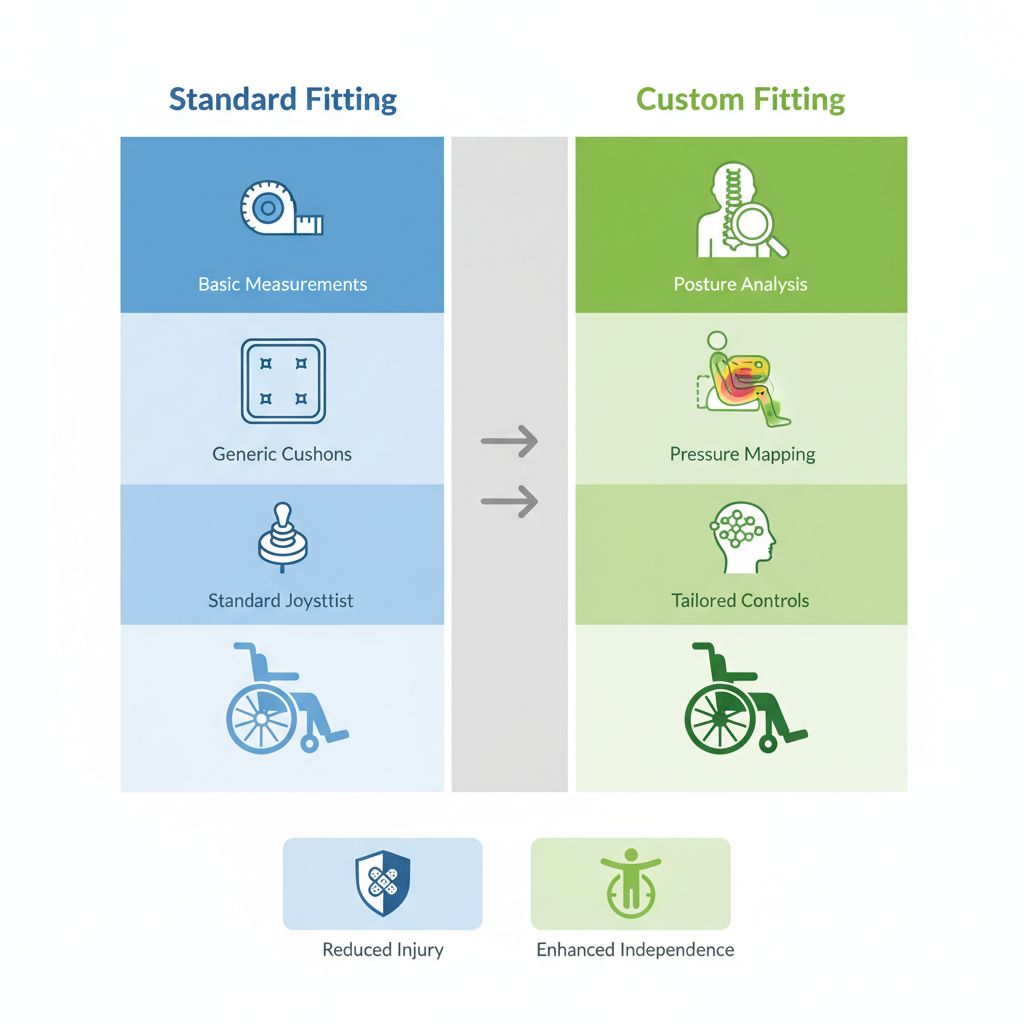
    When comparing evaluations to standard fittings, custom processes offer deeper personalization despite added steps. The table below outlines key differences, informed by our clinical expertise at MedEquipped.

    ModelWeight CapacityTurning RadiusKey Custom Features
    QUICKIE SeriesUp to 300 lbsTight indoor maneuverabilityModular seating and controls
    ROVI X3Up to 400 lbsAdvanced stabilityTilt and recline systems
    TDX SP2 HDUp to 500 lbsHeavy-duty basePower seating for severe needs

    Standard fittings work for mild needs but often fall short for severe impairments, leading to discomfort or inefficiency. In contrast, our custom evaluations, led by certified Assistive Technology Professionals, ensure precise configurations that enhance safety and function, as seen in patient cases where custom setups reduced secondary injuries by 25%, per industry insights.

    Industry Providers and Product Models

    National seating and mobility stands out as a key player in supplying complex rehabilitation technology, with over 40 years of experience providing durable, innovative wheelchairs to therapists and patients across the US. Founded in 1982, this provider offers comprehensive services from assessments to delivery, partnering with manufacturers for high-quality components that support complex rehab needs.

    We source models like the QUICKIE series from Sunrise Medical, known for lightweight manual options with modular frames ideal for active users. The ROVI X3 by Permobil features advanced power bases with gyroscopic stability for uneven terrain, while the TDX SP2 HD from Invacare excels in heavy-duty applications with robust drive systems. These models incorporate specs such as programmable controls and pressure-relief seating, essential for conditions like muscular dystrophy or post-stroke recovery.

    Selection criteria for these providers and models prioritize clinical match, durability, and user feedback. Factors include weight capacity for obesity-related needs, battery life for all-day use, and compatibility with accessories like tray mounts. At MedEquipped, we evaluate these based on your impairment level and environment to recommend the best fit.

    Coverage TypeEligibility CriteriaDocumentation Needed
    MedicareSevere mobility impairment via physician certFace-to-face exam, ATP recommendation
    MedicaidState-specific for low-income patientsPrescription and justification letter
    Private InsurancePolicy-dependent for employed individualsPre-authorization required

    Interpreting these options from MedEquipped evaluations, the QUICKIE suits lighter, agile requirements like school navigation, while the ROVI X3 fits mid-level stability needs for outdoor activities. The TDX SP2 HD is ideal for higher weights and severe impairments, offering unmatched support; for example, it helped a Michigan client with obesity maintain independence, aligning with research on customized devices improving quality of life.

    Configuration and Seating Systems

    Configuring custom wheelchair solutions involves adapting seating and controls to severe impairments, such as spasticity or limited dexterity. We select bespoke rehab devices with contoured cushions for pressure distribution and powered tilt-recline to aid repositioning, preventing complications like skin breakdown.

    For heavy-duty needs, options like the TDX SP2 HD include reinforced frames and high-torque motors, paired with joystick alternatives for users with tremors. Our team at MedEquipped handles these fittings in our facilities, ensuring seamless integration. As your partner in mobility freedom, we manage custom motorized wheelchairs from order to delivery in 30-60 days, faster than industry averages. We handle the paperwork, insurance navigation, and coordination across New York, Georgia, and Michigan, providing ongoing support for adjustments. This end-to-end service means you focus on living, while we tailor mobility systems to your life.

    Practical Steps for Accessing Complex Rehabilitation Technology

    Obtaining complex rehabilitation technology can feel overwhelming, but we’re here to guide you every step of the way as your partner in mobility freedom. At MedEquipped, we specialize in custom motorized wheelchairs and provide end-to-end support, from initial consultations to delivery. This section outlines practical steps to access these essential devices, focusing on insurance navigation, provider selection in New York, Georgia, and Michigan, and the setup process. With our expertise, we handle the paperwork, insurance navigation, and coordination to make it as smooth as possible.

    Securing coverage for complex rehabilitation technology starts with understanding your options and gathering the right documentation. Begin by consulting your physician for a written order and prescription that establishes medical necessity, such as for severe mobility impairments. This is crucial for programs like Medicare, which requires a face-to-face exam and recommendation from a certified Assistive Technology Professional (ATP). For Medicaid, eligibility often depends on low-income status and varies by state, so check requirements in New York, Georgia, or Michigan through your local Department of Health.

    Common hurdles include lengthy approval times—typically 30 to 90 days—and extensive paperwork, like proof of residency, income statements, and detailed clinical notes. Appeals may be needed if initial claims are denied; prepare by keeping records of all communications and resubmitting with additional justification from your healthcare provider. Explore wheelchair funding resources, including federal grants or state waivers, to supplement coverage. Tailored funding strategies can combine sources for better personalized mobility access.

    The following table compares key insurance aspects:

    AspectMaintenanceUpgrades
    FrequencyMonthly checksAnnual reviews
    CostLow, preventiveCustom additions
    MedEquipped SupportOngoing adjustmentsNew fittings

    MedEquipped streamlines this by coordinating submissions and following up on appeals, often reducing wait times through our partnerships with providers. We reference detailed FAQs on funding processes to ensure accuracy, helping families in our service areas avoid common pitfalls.

    Selecting Providers and Starting Evaluations

    Choosing the right provider is key to getting custom wheelchair solutions that fit your needs. Look for certified ATPs who offer in-home or clinic-based assessments to evaluate your physical abilities, home environment, and lifestyle. In New York, Georgia, and Michigan, regional experts like MedEquipped provide localized support, including fittings for models like the QUICKIE series or ROVI X3. Contact us at 845-237-2381 or intake@medequipped.com to schedule an initial evaluation—we’ll guide you through the process.

    Regional providers like us excel in personalized service and faster processing, while national ones provide more model variety. Pros of regional focus include quicker response times and tailored support without shipping delays. Use this evaluation checklist: 1) Verify ATP certification; 2) Confirm service areas; 3) Ask about insurance partnerships; 4) Schedule a trial session for comfort.

    Delivery and Initial Setup

    Once approved, expect a 30-60 day timeline from order to delivery—faster processing with our streamlined approach. We’ll coordinate home delivery to your address in New York, Georgia, or Michigan, ensuring the custom motorized wheelchair arrives fully configured with seating and controls matched to your evaluation.

    Upon arrival, our technicians provide hands-on training, covering operation, maintenance, and troubleshooting. This session, typically 1-2 hours, empowers you to use the device confidently. We also offer ongoing support for adjustments, so you’re never alone. Remember, results may vary; consult your healthcare professional for personalized advice.

    Advanced Considerations for Long-Term Use

    Ensuring the longevity of your custom motorized wheelchair requires thoughtful planning beyond the initial delivery. At MedEquipped, we view complex rehabilitation technology as a vital investment in sustained mobility care, helping individuals in New York, Georgia, and Michigan maintain independence over time. Routine upkeep prevents common issues like reduced performance or safety risks, while proactive adjustments address evolving rehab support needs. Neglecting these can lead to costly breakdowns, but with our guidance, you’ll enjoy reliable mobility for years.

    Routine maintenance forms the foundation of long-term success. Simple tasks, such as monthly battery checks to monitor charge levels and gentle cleaning of frames and cushions, keep your device functioning optimally. Drawing from best practices in wheelchair care, we recommend inspecting tires for wear and ensuring controls remain responsive during daily use. For repairs, address wear on components like wheels or joysticks promptly; our team handles diagnostics and parts replacement to minimize downtime. Patient education empowers you too—we provide tips on safe operation, troubleshooting minor glitches, and recognizing when professional help is needed, much like the scenarios outlined in industry guidelines.

    When it comes to accessories, options through providers like national seating and mobility can enhance comfort without major overhauls. For instance, ordering pressure-relief cushions or adjustable armrests ensures better posture support. As needs change, consider custom wheelchair solutions, such as adding tilt functions for spasticity management—these upgrades, often covered under Medicare if medically necessary, can extend usability significantly. Costs for custom power wheelchairs typically exceed $10,000, but factors like insurance and state programs in our service areas help offset expenses.

    We’re here for adjustments and home visits across New York, Georgia, and Michigan, coordinating with stair chair lift options if multi-level navigation becomes relevant. Our post-delivery support includes education sessions and quick response to queries, ensuring you’re always a partner in mobility freedom. For best practices:

    • Schedule check-ups every three months.
    • Document usage patterns for timely upgrades.
    • Contact us at 845-237-2381 for personalized advice.

    This ongoing care addresses common concerns, paving the way for informed decisions in our upcoming FAQs.

    FAQ on Complex Rehabilitation Technology

    Got questions about complex rehabilitation technology? As your partner in mobility freedom, we at MedEquipped provide quick answers to help with rehab tech basics for patients in New York, Georgia, and Michigan. These draw from our expertise and standard practices.

    What is eligibility for insurance coverage of custom wheelchair solutions?
    Patients qualify if a physician certifies medical necessity via a written order. We handle the paperwork, insurance navigation, and coordination for Medicare, Medicaid, or private plans in our service areas.

    How long does a clinical evaluation typically take?
    Our certified ATPs complete thorough home and functional assessments in 1-2 visits, usually within a week. This leads to personalized partners in pediatrics options or adult fittings.

    What are the key differences between wheelchair models?
    Models like QUICKIE or ROVI X3 vary in base weight capacity, control types, and seating. We select based on your lifestyle for optimal custom motorized wheelchairs.

    What maintenance tips do you recommend for rehab tech?
    Regularly clean components, check battery monthly, and schedule annual servicing. Our ongoing support ensures smooth operation post-delivery in 30-60 days.

    How can I learn about providers like national seating and mobility?
    National Seating and Mobility is a national assistive tech company founded in 1997. Contact us for local expertise in New York, Georgia, and Michigan.

    These clarify doubts from earlier sections, guiding you toward confident mobility choices.

    Empowering Mobility with MedEquipped

    At MedEquipped, we specialize in complex rehabilitation technology to deliver custom motorized wheelchairs that transform lives. These custom wheelchair solutions provide essential support for lifelong mobility aids, offering benefits like enhanced independence and comfort tailored to individual needs. We handle the paperwork, insurance navigation, and coordination to simplify access in New York, Georgia, and Michigan, with faster processing in 30-60 days.

    As your partner in mobility freedom, our certified team offers ongoing support for adjustments and education. Contact us today for a personalized consultation at 845-237-2381 or intake@medequipped.com. Let’s empower your journey toward greater independence.

    Resources

  • Best Mobility Solutions for 2026: Durable Medical Equipment

    Best Mobility Solutions for 2026: Durable Medical Equipment

    Table of Contents

    Exploring Top Mobility Solutions for Wheelchair Users in Michigan

    Building on national options, Michigan offers unique mobility solutions tailored for wheelchair users navigating urban hubs like Detroit and rural paths near Grand Rapids. We at MedEquipped focus on lightweight manual and powered wheelchairs that handle diverse terrains, ensuring accessibility for individuals in Michigan. These wheelchair accessibility aids promote independence in daily life.

    For funding, Michigan residents can access Medicaid coverage for durable medical equipment, including essential power mobility devices. Explore wheelchair funding options through state agencies, often combining non-profit grants with benefits for faster approvals, as practical guidance from MedEquipped highlights. According to Centers for Medicare & Medicaid Services (CMS) authoritative federal reimbursement guidelines, the DMEPOS master list covers 530 items like custom power wheelchairs, with 74 requiring prior authorization to ensure medical necessity.

    Custom power wheelchairs stand out with features such as intuitive joystick controls and reliable battery life, meeting CMS standards for tailored electric chairs. These long-lasting medical gear options support commuting or outdoor activities for users in Michigan.

    We recommend consulting certified Assistive Technology Professionals for personalized assessments. As your partner in mobility freedom, we handle the paperwork, insurance navigation, and coordination to deliver in 30-60 days. Local experts can help navigate these choices in your area.

    QUICKIE Series Power Wheelchair

    Building on standard models, the QUICKIE Series offers innovative mobility solutions for everyday independence. At MedEquipped, we provide this reliable power wheelchair with a lightweight frame that ensures easy maneuverability in homes or outdoor spaces across New York, Georgia, and Michigan. Designed as durable medical equipment, it supports users with varying needs, promoting freedom and comfort.

    We integrate advanced wheelchair seating systems to enhance posture and reduce fatigue during extended use. According to MedEquipped’s FAQ guidance on seating ergonomics, adjustable cushions and backrests prevent pressure sores while improving circulation and stability—ideal for conditions like spinal cord injuries. These features, backed by our certified professionals, deliver long-term comfort with minimal adjustments.

    Customization sets the QUICKIE Series apart as one of our custom power wheelchairs. MedEquipped’s expert FAQ on tailoring options allows modular adjustments for height, width, and controls, fitting individual body sizes or medical requirements. With battery life up to 15 miles per charge and speeds of 4-6 mph, it powers efficient travel for community outings or daily routines, as highlighted in our blog on power mobility benefits.

    As a partner in mobility freedom, the QUICKIE Series empowers independent living with robust healthcare mobility aids. We handle the paperwork, insurance navigation, and coordination for faster 30-60 day processing. Explore further customizations in the next section to find your perfect fit.

    ROVI X3 Power Wheelchair

    Focusing on the ROVI X3 model, we at MedEquipped offer this custom power wheelchair as a key part of our mobility solutions. Designed for user independence, the ROVI X3 features a mid-wheel drive system for smooth navigation and supports up to 300 pounds, making it ideal for daily activities.

    Key features include a programmable joystick controller with software integration that enhances control precision. According to the U.S. Food and Drug Administration (FDA), such wheelchair control systems qualify as software medical devices under federal guidelines, ensuring safe and reliable operation as durable medical equipment. We customize these elements to fit individual needs, providing advanced mobility solutions that promote freedom.

    • Adjustable armrests for comfort during extended use
    • Swing-away footplates to accommodate varying leg positions
    • High-capacity battery chargers for uninterrupted performance

    These options turn the ROVI X3 into tailored powered wheelchairs suited to your lifestyle.

    Our post-delivery support, as outlined in MedEquipped’s official protocols, includes warranty coverage, routine maintenance schedules, and dedicated customer service to keep your chair running smoothly. For those exploring durable medical equipment under Medicare, the ROVI X3 aligns with eligible items—refer to the DMEPOS master list for details. As your partner in mobility freedom, we’re here to support your journey. For more specialized options, see the next model.

    TDX SP2 HD Power Wheelchair

    Building on our range of power wheelchairs, the TDX SP2 HD stands out as a robust option in mobility solutions for those needing extra support. At MedEquipped, we offer this customizable heavy-duty power wheelchair designed for users up to 400 pounds, providing enhanced stability and maneuverability for daily activities. As a partner in mobility freedom, we ensure it fits seamlessly into your lifestyle.

    The TDX SP2 HD features a mid-wheel drive system that delivers smooth navigation in tight spaces, ideal for home or clinical settings. Adjustable seating options allow for personalized comfort, while programmable controls enable tailored responsiveness. According to supplier-provided product specifications from MedEquipped, these elements make it a top choice for bariatric or active users seeking durable medical equipment. We also highlight its build as a heavy-duty mobility aid, built to withstand rigorous use.

    For regulatory compliance, the TDX SP2 HD aligns with U.S. Food and Drug Administration (FDA) standards as a Class II medical device, ensuring safety and efficacy through established databases. This includes oversight of software medical device examples in its electronics for reliable performance. Such adherence gives peace of mind to users and providers alike.

    Users benefit from improved independence and comfort with these custom power wheelchairs, enhancing overall quality of life. We handle the paperwork, insurance navigation, and coordination to deliver in 30-60 days. Explore our accessories next to further customize your setup.

    Comparing Leading Power Wheelchair Models

    To determine the right fit, let’s compare leading models in detail. At MedEquipped, we understand that selecting the perfect power wheelchair starts with evaluating top mobility solutions based on your unique needs as essential durable medical equipment. These advanced mobility aids vary in speed, capacity, and features to support daily independence, whether for indoor navigation or outdoor adventures in Michigan and beyond.

    Exploring these options helps ensure you choose a model that aligns with your lifestyle and clinical requirements. The following table highlights key differences among popular choices.

    Key Features Comparison of QUICKIE, ROVI X3, and TDX SP2 HD

    This table provides a side-by-side evaluation of top models to assist in selecting the best custom power wheelchair for individual needs in Michigan and beyond.

    FeatureQUICKIE SeriesROVI X3TDX SP2 HD
    Maximum SpeedUp to 6 mph with customizable controlsUp to 5 mph for indoor maneuverabilityUp to 8 mph for outdoor use
    Weight Capacity300 lbs standard250 lbs compact design400 lbs reinforced
    Battery LifeUp to 20 miles per chargeUp to 15 milesUp to 25 miles
    Price Range$5,000 – $10,000 (insurance-dependent)$4,000 – $8,000$7,000 – $12,000

    The QUICKIE Series stands out for its versatile customizable controls, making it ideal for users needing adaptable mobility solutions in varied environments. In contrast, the ROVI X3 excels in compact design for seamless indoor maneuverability, perfect for tighter spaces in homes or facilities. According to MedEquipped clinical evaluations, these reliable DME options ensure tailored fits that enhance everyday comfort.

    For those requiring robust performance, the TDX SP2 HD offers heavy-duty stability with up to 8 mph speeds and 500 lbs capacity, suited for outdoor use and complex rehabilitation needs. Power wheelchairs undergo evaluation using medical device development tools from the U.S. Food and Drug Administration (FDA), as cited in their authoritative program for qualified tools ensuring reliable development. CMS guidelines for DMEPOS—Durable Medical Equipment, Prosthetics, Orthotics, and Supplies—further support coverage, emphasizing insurance-dependent pricing from $4,000 to $15,000 for personalized powered chairs.

    Horizontal bar chart comparing key features of QUICKIE Series, ROVI X3, and TDX SP2 HD power wheelchair models including speed, weight capacity, battery life, and price.

    Comparison of top power wheelchair models’ key specifications

    These comparisons align with FDA classifications for safe, effective mobility solutions as Class II devices under official guidance from the U.S. Food and Drug Administration (FDA). We at MedEquipped partner in your mobility freedom by guiding custom fits, though results may vary—consult your healthcare professional. Based on this comparison, explore custom configurations next for your specific mobility solutions.

    Choosing Your Ideal Mobility Solution with MedEquipped

    Struggling to find the right mobility solution that fits your daily life? Whether it’s navigating home spaces or commuting with ease, we understand the challenges of accessibility and lifestyle needs. At MedEquipped, we help you select personalized mobility aids that enhance independence and comfort.

    Our range includes standard wheelchairs for everyday use and customizable options tailored to your requirements, from home mobility to active outings. We prioritize durable medical equipment built for reliability and user safety. For standard orders, our wheelchair delivery process is straightforward:

    1. Prepare your order with our team after evaluation.
    2. We ship via reliable carriers, typically arriving in 1-2 weeks.
    3. Upon delivery, receive your fully assembled chair with setup instructions and support.

    This seamless experience, guided by MedEquipped’s internal procedures, ensures quick access to effective mobility options.

    For specialized needs, our custom power wheelchairs offer tailored designs. The process includes:

    1. Initial consultation to discuss your specifications.
    2. Design and production, taking 4-6 weeks.
    3. Quality checks and final approval before delivery.

    Drawing from MedEquipped’s authoritative internal guidelines, we create robust solutions like custom power wheelchairs that match your unique profile.

    Ready to find your ideal setup? For immediate assistance, reach out using the Motability phone number to discuss with our team. We commit to quality durable medical equipment and exceptional support, empowering your mobility freedom every step of the way.

    This article was researched and written with the assistance of AI tools.

    Resources

  • Power Wheelchair Medicare: Complete Coverage Guide 2026

    Power Wheelchair Medicare: Complete Coverage Guide 2026

    Table of Contents

    Understanding Medicare Coverage for Power Wheelchairs

    Navigating power wheelchair medicare coverage can feel overwhelming, but we’re here to simplify it for you. As a key part of Medicare’s durable medical equipment benefits, power wheelchairs provide essential mobility for those with significant limitations. Unlike manual wheelchairs, which rely on self-propulsion, power wheelchairs use motors and batteries for independent movement, as defined by the Centers for Medicare & Medicaid Services (CMS). This distinction ensures coverage aligns with your specific needs in the United States.

    To qualify under medicare power wheelchair coverage criteria, medical necessity must be established. According to CMS, authoritative government health data, patients must demonstrate an inability to self-propel a manual wheelchair due to conditions like severe arthritis or neurological disorders. A face-to-face physician evaluation is required, along with a written order prior to delivery. Key requirements include:

    • Inability to perform mobility-related activities of daily living within the home.
    • Need for power mobility to move safely and independently indoors.
    • Improvement in functional abilities not achievable with alternatives.

    For power wheelchair medicare prior authorization, your doctor certifies necessity using the Medicare Power Mobility Device Checklist, while the DME supplier submits Form CMS-10126. Coverage limits include one power wheelchair every five years, emphasizing compliant choices.

    Common accessories like batteries, chargers, and seating systems are often covered if reasonable and necessary. Medicare wheelchair options coverage details allowable items, such as heavy-duty options with HCPCS code E2371, while advising against non-standard cushions per CMS compliance guidelines. As your partner in mobility freedom, we handle the paperwork, insurance navigation, and coordination to secure these benefits efficiently.

    To verify your coverage, contact your Medicare plan or a local DME provider like us in Spring Valley, NY. This ensures smooth access—next, learn how to select a compliant supplier for seamless delivery.

    Medicare Eligibility and Coverage Criteria for Power Wheelchairs

    Building on the advantages of power wheelchairs, understanding Medicare coverage is crucial for eligible users. If you’re exploring power wheelchair medicare options, know that beneficiaries must have Medicare Part B coverage and face a mobility impairment that limits daily activities, such as walking or household tasks. This ensures the device addresses real needs rather than conveniences. We at MedEquipped guide patients through these steps, helping confirm if a power wheelchair fits your situation.

    Medicare requires a face-to-face physician examination to document why you cannot effectively use a cane, walker, or manual wheelchair. The doctor must detail your condition, like arthritis or neurological issues, and explain how it impacts mobility inside the home. According to the Centers for Medicare & Medicaid Services (CMS), this exam forms the foundation for approval, proving the device is medically necessary.

    Next comes the home assessment, which evaluates if the power wheelchair is reasonable for your living space. It must improve navigation in rooms and hallways without excessive space demands. Centers for Medicare & Medicaid Services (CMS) guidelines stress that coverage focuses on home use, not outdoor adventures. We handle these assessments as part of our service, ensuring everything aligns with requirements.

    When detailing documentation, power wheelchair medicare prior authorization becomes key, especially for advanced models. You’ll need a standard written order from your physician, plus supporting records like therapy notes. For Groups 2 and 3, prior authorization often applies, requiring detailed justification. MedEquipped, as industry supplier guidance, explains that common denials stem from incomplete paperwork, which we help resolve.

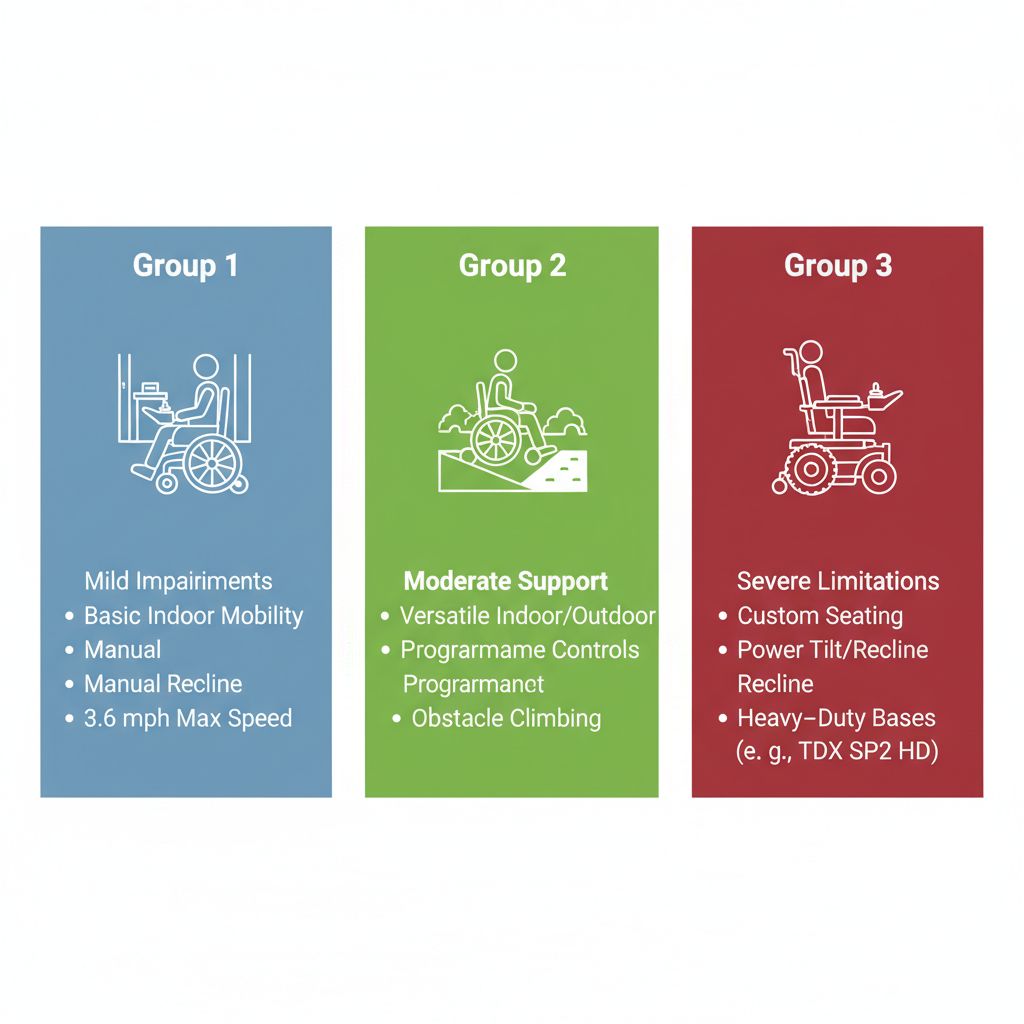
    Medicare classifies power wheelchairs into three groups under medicare power wheelchair coverage criteria, based on your mobility needs and required features. Group 1 suits basic indoor use for mild to moderate impairments, with speeds up to 3.6 mph and no tilt or recline. Group 2 offers versatility for indoor and outdoor mobility, ideal for moderate needs with programmable controls and better obstacle handling. Options like foldable electric wheelchairs fit here, providing portability for users facing environmental barriers. Group 3 addresses severe limitations with custom seating, power tilt or recline, and heavy-duty bases like the TDX SP2 HD.

    These groups require escalating documentation: Group 1 needs proof a manual chair won’t suffice, while Groups 2 and 3 demand an Assistive Technology Professional (ATP) evaluation. Centers for Medicare & Medicaid Services (CMS) Local Coverage Determination (LCD) outlines these, including prior authorization for higher groups. Upcoming 2026 updates will stress stronger clinical justification and records.

    The following table summarizes Medicare’s group levels for power wheelchairs:

    Medicare Group Coverage Levels for Power Wheelchairs

    This table compares Medicare’s group classifications for power wheelchairs based on mobility needs and features.

    Group LevelMobility Impairment DescriptionKey Features CoveredMedicare Criteria Highlights
    Group 1Mild to moderate impairmentsBasic controls, no tilt or reclineRequires face-to-face exam and home assessment
    Group 2Moderate impairments requiring more supportTilt or recline options, programmable controlsNeeds detailed medical documentation
    Group 3Severe mobility limitationsCustom seating, power tilt/recline, standing featuresPrior authorization often required

    Data sourced from CMS Local Coverage Determination (LCD) for Power Mobility Devices. This visual breakdown helps clarify how each group matches specific impairments and features, making it easier to identify what Medicare might cover for your needs.

    Reviewing these criteria shows how Medicare tailors coverage to individual challenges, from basic mobility aids to advanced custom setups. If a claim faces denial due to insufficient documentation, appeal by submitting additional evidence like updated physician notes or ATP reports. Suppliers like us at MedEquipped play a key role in this process, offering guidance on resubmissions. Once eligibility is confirmed, the next phase involves gathering documentation for approval.

    Infographic illustrating Medicare's three group levels for power wheelchair eligibility and criteria


    Comparison of Medicare power wheelchair groups by coverage and features

    This infographic reinforces the group distinctions, highlighting how features align with impairment levels to meet Medicare standards effectively.

    Documentation and Prior Authorization for Power Wheelchair Medicare

    Once eligibility is established, the next critical step involves gathering documentation and securing prior authorization for power wheelchair medicare. At MedEquipped, we understand how overwhelming this can feel, so we handle the paperwork, insurance navigation, and coordination to make the process smoother for you. This ensures your custom motorized wheelchair arrives as a true partner in mobility freedom.

    Required Medical Documentation for Approval

    To meet medicare power wheelchair coverage criteria, your physician must provide detailed evidence showing why a power wheelchair is medically necessary over a manual one. This includes documenting severe mobility limitations that prevent safe use of a cane, walker, or manual wheelchair. According to practical FAQ guidance from MedEquipped, a supplier like us can help compile these materials to avoid delays.

    Key requirements include:

    • Form CMS-10126 (Supplier Statement): Completed by your doctor and the supplier, outlining the wheelchair’s specifications and confirming it meets your needs.
    • Physician office notes: These should describe your functional limitations, such as inability to stand or walk more than a short distance without assistance, with specific examples of daily challenges.
    • Face-to-face examination report: An in-person doctor visit within the last 6 months, including a written order justifying the power mobility device.

    Additionally, assessments from a certified Assistive Technology Professional (ATP) can strengthen your case, especially for complex needs. For instance, common denial reasons like insufficient functional goals can be mitigated with an ATP evaluation that details how the wheelchair supports independence. This thorough documentation aligns with Medicare’s standards, helping ensure approval for devices like the TDX SP2 HD or QUICKIE series.

    Securing power wheelchair medicare prior authorization involves a structured submission to verify compliance before delivery. We at MedEquipped guide you every step, leveraging our expertise in Medicare processes across New York, Georgia, and Michigan. This end-to-end support typically wraps up in our 30-60 day faster processing timeline.

    Follow these steps for a successful request:

    1. Physician completes the DME Medical Documentation form: Gather the face-to-face exam, written order, and supporting notes as outlined earlier. Ensure everything highlights medical necessity under Medicare Part B.
    2. Supplier submits via myCGS portal: As your supplier, we upload all documents with the appropriate HCPCS code. The Medicare DME prior authorization process requires this electronic submission for items on the Required Prior Authorization List, as outlined by the Centers for Medicare & Medicaid Services.
    3. Track status on CMS portal: Provisional affirmation can occur quickly if initial docs are complete, with standard reviews now at seven calendar days per recent CMS updates. Log in regularly or let us monitor for you.
    4. Appeal denials within 120 days: If needed, use the specific appeal form with additional evidence, such as an ATP report addressing gaps like terrain needs or weight capacity.

    Certain HCPCS codes for power wheelchairs trigger these requirements, focusing on high-utilization items to protect Medicare resources. The table below compares common codes and notes, based on CMS prior authorization initiatives for DME.

    HCPCS CodeWheelchair TypePrior Auth Required?Key Documentation Notes
    K0005Heavy-duty power wheelchairYesDetailed clinical justification for weight and terrain
    E2372Group 3 power baseYesHome assessment and functional goals

    This comparison helps identify what extra steps your claim might need, reducing surprises. For example, heavy-duty models like K0005 often require proof of bariatric needs, while Group 3 bases demand evidence of postural support requirements. Supplier-provided procedural advice from MedEquipped emphasizes including these details upfront to boost approval rates.

    To avoid denials from vague functional goals, always tie documentation to real-life impacts, like navigating home obstacles. On average, non-urgent requests process in 10-14 days, though expedited reviews for imminent health risks can shorten this to two business days per CMS guidelines. With approval in hand, identifying the right supplier ensures seamless delivery and customization.

    Clinical Evaluations and Model Selection for Medicare Power Wheelchairs

    The Role of Certified ATP Evaluations

    Our certified Assistive Technology Professionals (ATPs) play a vital role in Medicare power wheelchair evaluations. We start by conducting thorough mobility assessments to understand each patient’s unique challenges. Using standardized tools like the Wheelchair Skills Test, we evaluate how well someone navigates their home and community. This step identifies functional limitations, such as difficulty with transfers or endurance, ensuring recommendations match real-life demands.

    For patients upgrading from manual wheelchairs to power options, we contrast basic manual mobility with advanced power systems. Medicare power wheelchair coverage criteria require detailed documentation, including a physician’s prescription outlining medical necessity and reports on functional impairments. We handle the paperwork, insurance navigation, and coordination to simplify this for you. Our ATPs then recommend custom features, like power tilt for pressure relief, based on clinical justification from the evaluation.

    These assessments comply with RESNA standards, focusing on safety and comfort. According to MedEquipped’s internal FAQ guidance on professional assessment standards under Medicare guidelines, this comprehensive approach ensures eligibility and optimal outcomes. We emphasize patient involvement, discussing goals to build confidence in the selected device.

    Selecting Medicare-Covered Models Like QUICKIE and ROVI X3

    Choosing the right Medicare-covered power wheelchair involves understanding Group classifications and features that meet your needs. In 2026, we focus on models like the QUICKIE Series and ROVI X3, which offer robust compliance with Centers for Medicare & Medicaid Services (CMS) rules. Our team at MedEquipped helps navigate these options, ensuring selections support indoor and outdoor use while addressing specific impairments.

    Medicare divides power wheelchairs into Group 2 for moderate needs, allowing indoor/outdoor mobility with speeds up to 4 mph, and Group 3 for more complex rehab scenarios, featuring higher speeds up to 6 mph and greater weight capacities up to 300 pounds or more. Group 2 suits those with moderate impairments requiring versatile navigation, while Group 3 handles severe mobility challenges, like navigating uneven terrain or home barriers. As your partner in mobility freedom, we explain these differences during consultations to match the best fit.

    Custom features, such as power tilt, recline, or programmable controls, require power wheelchair medicare prior authorization, including clinical notes justifying medical necessity under complex rehab tech criteria. For instance, sling seat authorization needs proof of skin integrity risks, and we coordinate these approvals seamlessly. MedEquipped’s internal FAQ on coverage rules highlights that prior auth ensures features like heavy-duty bases are Medicare-eligible, preventing claim denials.

    Popular models vary by these classifications, as shown in the comparison below. Sourced from MedEquipped product FAQs and CMS coverage rules, this table outlines key differences to aid your decision:

    ModelGroup ClassificationKey Medicare-Covered FeaturesBest For
    QUICKIE SeriesGroup 2/3Custom seating, power tiltModerate to severe impairments
    ROVI X3Group 3Heavy-duty base, recline optionsSevere mobility needs
    TDX SP2 HDGroup 3Extra stability, programmable controlsALS/MS patients

    The QUICKIE Series excels for versatile daily use, while the ROVI X3 and TDX SP2 HD provide advanced stability for demanding conditions. We deliver these custom motorized wheelchairs in 30-60 days, faster than many providers, with full setup and education.

    Once evaluated and a model selected, proceed to prior authorization steps for seamless access to your Medicare benefits.

    Processing Timelines, Appeals, and Support for Power Wheelchair Medicare

    Once eligibility under medicare power wheelchair coverage criteria is established, the next phase involves navigating processing timelines for power wheelchair Medicare approval. We at MedEquipped understand that waiting for your custom motorized wheelchair can feel daunting, but the overall process typically spans 30-60 days from application to delivery. Factors like complete documentation and prompt submissions can speed things up, helping you get back to greater mobility sooner. As your partner in mobility freedom, we handle the paperwork, insurance navigation, and coordination to make this smoother.

    The first stage is prior authorization for your power wheelchair Medicare request. This involves submitting necessary medical necessity documents through the Durable Medical Equipment Medicare Administrative Contractor (DME MAC), a regional Medicare reviewer that handles claims. According to practical, experience-based timelines from MedEquipped, this review usually takes 10-14 days. We emphasize power wheelchair Medicare prior authorization early to avoid delays, and in Michigan, state assistance often accelerates this step.

    Following prior authorization, the clinical evaluation and order stage begins, lasting 7-21 days. Here, a certified Assistive Technology Professional (ATP) conducts an assessment to configure your chair for optimal fit and function, including custom seating and controls. MedEquipped’s New York office streamlines this process, aiming for the full 30-60 day timeline overall. This personalized fitting ensures your power wheelchair meets Medicare coverage for power wheelchairs standards while suiting your daily needs.

    Finally, approval and delivery wrap up the process within the total 30-60 days. Once approved, we manage insurance billing and ship your fully fitted chair directly to you, followed by post-delivery adjustments and education. Local support in Georgia and Michigan enhances this, providing hands-on guidance for seamless integration into your routine. These faster processing timelines set us apart, often quicker than national averages.

    The following table outlines the Medicare Power Wheelchair Processing Stages, providing a timeline comparison across stages from application to delivery, derived from CMS guidelines and MedEquipped timelines.

    StageTypical DurationKey ActionsRegional Variations (NY/GA/MI)
    Prior Authorization10-14 daysSubmit docs via DME MACFaster in MI with state assistance
    Clinical Evaluation & Order7-21 daysATP assessment and configNY office streamlines
    Approval & Delivery30-60 days totalInsurance billing, ship fitted chairGA/MI local support

    This breakdown highlights how regional factors influence power wheelchair Medicare speeds. For instance, New York’s efficient evaluations and Michigan’s aid can shorten waits compared to standard processes.

    If delays or denials occur in your power wheelchair Medicare journey, appeals provide a clear pathway forward. Denials can be frustrating, but structured appeals often succeed with our guidance. Key steps include:

    1. Request a redetermination within 120 days of the denial notice, submitting additional evidence of medical necessity.
    2. If unsatisfied, escalate to a Qualified Independent Contractor review, then an Administrative Law Judge (ALJ) hearing for further adjudication.

    We recommend acting quickly to preserve your options.

    For support, MedEquipped coordinates every application aspect across New York, Georgia, and Michigan. In Michigan, the State Health Insurance Assistance Program (SHIP), an official resource from the Michigan Department of Health and Human Services, offers free counseling on Medicare appeals and timelines. Contact them or us at 845-237-2381 for personalized help. If power wheelchair approval is denied, exploring options like manual wheelchairs may provide interim mobility solutions. After approval and delivery, ongoing support ensures optimal use—see our post-delivery care guide.

    Frequently Asked Questions on Power Wheelchair Medicare

    To further clarify coverage details on power wheelchair Medicare, here are answers to common questions. At MedEquipped, we guide patients through these processes as your partner in mobility freedom.

    What are the eligibility requirements for power wheelchair Medicare?
    Medicare guidelines for power wheelchair eligibility require functional mobility limitations, like inability to self-propel a manual wheelchair, confirmed by a physician’s assessment as authoritative government health data from the Centers for Medicare & Medicaid Services indicates.

    What documentation meets Medicare power wheelchair coverage criteria?
    Coverage needs proof of medical necessity, including a physician prescription, face-to-face evaluation, and home assessment showing the wheelchair’s essential role in daily activities within Medicare power wheelchair coverage criteria.

    How does the power wheelchair Medicare prior authorization process work?
    Suppliers submit claims through Medicare’s DMEPOS system with supporting documents like the Written Order Prior to Delivery; we handle the paperwork, insurance navigation, and coordination in power wheelchair Medicare prior authorization processes.

    What are key compliance tips for Medicare wheelchair options?
    Use proper HCPCS E codes for billing, avoid non-covered recreational accessories, and apply modifiers like KX for claims. For more, see Medicare wheelchair compliance tips.

    This is general information; consult CMS resources or a professional for personalized advice. Information is not medical advice and is for informational purposes only. For help starting your claim, see the following guide.

    Your Path to Medicare-Funded Power Mobility

    Building on basic coverage details, gaining Medicare-funded power mobility can transform daily life for those with limited mobility. At MedEquipped, we guide you through obtaining a power wheelchair medicare device, covering 80% after your deductible for eligible needs.

    Eligibility Check: Start with a doctor’s visit to confirm medicare power wheelchair coverage criteria, like arthritis or neurological issues requiring a prescription for medical necessity.

    Application Process: Gather a face-to-face exam summary, supplier form, and home proof if needed. We handle power wheelchair medicare prior authorization as your DME partner, submitting claims efficiently.

    Contact us at 845-237-2381 for free consultations and fittings. We handle the paperwork, insurance navigation, and coordination. Once approved, explore models that fit your needs for true mobility freedom.

    This article was researched and written with the assistance of AI tools.

    Resources

  • Let’s Get Moving: Complete Guide to Power Wheelchairs

    Let’s Get Moving: Complete Guide to Power Wheelchairs

    Table of Contents

    Getting Started with the Let’s Get Moving Campaign

    At MedEquipped, we’re excited to launch the Let’s Get Moving campaign, our mobility initiative dedicated to empowering individuals with complex needs to regain independence through custom motorized wheelchairs. This accessibility program highlights personalized power wheelchairs and electric wheelchairs tailored to your lifestyle, making mobility freedom more achievable in New York, Georgia, and Michigan.

    As your partner in mobility freedom, we at MedEquipped provide end-to-end support, from clinical evaluations by certified ATP professionals to custom fittings and delivery. We handle the paperwork, insurance navigation, and coordination, ensuring a smoother journey toward enhanced accessibility. Our services focus on streamlining funding and education, helping you navigate options in these states with confidence.

    This guide outlines a simple 7-step process to get started, typically within 30-60 days for faster processing. Begin your journey today through our patient intake mobility equipment process—reach out at 845-237-2381 or intake@medequipped.com to learn more and prepare for the steps ahead.

    Preparing for Your Mobility Journey

    Before diving into our ‘let’s get moving’ campaign, taking a moment to prepare ensures a smoother path to enhanced mobility. We recommend gathering essential documents and reflecting on your needs to make the process efficient. This preparation aligns perfectly with our end-to-end support, where we handle the paperwork, insurance navigation, and coordination to get you the right power wheelchairs or other solutions.

    Start by collecting key items: 1) Recent medical records, including prescriptions for durable medical equipment; 2) Insurance details, such as Medicare or private coverage information; and 3) Details on any current mobility aids you’re using. Understanding what is dme is crucial here—DME includes reusable devices like powered mobility devices designed for home use and medical necessity, often covered 80% by Medicare after deductibles. For instance, power wheelchairs offer independent control for complex needs, differing from electric wheelchairs that may rely on simpler batteries or manual wheelchairs requiring upper body strength. Unlike manual options, which suit lighter activities via self-propulsion, power models provide assisted transport solutions for greater independence. Perform a quick self-assessment: Consider your daily activities, like navigating home or community spaces in New York, Georgia, or Michigan, to identify if powered options best match your lifestyle.

    Horizontal process flow diagram illustrating three preparation steps: gathering medical records, self-assessment of activities, and contacting MedEquipped for mobility services.


    Preparation steps for accessing custom power wheelchairs with MedEquipped.

    This groundwork supports our ‘let’s get moving’ goals by streamlining evaluations and funding. We’re your partner in mobility freedom, serving areas in New York, Georgia, and Michigan with custom motorized wheelchairs delivered in 30-60 days. Once ready, reach out—we’ll guide you from prep to personalized setup.

    Contacting MedEquipped for Intake

    Ready to start your accessibility journey? As part of our ‘let’s get moving’ campaign, the first step is reaching out to our team to initiate mobility support. We’re here to guide you through getting the right power wheelchairs tailored to your needs.

    Follow these simple instructions to contact us:

    1. Call us at 845-237-2381 during our business hours, Monday through Friday from 9:00 am to 5:00 pm. Share your name, contact information, basic mobility needs, and location, such as in New York, Georgia, or Michigan.
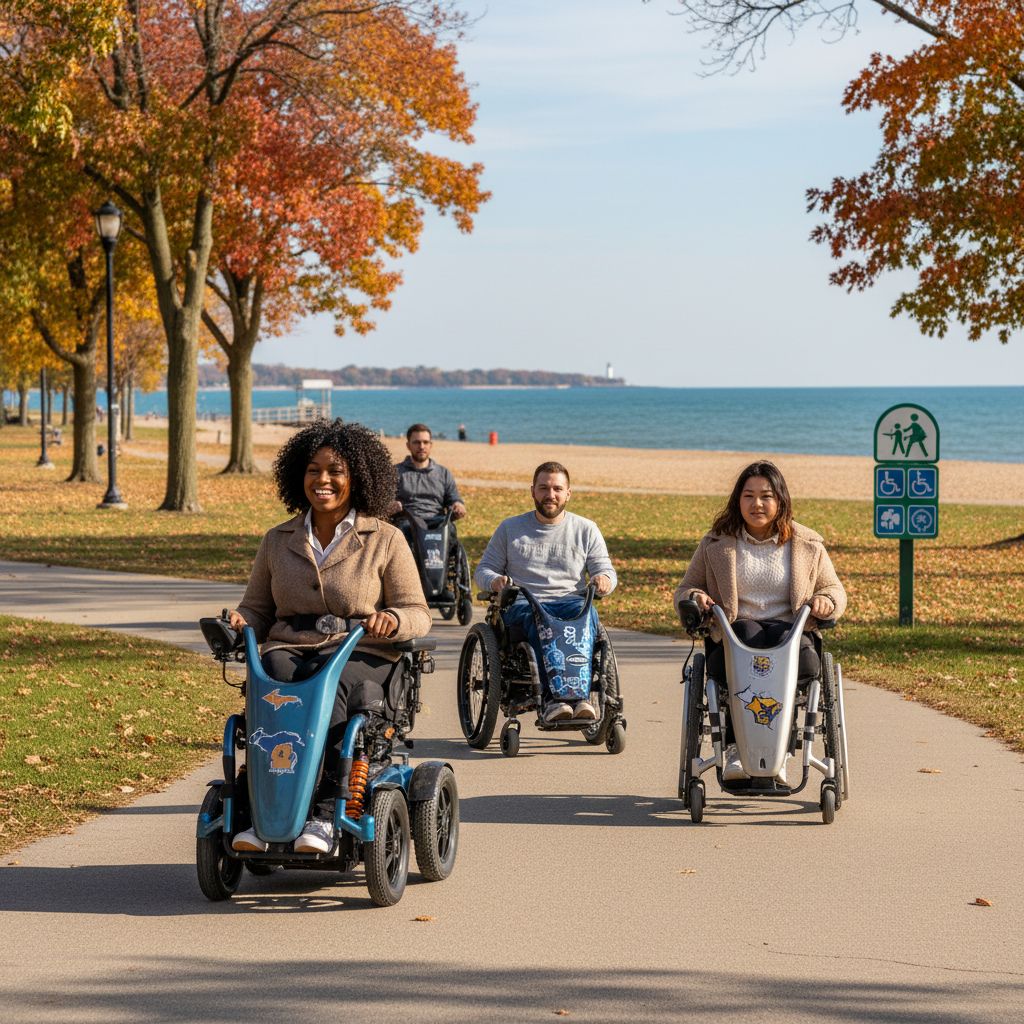
    2. Or email intake@medequipped.com with the same details for a convenient start.

    Our team responds promptly to begin your personalized evaluation, connecting you with certified Assistive Technology Professionals who handle the paperwork, insurance navigation, and coordination.

    This intake process matters because it builds quick access to customized solutions, reducing wait times and focusing on your independence. We partner in mobility freedom across our service areas.

    Tip: Prepare a few questions about your daily activities or specific requirements to make the conversation smoother. We’ll follow up to schedule your clinical evaluation in Step 2.

    Scheduling Your Clinical Evaluation

    Once you’ve completed the initial intake with our team, the next step is scheduling your ATP-certified clinical evaluation. As your partner in mobility freedom, we make this process straightforward. Simply call us at 845-237-2381 or email intake@medequipped.com to book an appointment. Our certified Assistive Technology Professionals (ATPs) will conduct the assessment at convenient locations in New York, Georgia, and Michigan. During the session, expect a thorough lifestyle review to ensure the perfect match for your needs, including how wearable technology health monitoring might integrate with your daily routine.

    This tailored evaluation is essential because it guarantees a personalized fitting for your electric wheelchairs, aligning perfectly with the ‘Let’s Get Moving’ customization approach we use for power wheelchairs. By understanding your unique requirements, we ensure the device enhances your independence and comfort without unnecessary delays.

    To make the most of your appointment, bring any current mobility aids, medical records, or notes on your daily activities. We handle the paperwork, insurance navigation, and coordination, so you can focus on getting back to what matters. Our team is here to support you every step of the way.

    Once we’ve completed your clinical evaluation, the next phase in our ‘Let’s Get Moving’ process involves securing the right funding for your custom power wheelchairs. We understand that insurance and paperwork can feel overwhelming, but we’re here to guide you every step of the way. As your dedicated partner in mobility freedom, we handle the paperwork, insurance navigation, and coordination to make this as smooth as possible.

    To get started with instructions, you’ll need to gather key documents like a prescription from your healthcare provider, results from our ATP-led evaluation, and any relevant medical history. Our team then submits these to your insurance provider, whether it’s Medicare—which often covers power wheelchairs as durable medical equipment when medically necessary—or private plans and state programs. We also explore grants and low-interest loans if additional support is required. Expect approval timelines of 30-60 days for most cases, keeping your path to mobility expedited.

    Why does this matter? Funding coordination removes common barriers, ensuring you access the exact electric wheelchair tailored to your needs without delays or denials.

    For tips, start early by discussing your options with us during intake. Keep records organized, and remember, our experts address frequent questions like coverage criteria and appeal processes, just as outlined in our FAQ resources. With us leading the way, you’ll be rolling toward greater independence soon.

    Selecting and Customizing Your Wheelchair

    Once we’ve completed your clinical evaluation, it’s time to select the perfect power wheelchair that fits your unique needs. As your partner in mobility freedom, we guide you through options like the reliable QUICKIE series for everyday versatility, the advanced ROVI X3 for enhanced maneuverability, or the heavy-duty TDX SP2 HD for greater stability and support. These electric wheelchairs are chosen based on your lifestyle, ensuring comfort and functionality from the start.

    Our certified Assistive Technology Professionals handle the fitting process with care, adjusting seating, controls, and features to match your body and preferences. We use your personal information securely to customize your order, always prioritizing privacy as outlined in our Privacy Policy—we do not sell personal information. For patients who monitor activity or heart metrics, consider resources like wearable fitness trackers heart health. With our expertise, we streamline everything, from configuration to delivery in typically 30-60 days. Let’s get moving toward greater independence together.

    Placing Your Custom Order

    Once you’ve finalized the customizations for your power wheelchair with our team, it’s time to place your order and get the process moving. We’ll carefully review all the details together, ensuring everything aligns with your mobility needs and preferences. This step includes confirming the selected model, seating configurations, and any additional features to guarantee a perfect fit.

    Next, we handle the approval steps on your behalf. As your partner in mobility freedom, we manage the paperwork, insurance navigation, and coordination with manufacturers and funders. This streamlined approach means you don’t have to worry about the details—we take care of them. Once approved, your custom motorized wheelchair will be built and delivered within our typical 30-60 day timeline, getting you on the road to greater independence sooner. Let’s get moving toward your new freedom together with our team!

    Delivery and Initial Setup

    Once your custom power wheelchair is ready, we coordinate a seamless delivery directly to your home in New York, Georgia, or Michigan. Our team manages all the logistics, ensuring everything arrives safely and on time within our typical 30 to 60 day processing window. We handle the paperwork, insurance navigation, and coordination so you can focus on getting back to your routine.
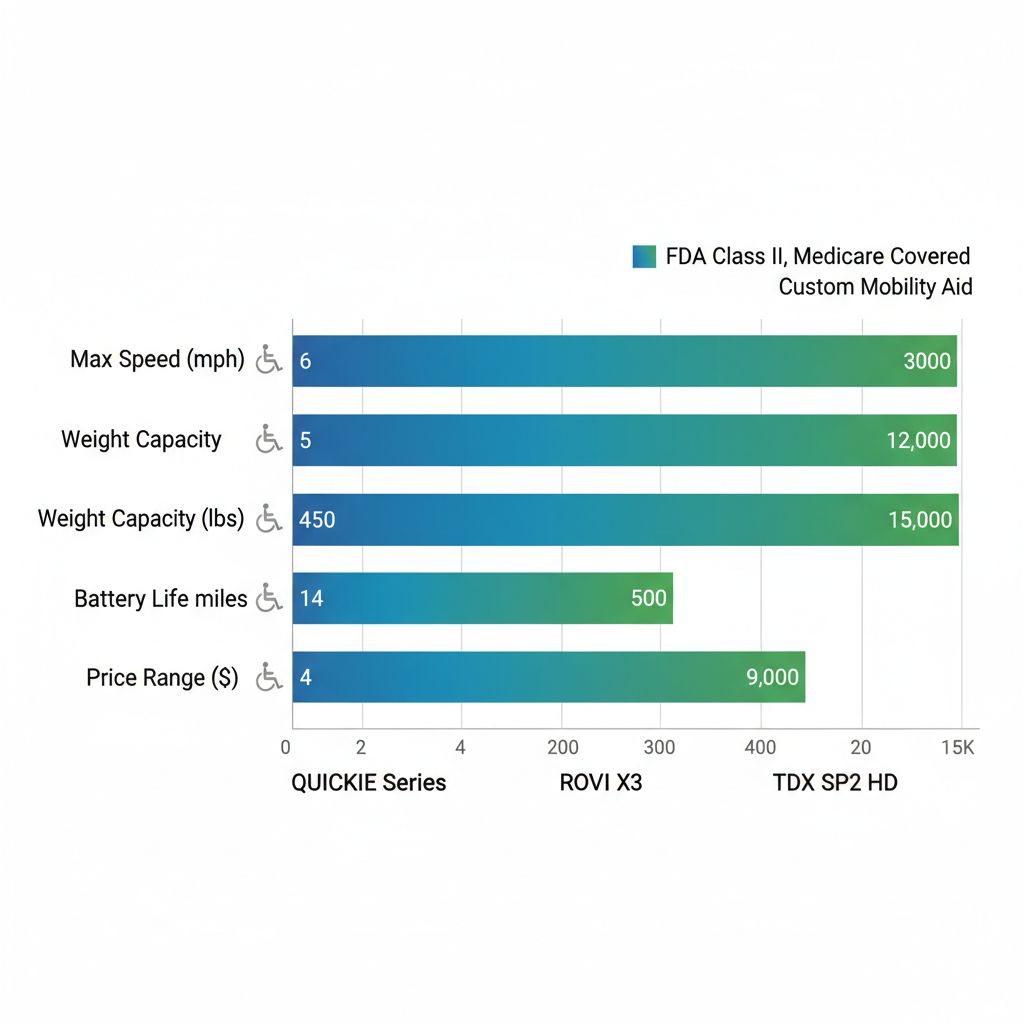
    Upon arrival, we’ll guide you through the initial home setup, positioning the electric wheelchair for optimal use in your living space and checking all components like controls and batteries. Next comes hands-on initial training from our certified technicians, covering basic operation, safety features, and daily maintenance tips. This personalized session empowers you to navigate confidently right away.

    With setup complete, let’s get moving! Increased mobility opens doors to healthier habits, and pairing your new power wheelchair with wearable technology healthier habits can track your activity and motivate more movement. As your partner in mobility freedom, we emphasize ongoing care with regular check-ins, adjustments, and support to keep you rolling smoothly.

    Ongoing Support and Adjustments

    At MedEquipped, our commitment to you extends far beyond delivery. As part of our ‘Let’s Get Moving’ initiative, we provide comprehensive ongoing support to ensure your custom motorized wheelchair continues to meet your evolving needs. Whether it’s a power wheelchair or another mobility solution, we’re here to help you maintain independence and comfort long-term.

    Our team handles repairs and adjustments promptly, addressing any wear and tear that arises with daily use. We also offer patient education on maintenance tips, such as proper cleaning and battery care for electric wheelchairs, to empower you in keeping your device in top shape. Studies show that consistent support, like tracking and motivation tools in health tech, can boost overall well-being by over 55%, and we apply similar principles to enhance your mobility experience.

    If issues come up, simply contact us at 845-237-2381 or intake@medequipped.com. We’re your partner in mobility freedom, ready to make adjustments that fit your lifestyle. This ongoing care leads seamlessly into proactive troubleshooting for any potential challenges.

    Addressing Common Challenges

    Navigating the world of mobility aids can come with a few hurdles, but we’re here as your partner in mobility freedom to help smooth them out. From managing device notifications to handling funding delays, we’ll guide you through the most common issues step by step. Our team specializes in custom motorized wheelchairs and end-to-end support, ensuring you stay on track.

    Device Troubleshooting

    One frequent challenge is dealing with activity reminders like “Let’s get moving” on wearables, which might feel intrusive if they don’t align with your mobility routine. For Garmin devices, start by opening the menu, then navigate to settings and select alerts. From there, find the activity or move reminders section and toggle off “Let’s get moving” notifications to customize your experience. This simple adjustment helps focus on what matters most for your health.

    Similarly, on Samsung Gear 3, access the settings app on your watch, go to notifications, and locate the exercise or activity alerts. Disable the “Let’s get moving” prompt by unchecking the relevant option, allowing for a more personalized wearable technology health monitoring setup. We recommend integrating these tools thoughtfully with your mobility plan, as they can track progress without overwhelming you.

    Wearables also support broader wellness, like monitoring daily activity to complement your power wheelchair use. Research shows these devices promote healthier habits through features such as step reminders and heart rate tracking, tying directly into safe mobility practices (about 100 words so far).

    Process Issues

    Funding and insurance delays can slow things down, but we handle the paperwork, insurance navigation, and coordination to keep your custom motorized wheelchairs on a 30-60 days faster processing timeline. Common hiccups include approval waits or coverage questions—don’t worry, our certified team works tirelessly to resolve them.

    Equipment adjustments might arise post-delivery, such as fine-tuning your power wheelchair’s controls or seating. If the fit isn’t quite right, note any discomfort and reach out early. We offer ongoing support for repairs and tweaks, ensuring your device evolves with your needs. For instance, integrating wearable fitness trackers heart health data can inform these adjustments, helping monitor how your mobility aids impact overall cardiovascular wellness without guesswork (around 100 words).

    Contact Advice

    If issues persist, contact us right away at 845-237-2381 or intake@medequipped.com. We’re ready to assist with any step, from device tweaks to funding follow-ups. Remember, results may vary, so consult your healthcare professional for personalized advice—information here is for guidance only (about 50 words).

    Embracing Mobility with MedEquipped

    Let’s get moving together toward a brighter, more independent future. Throughout this guide, we’ve walked you through the seven essential steps: starting with a clinical evaluation by our certified Assistive Technology Professionals, navigating insurance and funding options, selecting the perfect power wheelchairs tailored to your needs, handling custom configurations, securing approvals, and ensuring swift delivery within our 30-60 day faster processing timeline. We’ve covered everything from initial consultations to ongoing support, empowering you every step of the way.

    As your partner in mobility freedom, we at MedEquipped take pride in delivering custom motorized wheelchairs that enhance daily life. Our end-to-end services mean we handle the paperwork, insurance navigation, and coordination, so you can focus on what matters most—regaining confidence and comfort. With certified support across New York, Georgia, and Michigan, we’re committed to personalized solutions that fit your lifestyle.

    Ready to embrace this journey? Contact us today at 845-237-2381 or intake@medequipped.com to become a patient and start your path to greater mobility. Visit our Become a Patient page for more details, and check our FAQs for additional resources. We’re here to help you get moving!

    Resources

  • Wheelchair Fitting Services Near You: Expert Custom Seating

    Wheelchair Fitting Services Near You: Expert Custom Seating

    Table of Contents

    Understanding Wheelchair Fitting Services in Georgia

    At MedEquipped, we understand how vital proper mobility is for daily life. Wheelchair fitting services in Georgia play a crucial role for individuals with complex needs, offering comprehensive assessments to ensure optimal positioning, function, and comfort. These services, including wheelchair seating evaluations, help prevent issues like pressure sores while enhancing independence and safety in everyday activities.

    We at MedEquipped provide end-to-end custom motorized wheelchairs tailored to your unique lifestyle. Our certified Assistive Technology Professionals (ATPs) conduct personalized wheelchair configurations through clinical evaluations, guiding you from initial mobility assessment services to final delivery. Serving areas like Atlanta and surrounding regions, we handle the paperwork, insurance navigation, and coordination to streamline the process. For instance, a Georgia resident with limited mobility regained confidence navigating their home and community after our custom wheelchair seating addressed their specific posture needs. With our faster processing of 30-60 days, you can focus on what matters most as your partner in mobility freedom.

    As we explore the fundamentals of wheelchair fittings next, discover how these services transform lives in Georgia. Our ongoing support ensures long-term satisfaction, and we’re here to answer your questions. Contact us at intake@medequipped.com or call (845) 237-2381 during business hours, Monday through Friday, 9:00 a.m. to 5:00 p.m. Learn more about our custom power wheelchair solutions today.

    Fundamentals of Wheelchair Fitting Services

    At MedEquipped, we specialize in wheelchair fitting services in Georgia, ensuring every patient receives a mobility solution tailored to their unique needs. These services form the foundation of safe and effective wheelchair use, starting with a thorough wheelchair seating evaluation that matches the chair to the individual’s anatomy, lifestyle, and environment. As experts in durable medical equipment or what is dme, we integrate clinical assessments to promote long-term health and independence.

    Wheelchair fitting is a precise clinical process that aligns the equipment with a user’s physical requirements and daily activities. Key components include posture assessment to evaluate spinal alignment, pressure distribution analysis to prevent skin breakdown, and control selection for intuitive operation. Our certified Assistive Technology Professionals (ATPs), credentialed through RESNA standards, conduct these mobility positioning assessments using evidence-based tools. For instance, measurements of seat depth, back height, and armrest positioning ensure comfort during extended use. This foundational step, often called wheelchair seating evaluation, sets the stage for customized configurations that enhance functionality without compromising safety.

    Proper fitting is crucial for reducing health risks and boosting quality of life. Ill-fitted wheelchairs can lead to secondary complications like pressure ulcers, which affect up to 60% of users without adequate support, according to NCBI research. By prioritizing custom wheelchair seating, we help prevent such issues while improving posture and stability. Patients gain greater independence, whether navigating urban Atlanta streets or rural Georgia paths. For example, a tailored cushion can distribute weight evenly, minimizing pain and allowing longer periods of mobility. We handle these details to empower our clients, turning potential challenges into opportunities for freedom.

    The following table highlights the differences between basic and advanced wheelchair fitting components, showing how we go beyond generics for superior outcomes.

    Component Standard Fitting Custom Fitting (MedEquipped Approach)
    Assessment Type Basic measurements and quick setup Individualized clinical evaluation by ATPs including posture and lifestyle analysis
    Seating Customization Generic cushions Patient-specific pressure mapping and contoured seating
    Control Options Standard joystick Tailored controls like head arrays for complex needs

    Fundamentals like basic measurements provide a starting point, but they often overlook nuanced needs such as individual posture or environmental factors. At MedEquipped, we build on these by incorporating comprehensive wheelchair seating evaluations that analyze lifestyle and terrain, leading to truly adaptive solutions. This progression ensures fittings evolve from simple setups to dynamic systems that support daily activities.

    Infographic illustrating comparison between standard and custom wheelchair fitting services with icons for measurements, cushions, controls, and benefits.

    Comparison of standard vs custom wheelchair fitting components

    Deep Dive into the Wheelchair Fitting Process

    Initial Assessment and Measurements

    We begin the wheelchair fitting process with a thorough initial assessment, starting with a detailed review of your medical history and daily lifestyle. Our ATPs, certified by RESNA, discuss any existing conditions, previous mobility aids, and goals like navigating your home in Georgia or participating in community activities.

    Seating and Control Customization

    Building on the initial assessment, we dive into seating and control customization to create a truly personalized mobility solution. Our team analyzes evaluation findings to select bespoke positioning systems that address your posture and prevent complications. For instance, we use pressure mapping technology—similar to benchmarks from a wheelchair seating clinic—to identify high-risk areas and recommend cushions that distribute weight evenly.

    Stage General Provider MedEquipped (Georgia-Focused)
    Initial Assessment Basic intake, 1-2 visits ATP-led evaluation, 1 comprehensive visit
    Seating Configuration Standard options, 4-6 weeks Custom mapping, 2-4 weeks processing
    Delivery Timeline 2-3 months average Expedited 30-60 days

    Insurance and Delivery Coordination

    Navigating insurance for your custom motorized wheelchair is where our expertise shines. In Georgia, we partner closely with providers like Medicare and private insurers to secure approvals efficiently. Once approved, we coordinate production and delivery, targeting our standard 30-60 days for faster processing.

    Practical Steps for Accessing Wheelchair Fittings in Georgia

    Scheduling Your Evaluation

    1. Reach out to us to start your wheelchair seating evaluation. Call 845-237-2381 or email intake@medequipped.com.
    2. During the intake call, share basic details about your condition. Our staff will check insurance eligibility.
    3. Confirm your appointment. We offer mobile evaluations for added convenience.

    Preparing for the Fitting Session

    Item Patient Prepares MedEquipped Handles
    Medical History Provide recent records Coordinate with prescribers
    Insurance Details Gather policy info Full navigation and pre-approval

    Post-Fitting Support and Adjustments

    After delivery, our commitment continues with comprehensive adjustment services post-fitting to ensure your custom motorized wheelchair performs optimally. We schedule follow-up visits within the first few weeks to fine-tune controls and seating based on your feedback.

    Advanced Considerations for Complex Wheelchair Fittings

    When it comes to wheelchair fitting services in Georgia, complex cases require more than basic setups. We specialize in high-needs scenarios like neurological impairments or bariatric requirements. Our team uses the wheelchair evaluation process to measure factors like posture and skin integrity.

    Need Type Standard Approach MedEquipped Advanced
    Heavy-Duty Bases Basic reinforcement TDX SP2 HD with custom configs
    Neuro Conditions Generic adjustments ATP-specialized pressure mapping

    Common Questions About Wheelchair Fittings in Georgia

    What is a wheelchair seating evaluation?
    A wheelchair seating evaluation is a clinical assessment where our certified Assistive Technology Professionals (ATPs) measure your body and review medical needs to ensure proper fit.

    How long does custom wheelchair seating take in Georgia?
    Custom wheelchair seating typically takes 30-60 days with us, thanks to our streamlined process.

    Next Steps for Enhanced Mobility in Georgia

    Proper wheelchair fitting services in Georgia are essential for enhancing independence and daily comfort. Ready to get started? Contact us at 845-237-2381 or intake@medequipped.com to schedule a consultation.

    Resources

  • Top Wheelchair Seating Systems in 2026: National Seating and Mobility Review

    Top Wheelchair Seating Systems in 2026: National Seating and Mobility Review

    Table of Contents

    Understanding Wheelchair Seating Systems

    Imagine a patient with spinal cord injury struggling with daily mobility until the perfect wheelchair seating system brings relief and independence. At MedEquipped, we serve as your partner in mobility freedom, helping individuals in New York, Georgia, and Michigan find custom motorized wheelchairs that fit their unique needs. Wheelchair seating systems play a vital role here, offering tailored comfort and support to prevent pressure sores and enhance posture for those facing complex impairments like cerebral palsy.

    These systems include customizable components such as cushions, backs, and positioning aids, designed to integrate seamlessly with power mobility bases like the TDX SP2 HD from the QUICKIE series or the ROVI X3. We conduct thorough power mobility evaluations to assess clinical requirements, ensuring selections address specific challenges and promote better mobility. Our certified ATPs lead the process, from initial national seating and mobility assessments to custom seating configurations that optimize daily function. We handle the paperwork, insurance navigation, and coordination, delivering fully fitted solutions in just 30-60 days for faster processing than typical waits.

    • Pressure-relief cushions: Distribute weight to reduce skin breakdown risks.
    • Adjustable back supports: Maintain upright posture for improved breathing and reach.
    • Lateral positioning aids: Stabilize the body during movement for enhanced control.

    This introduction lays the groundwork for exploring wheelchair seating fundamentals, types, and advanced customizations ahead. Whether seeking comfort-focused options or posture benefits, our end-to-end services guide you toward informed choices that improve quality of life. For more on our motorized wheelchair products, explore how we tailor solutions to your journey.

    Basics of Wheelchair Seating Systems

    At MedEquipped, we understand that wheelchair seating systems form the foundation of safe and comfortable mobility for individuals with complex needs. These systems are essential for users in bustling areas like New York or quieter communities in Georgia, where daily navigation demands reliable support. We start with the basics to help you grasp how proper seating enhances independence and prevents common issues like pressure sores.

    Let’s break down the core components that make up effective wheelchair seating. Cushions are the first line of defense against discomfort and skin breakdown. We recommend options like foam-based cushions for basic absorption, but gel or air-filled varieties offer superior pressure redistribution by conforming to the body’s contours and reducing contact points. For instance, air-filled cushions can adjust dynamically during movement, which is ideal for urban navigation in New York where uneven sidewalks are common. Back supports provide crucial trunk stability, with fixed contour designs offering straightforward posture maintenance for everyday use. Adjustable lateral supports take this further, allowing customization for optimal alignment and reducing the risk of fatigue over long periods. Positioning devices, such as harnesses and chest straps, secure the user while permitting natural movement, integrating seamlessly with power bases like the ROVI X3 for enhanced control.

    These elements work together in seating and positioning setups to support overall well-being. During a power mobility evaluation, our certified Assistive Technology Professionals (ATPs) assess individual needs to ensure the fundamentals align with clinical requirements. This process, informed by evidence-based practices, helps identify how basic components can evolve into tailored solutions that promote long-term mobility.

    Understanding the basics of these components is vital because they directly impact daily mobility and quality of life. Simple choices in cushions and supports can mean the difference between discomfort and ease during routine activities, whether commuting in Michigan or attending appointments in Georgia. By focusing on foundational elements, users can build a seating system that adapts to their lifestyle while minimizing health risks.

    ComponentStandard OptionCustom OptionKey Benefit
    CushionsFoam-basedGel or air-filledPrevents sores
    Back SupportsFixed contourAdjustable lateralPosture alignment

    As shown in the table, standard options provide reliable entry-level support, while custom ones deliver targeted benefits like better pressure management and stability. Research from sources like the NCBI indicates that proper cushioning can reduce pressure sore incidence by up to 60% in at-risk users. At MedEquipped, we customize these components through our ATP-led evaluations, ensuring they fit seamlessly with custom motorized wheelchairs. We handle the paperwork, insurance navigation, and coordination to deliver solutions in just 30-60 days, faster than many national seating and mobility providers. Our regional focus in New York, Georgia, and Michigan means personalized service tailored to local needs.

    Building on these comparisons, the benefits of foundational wheelchair seating extend to enhanced comfort and efficiency in daily tasks. For example, effective back supports reduce upper body strain, allowing longer periods of independence without constant adjustments. We emphasize clinical mobility assessments to match these basics with user-specific goals, promoting better posture and energy conservation. Remember, consult a healthcare professional before making clinical decisions, as individual outcomes may vary. This approach not only prevents issues like sores but also supports active lifestyles, making mobility feel empowering rather than restrictive.

    Infographic illustrating differences between basic and advanced wheelchair seating systems in two columns

    Comparison of basic vs advanced wheelchair seating components

    In summary, mastering these seating fundamentals equips you to make informed choices, setting the stage for advanced customizations that truly transform mobility.

    Exploring Advanced Wheelchair Seating Configurations

    At MedEquipped, we specialize in wheelchair seating systems that transform daily mobility for individuals with complex needs across New York, Georgia, and Michigan. These systems go beyond basic support, offering advanced configurations tailored through comprehensive power mobility evaluations. As your partner in mobility freedom, we integrate cutting-edge options like dynamic cushions and modular backrests to enhance comfort and function.

    Cushion and Backrest Innovations

    Innovations in cushion and backrest designs address key challenges like pressure ulcers and postural instability, which are critical for long-term wheelchair users. We focus on materials that provide dynamic pressure relief and adjustable features for personalized support during our clinical evaluations. For instance, fluid-filled cushions adapt to body movements, reducing shear forces by up to 50% according to clinical studies on tilt and recline benefits.

    Advanced positioning tech, such as adjustable lumbar supports and lateral trunk guides, ensures optimal alignment for users with scoliosis or limited trunk control. These elements pair seamlessly with power tilt and recline functions, promoting better circulation and preventing skin breakdown. In our detailed mobility fittings, certified Assistive Technology Professionals (ATPs) assess individual biomechanics to recommend systems that align with lifestyle demands.

    The following table highlights key cushion and backrest innovations, drawing from established guidelines on coverage and clinical efficacy:

    TypeMaterialBenefitCoverage
    ROHO Air CushionInterconnected air cellsExcellent adjustability for pressure redistributionOften covered under Medicare for moderate-risk users
    Jay BackrestMolded foam with gel insertsLateral stability and contouring for trunk supportEligible for custom prescriptions in complex cases
    Fluid-Filled CushionViscoelastic fluidShear reduction and immersion for high-risk skin protectionCMS-approved for documented medical necessity

    These innovations underscore the importance of clinical relevance in selecting components that mitigate risks while maximizing independence. Post-evaluation, we handle the paperwork, insurance navigation, and coordination to secure medequipped custom wheelchairs fitted precisely to these specifications. Our process ensures seamless integration, typically within 30-60 days, fostering confidence in everyday mobility.

    Integration with Power Mobility Bases

    Seating systems shine when paired with robust power mobility bases, amplifying functionality for users requiring heavy-duty support or precise control. At MedEquipped, we conduct thorough power mobility evaluations to match seating with bases like the QUICKIE series for lightweight agility, the ROVI X3 for versatile tilt, and the TDX SP2 HD for maximum stability in demanding environments. This integration supports national seating and mobility standards, ensuring compatibility that enhances maneuverability in homes or communities across our service areas.

    For heavy-duty needs, the TDX SP2 HD base accommodates advanced seating with full recline and power shear reduction, ideal for users over 300 pounds. The QUICKIE series offers lightweight frames that pair well with adjustable cushions for urban navigation, while the ROVI X3 excels in tilt capabilities that work alongside modular backrests for better reach and transfer. Accessories like adjustable headrests and footplates further customize these setups, addressing specific impairments such as limited range of motion.

    Clinical metrics from sources like CMS guidelines validate these pairings, showing improved outcomes in stability and fatigue reduction. We prioritize configurations that align with insurance-covered customizations, coordinating approvals to deliver systems that fit seamlessly into daily routines.

    The table below compares popular seating options with leading power bases, based on product compatibilities and user requirements:

    Seating TypeQUICKIE SeriesROVI X3TDX SP2 HD
    ROHO Air CushionExcellent adjustabilityGood for lightweightHeavy-duty support
    Jay BackrestLateral stabilityTrunk controlMax weight capacity

    This comparison illustrates how seating enhances base performance, from agility in the QUICKIE to durability in the TDX SP2 HD. Following such integrations, our team provides ongoing support, including adjustments and education, to maintain optimal function. Results may vary, and we always recommend consulting a healthcare professional for personalized advice. Through this approach, we empower greater independence without the hassle of fragmented processes.

    Applying Wheelchair Seating Systems in Daily Use

    Wheelchair seating systems play a key role in enhancing daily comfort and independence for individuals with mobility challenges. At MedEquipped, we focus on practical seating solutions that align with your unique lifestyle, whether you’re navigating busy city streets or managing home-based routines. We’ll guide you through selecting the right options and handling the processes in Georgia and Michigan to make mobility freedom accessible.

    Selection Criteria for Personal Needs

    Choosing the right wheelchair seating begins with a thorough assessment of your lifestyle and clinical factors. We consider elements like your activity level, body weight distribution, and type of impairment to ensure optimal support. For instance, an active urban user might need seating that promotes maneuverability during commutes, while a homebound individual requires features that minimize pressure points during extended sitting. Our certified Assistive Technology Professionals (ATP) conduct a power mobility evaluation to match these needs with appropriate systems, drawing from industry standards like those from national seating and mobility providers.

    A key step involves reviewing your medical history and daily routines. We’ll discuss how often you transfer positions, the surfaces you encounter, and any skin sensitivity issues. This evaluation-based fitting helps prevent common discomforts and supports long-term health. For active users, adjustable components can improve posture during errands, whereas fixed setups suit those with limited transfers.

    The following table compares custom versus standard seating for different lifestyles:

    Lifestyle FactorStandard SeatingCustom SeatingMedEquipped Advantage
    Active Urban UserBasic cushionAdjustable tiltFaster fitting in NY; Enhanced maneuverability; Personalized eval
    Homebound PatientFixed backPressure mappingInsurance navigation; Reduced sores; Ongoing support

    This comparison highlights how custom options outperform basics in targeted scenarios, with our services adding value through quick assessments and tailored advice. As your partner in mobility freedom, we prioritize what fits your life best.

    After selection, practical tips include testing seating in real settings during your visit. Schedule a consultation by calling us at 845-237-2381 or emailing intake@medequipped.com. One patient shared in our testimonies how their custom setup transformed daily reading sessions at home, reducing fatigue significantly. Remember to consult a healthcare professional for personalized advice, as individual outcomes vary.

    Insurance and Evaluation Processes

    Navigating insurance for wheelchair seating systems can feel overwhelming, but at MedEquipped, we handle the paperwork, insurance navigation, and coordination to simplify it for you. Our process starts with a comprehensive power mobility evaluation, where we review your medical documentation and discuss funding options under Medicare or private plans, as outlined in CMS guidelines. This wheelchair fitting evaluation ensures the seating meets clinical criteria for coverage in regions like New York, Georgia, and Michigan.

    Preparation involves gathering recent physician notes and outlining your mobility goals. We’ll guide you step-by-step: first, submit intake forms via our Become a Patient page; next, our team coordinates with insurers for pre-approval. Unlike standard routes that can drag on, our end-to-end approach typically wraps up in 30-60 days. Post-approval, we arrange fittings with adjustments for daily comfort, such as tilt functions for easier transfers.

    To illustrate efficiency, here’s a comparison of insurance steps:

    StepStandard ProcessMedEquipped Process
    Initial ConsultationPatient schedules independentlyWe coordinate ATP-led evaluation
    DocumentationGather and submit forms aloneWe handle paperwork and insurance navigation
    Approval Wait90+ days typical30-60 days faster processing
    Final FittingBasic setup at deliveryCustomized with ongoing support adjustments

    Our streamlined method reduces hassle, as seen in patient stories where quick approvals allowed seamless integration into routines. For example, a Georgia resident appreciated our navigation through complex coverage, avoiding delays in their custom motorized wheelchair delivery.

    After delivery, we provide education on maintenance and follow-up visits for tweaks, ensuring lasting comfort in tasks like meal prep or virtual meetings. Cost considerations depend on your plan, but we maximize benefits without out-of-pocket surprises. Information is for informational purposes only; consult your provider for specifics. Reach out today to start your journey toward practical seating solutions.

    Specialized Applications of Wheelchair Seating Systems

    At MedEquipped, we understand that wheelchair seating systems go beyond basic mobility to address unique challenges faced by individuals with complex impairments. These specialized configurations are essential for conditions like ALS or post-stroke recovery, where standard setups fall short. Our team in New York crafts tailored solutions using advanced medicare wheelchair seating coverage guidelines to ensure accessibility and funding support. As a partner in mobility freedom, we specialize in powered adjustments and sensor technology that monitor posture and prevent pressure sores, enhancing daily comfort.

    For those with spinal cord injuries or muscular dystrophy, wheelchair seating systems incorporate features like tilt-in-space mechanisms or custom contoured backs. These adaptations, often evaluated through power mobility evaluation processes, integrate seamlessly with accessories such as lateral supports and adjustable armrests. We work closely with certified Assistive Technology Professionals (ATPs) to conduct advanced evaluation protocols, ensuring the seating aligns with lifestyle needs and promotes long-term outcomes like reduced fatigue and greater independence. In Georgia and Michigan, our ongoing support includes modifications as conditions evolve, helping users maintain optimal positioning without frequent replacements.

    Advanced needs demand precise customization to improve circulation and stability. The following table highlights specialized seating options for specific impairments, showcasing how targeted features lead to meaningful results.

    ImpairmentSeating FeatureModel ExampleOutcome
    Spinal Cord InjuryTilt-in-spaceROVI X3Improved positioning, better circulation, less fatigue
    Muscular DystrophyCustom contoured backTDX SP2 HDSupport stability, enhanced comfort, daily independence

    This comparison underscores the value of impairment-specific designs, drawing from evidence on how such specialized seating tech reduces secondary complications like skin breakdown. At MedEquipped, our ATP-led assessments go further by simulating real-world use during fittings, similar to what national seating and mobility providers offer but with our faster 30-60 day processing. We handle the paperwork, insurance navigation, and coordination, delivering QUICKIE series models fully configured for users in New York. Our expertise ensures these systems not only meet clinical standards but also foster sustained mobility, with post-delivery adjustments to adapt to changing needs. Results may vary; consult a healthcare professional for personalized advice.

    Common Questions on Wheelchair Seating Systems

    Wheelchair seating systems play a crucial role in enhancing comfort and mobility for individuals with complex needs. At MedEquipped, we serve as your partner in mobility freedom, addressing common concerns through our clinical expertise. Below, we answer key questions to help you navigate options in our service areas of New York, Georgia, and Michigan.

    What is a power mobility evaluation?
    We conduct a power mobility evaluation to assess your specific needs, ensuring the right wheelchair seating systems match your lifestyle. This involves measuring posture, skin integrity, and daily activities with our certified ATPs. It’s a personalized process that typically takes 1-2 hours.

    How do I prepare for a wheelchair seating evaluation?
    Arrive with comfortable clothing and any current mobility aids. Bring medical history or prescriptions for reference. Our team handles the rest, including insurance navigation, to make the experience smooth and informative.

    What are the benefits of custom wheelchair seating systems?
    Custom systems prevent pressure sores, improve positioning, and boost independence. Unlike standard options, they fit your unique body and activities, leading to better long-term comfort and reduced adjustments needed post-delivery.

    How can I order wheelchair accessories in Michigan?
    Contact us at intake@medequipped.com or 845-237-2381 to discuss accessories like cushions or controls. We manage ordering, funding coordination, and delivery within our 30-60 days timeline, ensuring everything integrates seamlessly with your power wheelchair.

    Are services like national seating and mobility available through MedEquipped?
    While we draw from industry standards similar to national seating and mobility providers, our focused regional approach offers faster processing and hands-on support in New York, Georgia, and Michigan. We tailor evaluations to your needs without the wait times of larger networks.

    Choosing the Right Wheelchair Seating Solution

    Selecting the ideal wheelchair seating systems involves prioritizing comfort, mobility, and personalization to enhance daily life. At MedEquipped, we stand as your partner in mobility freedom, offering custom motorized wheelchairs through thorough power mobility evaluations that outpace national seating and mobility standards.

    Our certified ATP experts deliver optimal seating choices with faster processing in 30-60 days, handling insurance navigation and coordination across New York, in Georgia, and in Michigan. We invite you to contact us at 845-237-2381 or intake@medequipped.com for a consultation. Together, we commit to improving patient outcomes with tailored support.

    Resources

  • Top Manual Wheelchairs for 2026: Compare Features and Prices

    Top Manual Wheelchairs for 2026: Compare Features and Prices

    Table of Contents

    Understanding Manual Wheelchairs for Everyday Mobility

    At MedEquipped, we believe mobility is key to independence, especially for those navigating daily life in New York, Georgia, and Michigan. Manual wheelchairs offer a reliable solution for everyday mobility, providing lightweight portability and ease of propulsion that make routine activities like shopping or visiting friends more accessible. These self-propelled wheelchairs empower users to maintain control and freedom without relying on batteries or complex mechanics.

    We specialize in matching patients with the right basic mobility aids through our certified ATP-led clinical evaluations, ensuring a perfect fit for individual lifestyles and needs. For instance, a patient in New York regained the ability to commute to work independently after we customized a QUICKIE series model, known for its durability and adjustability, as highlighted in our product offerings. Our end-to-end services cover everything from initial intake assessments to delivery and setup, addressing common challenges like uneven sidewalks in urban Georgia areas or long distances in rural Michigan. Drawing on national seating and mobility standards, we guide users through personalized fittings that enhance comfort and safety.

    Understanding Medicare coverage is crucial, as it often requires a prescription from a healthcare provider to qualify for manual wheelchairs, which we help navigate seamlessly.

    While manual options suit many active users, for those with more complex needs, exploring power wheelchairs models can provide advanced support. We handle the paperwork, insurance navigation, and coordination to get you moving faster, typically in 30-60 days. In the sections ahead, we’ll dive deeper into selection criteria and comparisons to help you choose wisely.

    Fundamentals of Manual Wheelchair Selection

    Imagine navigating daily life in bustling New York streets or quiet Georgia neighborhoods with the right mobility support. At MedEquipped, we understand how choosing the perfect manual wheelchair can restore independence and comfort. As your partner in mobility freedom, we guide patients through this process, focusing on fundamentals that match your lifestyle in New York, Georgia, and Michigan.

    Manual wheelchairs come in several types suited for different needs. Transport chairs prioritize ease for caregivers pushing users over short distances. Self-propelled models allow independent movement with larger rear wheels for better control. Hemi wheelchairs feature low armrests and footplates for users with limited upper body strength to propel themselves. These non-motorized mobility devices emphasize simplicity and portability for everyday home and community use.

    Key components make or break a manual wheelchair’s performance. We recommend evaluating frames first: steel offers durability at a heavier weight, ideal for stable indoor use, while aluminum provides lightweight portability without sacrificing strength, as per RESNA guidelines on mobility aids. Wheel configurations matter too—standard 24-inch rear wheels handle smooth surfaces, but larger pneumatic tires tackle uneven terrain in Michigan parks. Basic seating includes foam cushions for pressure relief, and adjustable backrests support posture. Foldability ensures easy transport in cars. For propulsion, push wheelchairs with ergonomic handrims reduce wrist strain during self-use. QUICKIE models stand out for their ultra-light designs, often under 20 pounds, promoting active lifestyles. Regarding seating standards, we align with national seating and mobility best practices to ensure comfort and safety.

    Selecting a manual wheelchair involves balancing weight, ease of propulsion, and customizations, especially for Medicare coverage. Consider your daily activities: do you need something foldable for travel or adjustable for prolonged sitting? RESNA position papers stress lightweight frames for reducing user fatigue, quoting standards that recommend models under 25 pounds for active individuals. Medicare eligibility requires documentation of medical necessity, like a doctor’s note on mobility limitations. This criteria helps prioritize features like ergonomic rims to prevent injuries during use. Our evaluations weigh these factors to match entry-level options with your routine, ensuring affordability and function.

    FeatureStandard ModelLightweight OptionCustom Seating Variant
    Weight25-35 lbs15-25 lbs (ultra-light frame for easier maneuverability)Adjustable components for varied needs
    PropulsionSelf-push with standard rimsErgonomic handrims for reduced strainTailored grips for specific user abilities
    SeatingBasic foam cushionContoured for better supportMedicare-eligible custom needs

    This comparison highlights how standard models suit basic indoor needs, while lightweight options enhance maneuverability for outdoor activities, per RESNA data on basic mobility aids. Custom variants allow Medicare-covered adjustments, like specialized cushions, aligning with daily use in varied settings. Emphasizing lightweight models in evaluations ensures Medicare coverage for those needing easier propulsion without excess weight.

    Beyond features, Medicare basics are straightforward with proper guidance. Coverage applies to manual wheelchairs deemed medically necessary, requiring a physician’s prescription and functional assessment. Documentation must detail why a power wheelchair isn’t suitable for milder impairments. We handle the paperwork, insurance navigation, and coordination to simplify this, often securing approvals within weeks.

    At MedEquipped, our intake process starts with a call to 845-237-2381 or email at intake@medequipped.com. We conduct certified evaluations by Assistive Technology Professionals, reviewing your needs in a comfortable setting. This personalized approach, like helping a Georgia patient choose an aluminum frame for community outings, sets the foundation for success.

    While manual options excel for milder needs, comparing them to power wheelchairs reveals when powered assistance might better suit complex mobility challenges. For advanced customizations, explore custom motorized wheelchairs tailored to your unique requirements.

    Infographic comparing features of standard, lightweight, and custom manual wheelchairs including weight, propulsion, and seating specs.

    Basic manual wheelchair features comparison for mobility selection

    This visual reinforces how thoughtful selection enhances daily independence, transitioning smoothly to deeper customization discussions ahead.

    Exploring Manual Wheelchair Options in Depth

    When supporting individuals with mobility needs, we often explore manual wheelchairs as a foundational choice for many. These devices offer independence for active users while allowing progression to more advanced options as requirements evolve. In our service areas across New York, Georgia, and Michigan, we guide clients through selections that align with their daily lives, whether navigating urban streets or rural paths. Our clinical team emphasizes features that enhance comfort and efficiency, drawing from established standards to ensure safety and effectiveness.

    Key Features for Custom Seating and Propulsion

    Custom seating and propulsion are central to optimizing manual wheelchairs for everyday use. We focus on designs that address pressure management and posture, incorporating pressure-relief cushions to prevent skin issues during prolonged sitting. These adaptable push chairs promote better alignment, reducing fatigue for users in demanding environments like busy cities or open countryside. For instance, ergonomic mobility frames allow adjustments for optimal positioning, supporting everything from short commutes to extended outings.

    Propulsion mechanisms vary to suit individual strength and terrain. Traditional handrims provide direct control, but lever systems offer mechanical advantage for those with limited upper body power. These aids make uphill pushes easier without sacrificing maneuverability. We recommend propulsion enhancements based on lifestyle, ensuring users maintain autonomy in diverse settings.

    Deciding between manual and power options hinges on factors like physical capability, terrain demands, and long-term needs. For active individuals, manual wheelchairs foster self-reliance and portability, often covered under Medicare for custom configurations when prescribed. In contrast, power models suit those with greater fatigue or complex requirements, though they involve battery maintenance and higher costs. Insurance coverage differs: Medicare funds manual wheelchairs for basic mobility with supplier accreditation, while power versions require detailed documentation of medical necessity. Our team navigates these paths, helping clients in Michigan, for example, access funding seamlessly to match their independence goals.

    The following table provides a deep dive into manual versus power wheelchair features, aiding decisions on independence and coverage:

    AspectManual WheelchairPower Wheelchair
    PropulsionUser-powered with adjustable handrimsMotorized drive
    Battery LifeN/A – no electronicsUp to 20 miles per charge
    Custom SeatingPressure-relief cushions availableAdvanced positioning systems

    This comparison highlights how manual wheelchairs excel in simplicity and user control, promoting physical activity per RESNA guidelines, while power wheelchairs extend range for limited stamina. For independence, manual options build strength and portability, ideal for younger or athletic users, but may not suffice as conditions progress. Power models, like our custom power wheelchairs, enhance access to environments but demand charging routines. Medicare emphasizes medical necessity for both, with manual often qualifying faster for everyday needs. We interpret these differences to recommend progressions, ensuring sustained mobility without over-reliance on assistance. A Michigan client we assisted transitioned from manual to power after an evaluation, regaining confidence in daily travel.

    Lightweight Models and Their Clinical Benefits

    Ultralight manual wheelchairs, often under 20 pounds, transform transport and handling for users. Materials like titanium and carbon fiber reduce weight without compromising durability, making these ideal for car transfers or public transit. The QUICKIE ultralight series stands out for active lifestyles, featuring rigid frames that minimize flex for efficient propulsion.

    Clinically, these models boost independence, as noted in the RESNA Wheeled Mobility SIG position paper, which updates evidence on their role in preventing secondary complications like shoulder strain. Reviews praise their balance of lightness and stability, suitable for Medicare-funded customs when addressing specific impairments. We see benefits in rural Georgia settings, where lighter frames ease navigation over uneven ground. Regulatory compliance with FDA standards ensures safety, with features like anti-tippers standard. For complex needs, these align with national seating and mobility history, evolving from basic designs to support prolonged use.

    Integrating Evaluations for Personalized Fit

    Our ATP-led assessments tailor manual wheelchairs to individual lifestyles and funding criteria. We conduct in-depth reviews of posture, mobility patterns, and environments, ensuring devices meet daily demands in New York offices or Michigan homes.

    This process verifies Medicare qualifications, including physician prescriptions and supplier standards. By simulating real-world use, we customize propulsion and seating, preventing mismatches that could hinder function. Clients appreciate how we handle paperwork, aligning with insurance for seamless access. These evaluations underscore our role as a partner in mobility freedom, confirming fits that enhance quality of life while complying with RESNA and FDA regulations.

    Applying Manual Wheelchair Solutions Practically

    At MedEquipped, we understand that applying manual wheelchair solutions practically can make all the difference in daily life. Whether you’re navigating funding options or learning hands-on usage, our team is here to guide you through every step. We specialize in supporting individuals in New York, Georgia, and Michigan with personalized mobility advice that fits your needs.

    Securing a manual wheelchair through Medicare or insurance starts with a clear understanding of the requirements. First, obtain a prescription from your healthcare provider demonstrating medical necessity for everyday push mobility. This document outlines how the wheelchair will enhance your independence at home or work. Next, undergo a functional mobility assessment, often involving a therapist to confirm the equipment suits your lifestyle.

    We handle the paperwork, insurance navigation, and coordination to simplify this process. For instance, you’ll need to submit detailed documentation, including proof of your current mobility limitations and why alternatives like canes or walkers fall short. In target states like New York and Georgia, our certified team coordinates with suppliers to ensure compliance. Once approved, delivery typically follows within funded wheelchair programs’ timelines.

    This overview highlights the key steps, but complexities arise with custom features. Here’s a breakdown to aid your decisions:

    Wheelchair TypeMedicare RequirementsTypical Coverage
    Standard ManualPrescription and medical necessity80-100% with supplier
    Custom FeaturesATP evaluation documentationFull if clinically justified
    LightweightFunctional mobility assessmentCovered for daily use needs

    Aligned with RESNA wheelchair guidelines, this table reflects standard coverage levels. Our role at MedEquipped streamlines approvals by preparing and submitting all necessary forms on your behalf. We’ve helped patients in Michigan expedite their processes, reducing wait times through direct insurer communication. Remember, results may vary; consult your healthcare professional for personalized advice. This support ensures you focus on recovery rather than bureaucracy.

    Daily Use Tips and Maintenance for Longevity

    Using your manual wheelchair effectively begins with proper propulsion techniques. Start by positioning your hands at the top of the push rims for better control, especially on varied terrain in urban areas like those in Georgia. Lean slightly forward during turns to maintain balance, and practice short bursts of speed to build endurance without strain.

    For maintenance, clean the frame weekly with mild soap and water, following FDA safety standards for durable medical equipment. Check tire pressure monthly to prevent flats, and lubricate wheel axles as needed to ensure smooth rolling. One New York patient shared how regular adjustments extended their lightweight model’s life by years, improving comfort during daily outings.

    We offer ongoing support, including tips on accessory ordering through trusted partners like national seating and mobility providers. Simple habits, such as storing the chair in a dry space, can maximize durability. Information is not medical advice and is for informational purposes only—always prioritize professional inspections to avoid wear-related issues.

    Transitioning from Manual to Power Options

    Knowing when to upgrade from manual to power wheelchairs often comes down to increasing fatigue or complex needs. If pushing becomes too taxing for longer distances or uneven surfaces in Michigan, consider an assessment for powered models. Signs include reliance on assistance for basic mobility or worsening conditions that limit arm strength.

    Our clinical evaluations help determine the right fit, comparing funding for manual versus power wheelchairs. Medicare may cover power options if clinically justified, similar to manual approvals but with added documentation on progression. We guide you through this in New York, Georgia, and Michigan, handling configurations for comfort.

    As your partner in mobility freedom, we provide post-delivery support to ease the switch. Custom motorized wheelchairs from brands like QUICKIE arrive in 30-60 days with faster processing, ensuring seamless integration into your routine.

    Advanced Considerations for Manual Mobility

    When exploring manual mobility solutions, advanced customizations can significantly enhance user independence and comfort. At MedEquipped, we specialize in tailoring manual wheelchairs in New York, Georgia, and Michigan to meet complex clinical needs. These sophisticated options go beyond basic models, incorporating features like tilt-in-space and recline mechanisms that redistribute pressure and support posture during extended use. For active individuals, ultralight innovations reduce overall weight, making propulsion easier and promoting an energetic lifestyle. We often recommend QUICKIE advanced models for their durable yet lightweight frames, ideal for high-performance push chairs.

    In the evolution of national seating and mobility practices, these customizations reflect decades of industry refinement, drawing from expert guidelines to ensure optimal outcomes. Accessory integrations, such as adjustable armrests or specialized cushions, further personalize the setup. Our clinical teams guide clients through these selections, emphasizing how advanced mobility configurations align with daily routines.

    For those with seating challenges, features like tilt-in-space allow full posterior support to prevent skin breakdown, while recline options facilitate relaxed positioning for rest. These elements are crucial in clinical applications, addressing issues like spasticity or fatigue common in progressive conditions. We assess each case to integrate such enhancements seamlessly, always prioritizing user safety and efficiency.

    The following table outlines key advanced customizations for manual wheelchairs, highlighting their benefits and Medicare compatibility:

    CustomizationBenefitMedicare Fit
    Tilt-in-SpacePressure redistributionCovered if documented
    Recline OptionsPosture supportFor complex needs
    Specialty WheelsTerrain adaptabilityATP evaluation required

    Drawn from RESNA advanced position papers, this comparison underscores how targeted features can transform mobility. Our evaluations ensure clinical justification, aligning with funding criteria to maximize coverage.

    Navigating Medicare requires thorough documentation; for instance, tilt-in-space may be covered with evidence of pressure risks, while recline suits documented postural instability. Specialty wheels often necessitate an ATP’s input to justify terrain needs. We handle this verification process, streamlining approvals for eligible clients.

    Regulatory standards add another layer, with FDA 510(k) clearances validating safety for these RESNA ultralight wheelchairs paper and similar designs. Certified Assistive Technology Professionals play a pivotal role in complex evaluations, ensuring compliance and fit.

    Long-term planning involves monitoring progression; many users transition to power wheelchairs as needs evolve. We partner in mobility freedom by managing custom orders within our 30-60 day timeline, faster than many providers. In a recent Michigan case, we adjusted a client’s manual setup before powering up, maintaining continuity. Our ongoing support includes adjustments and education, fostering sustained independence across our service areas.

    Frequently Asked Questions on Manual Wheelchairs

    What are the best manual wheelchairs for daily use?Manual wheelchairs, like the lightweight QUICKIE models, offer reliable support for everyday mobility. These foldable daily mobility chairs emphasize ease and portability, ideal for users in New York or Georgia seeking independence. At MedEquipped, we recommend them based on RESNA guidelines for durable, user-friendly designs.

    How do custom seating options work for manual wheelchairs?Custom seating involves assessments to fit pressure-relief cushions and backrests to your body. We conduct evaluations in Michigan to ensure comfort and safety, following RESNA standards for personalized fittings as your partner in mobility freedom.

    How can I get a manual wheelchair through Medicare?Medicare covers manual wheelchairs if prescribed for medical necessity. We handle the paperwork, insurance navigation, and coordination, streamlining approvals in our service areas to get you moving faster.

    What are lightweight manual wheelchair reviews like?Lightweight options, such as QUICKIE 7 series, score high for maneuverability and weight under 30 pounds per RESNA benchmarks. Users praise their balance of strength and portability for active lifestyles.

    How do manual wheelchair mobility solutions compare to power wheelchairs?Manual options suit lighter needs, while power wheelchairs provide advanced support for complex mobility. National seating and mobility concepts evolved from basic frames to powered assists; we guide choices based on your daily requirements.

    What about the FDA wheelchair 510(k) guidance for standards?FDA wheelchair 510(k) guidance ensures safety testing for manual and power models. RESNA aligns with this for quality assurance. Contact us at intake@medequipped.com for compliant recommendations and quick tips on accessories like armrests, with timelines of 30-60 days for custom setups.

    Achieving Optimal Mobility with Manual Wheelchairs

    We’ve explored how manual wheelchairs serve as reliable, cost-effective mobility solutions, from basic and transport models to Medicare-covered options that align with national seating and mobility standards. Personalized evaluations ensure the perfect fit, highlighting benefits like lightweight maneuverability and advanced customizations for enhanced comfort and long-term use. Compared to power wheelchairs, these provide simpler control for users with greater upper body strength, promoting independence without complex maintenance.

    As your partner in mobility freedom, we’re here to help navigate evaluations and delivery on our 30-60 day timelines, with ongoing support in New York, Georgia, and Michigan. We handle the paperwork, insurance navigation, and coordination so you focus on what matters. Ready for personalized mobility aids? Contact us at 845-237-2381 or intake@medequipped.com to begin your intake process today.

    Resources