Table of Contents
- Understanding Durable Medical Equipment (DME) and Its Role in Healthcare
- What Is Durable Medical Equipment? Definition, Medicare Criteria, and Key Distinctions
- Medicare DME Coverage: Qualification, Documentation, and Mobility Device Classification
- How to Secure Medicare Coverage for a Custom Motorized Wheelchair
- Navigating Medicare Billing and Benefits for Custom DME
- Common Questions About Durable Medical Equipment and Medicare Coverage
- Getting the Right Custom Mobility Equipment
Understanding Durable Medical Equipment (DME) and Its Role in Healthcare
Understanding what is DME begins with the definition established by the Centers for Medicare & Medicaid Services (CMS). According to CMS guidelines, durable medical equipment must be ordered by a doctor for a medical reason, designed for repeated use, and appropriate for use in the home. This framework ensures that prescribed equipment meets clinical standards and serves a legitimate medical purpose.
Common examples of durable medical equipment include wheelchairs, walkers, hospital beds, and oxygen equipment. Among these, custom motorized wheelchairs represent a specialized category designed to meet individual mobility needs, offering tailored configurations that standard equipment cannot provide. Medicare DME coverage extends to these items when they satisfy the required criteria and medical necessity documentation is complete.
The role of DME in healthcare reaches beyond basic medical necessity. These devices can enable Greater Independence for individuals facing mobility challenges, allowing them to navigate their homes and communities with confidence. By reducing physical strain and minimizing the risk of falls, durable medical equipment may help lower caregiver burden and support an improved quality of life. For many patients, access to properly fitted equipment makes a meaningful difference in daily function.
Among the most impactful DME are custom motorized wheelchairs, which combine specialized engineering with individualized fitting to address specific diagnoses and lifestyle requirements. We explore these transformative devices further in the sections ahead. Medicare coverage varies; verify eligibility with your healthcare provider.
What Is Durable Medical Equipment? Definition, Medicare Criteria, and Key Distinctions
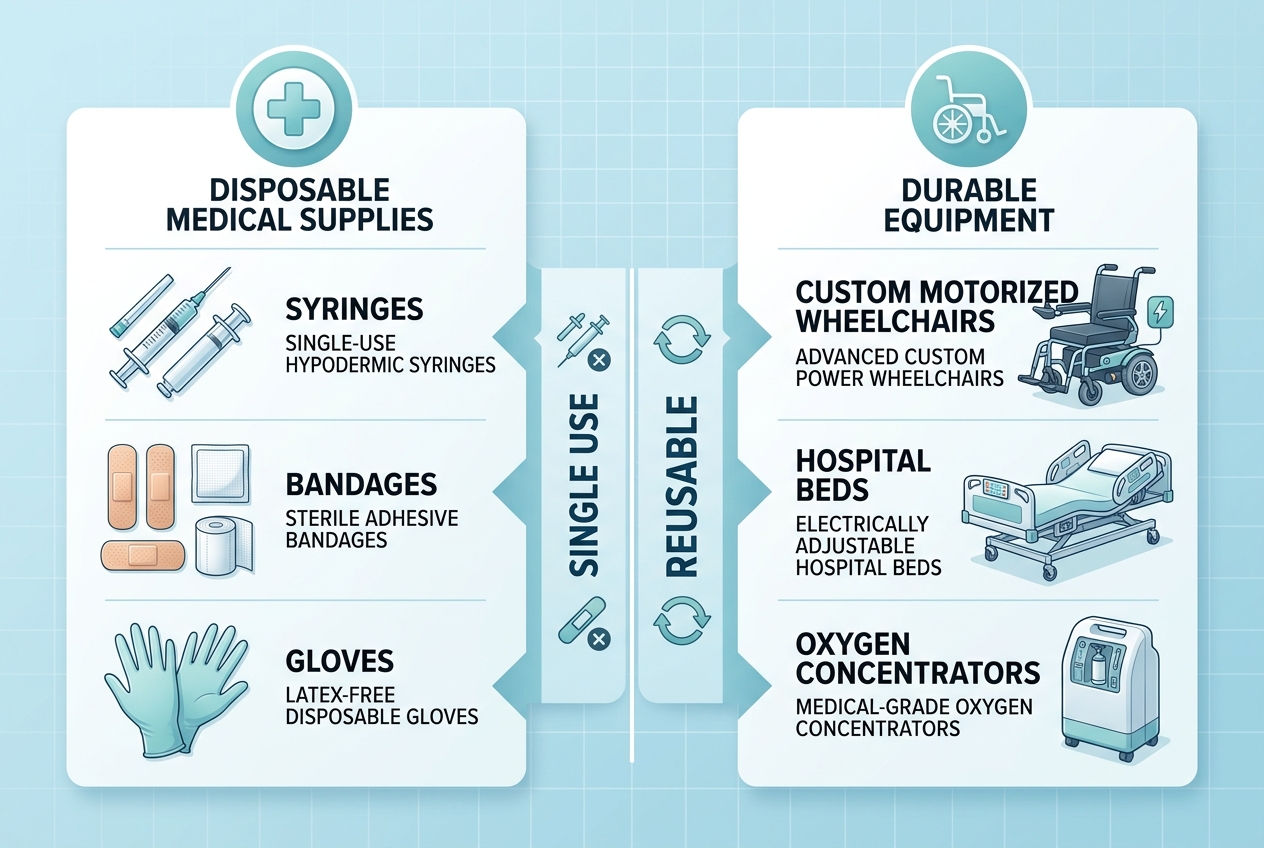
If you are wondering what is dme, it stands for durable medical equipment — reusable devices and supplies ordered by a doctor for everyday use in your home. Common examples include wheelchairs, walkers, hospital beds, oxygen concentrators, and patient lifts. DME is designed to withstand repeated use and to serve a legitimate medical purpose, which is why it is distinct from disposable items like syringes or bandages. The Centers for Medicare & Medicaid Services (CMS) defines DME as equipment that can endure long-term use, is not generally useful to someone who is not sick or injured, and is appropriate for the home setting.
Medicare dme coverage under Part B requires that the equipment be prescribed by your treating physician, be deemed medically necessary, and be used primarily in your residence. This means a doctor must document how the item addresses a specific health condition, and the equipment must be obtained from a Medicare-approved supplier. Without a valid prescription and proof of medical necessity, Medicare will not pay for the device. The home-use requirement is equally important — items used only outside the home, or those that are not medically essential, do not qualify for Part B reimbursement.
To clarify the difference, the table below compares disposable medical supplies with durable medical equipment.
| Aspect | Disposable Medical Supplies | Durable Medical Equipment (DME) |
|---|---|---|
| Definition | Single-use or limited-use items | Reusable equipment intended for long-term home use |
| Examples | Syringes, bandages, gloves | Wheelchairs, walkers, hospital beds, oxygen equipment |
| Medicare Coverage | Covered under Part B only if used with DME (e.g., supplies for insulin pump) | Covered under Part B if prescribed by doctor and medically necessary |
| Prescription Required | Usually not required (except for certain items) | Always requires a written prescription from a treating physician |
These distinctions have real-world consequences for families in Spring Valley, NY. While a box of gauze typically costs little, a custom-fitted power chair can represent a significant investment — and one that Medicare may help cover if all the conditions are met.
Durable medical equipment criteria and Medicare distinctions
For those needing a personalized mobility solution, working with a custom wheelchair provider ensures the equipment fits individual needs and preferences. At MedEquipped, we specialize in Custom Motorized Wheelchairs built to exact specifications, and we manage the paperwork, funding verification, and hands-on fitting so you can focus on your health. We’re here to help you navigate the process — every step of the way. Verify Medicare/insurance coverage; supplier does not guarantee coverage. Consult your treating healthcare professional to determine medical necessity.
Understanding DME is the first step; next, we explore how Medicare specifically covers custom motorized wheelchairs.
Medicare DME Coverage: Qualification, Documentation, and Mobility Device Classification
Understanding what is dme is the first step toward accessing the mobility equipment you need. Durable medical equipment encompasses a wide range of devices prescribed by a physician for use in the home, and Medicare Part B provides coverage for many of these essential items when specific conditions are met. For individuals with mobility challenges, navigating the requirements for medicare dme coverage ensures you receive the right device without unnecessary delays.
The process involves meeting strict eligibility criteria, gathering comprehensive documentation, and selecting a device that fits your medical condition and lifestyle. We’re here to help simplify this journey by guiding you through each phase and managing the paperwork on your behalf.
Eligibility Requirements for Medicare DME Coverage
Qualifying for Medicare Part B coverage of durable medical equipment hinges on four core requirements. First, the equipment must be deemed medically necessary by your treating physician to serve a therapeutic purpose or assist with a condition. Second, the device must be intended for use in your home, meaning it is appropriate for your living environment and daily activities. Third, you need a prescription from a doctor enrolled in Medicare, confirming that the equipment is required to address your specific health needs.
The fourth criterion involves the supplier. The Centers for Medicare & Medicaid Services (CMS) mandates that the equipment provider be enrolled in the Medicare program and accept assignment. Additionally, a face-to-face encounter with your physician is required before a Certificate of Medical Necessity (CMN) can be completed. This in-person examination ensures that your prescription is based on a current assessment of your mobility limitations. Without this step, coverage for durable medical equipment will typically be denied.
Required Documentation: Prescription, Certificate of Medical Necessity, and More
Once eligibility is established, gathering the correct paperwork is critical. The foundation of your application is a written prescription, also called a detailed order, from your Medicare-enrolled doctor. This document must specify the type of equipment needed and the medical justification for it. The Certificate of Medical Necessity (CMN) is a separate, more detailed form that captures diagnostic codes and answers specific questions about your condition.
Supporting medical records from your physician’s office are equally important, as they validate the information on the CMN and prescription. For power wheelchairs, a mobility evaluation is often required to document your functional capabilities and seating needs. At MedEquipped, we assist with this entire documentation process, managing benefits verification and Medicare billing so that you can focus on your health rather than the paperwork.
Types of Mobility Devices Classified as Durable Medical Equipment
Medicare classifies several mobility aids as DME, each with its own coverage conditions. Manual wheelchairs are covered when you have a mobility limitation that prevents you from performing daily activities, but you possess sufficient upper body strength to operate the chair. Walkers, canes, and crutches are straightforward DME items that require a prescription and a confirming CMN. Patient lifts, used to transfer individuals safely, also fall under the durable medical equipment umbrella.
Power wheelchairs, including custom configurations, are considered complex rehabilitation technology when built to a patient’s exact specifications. For a Quickie wheelchair, Medicare typically requires a detailed mobility evaluation and prior authorization because of the specialized nature of the equipment. These custom motorized wheelchairs demand precise clinical justification, but they offer greater independence for users with severe mobility impairments.
The following table summarizes coverage and documentation requirements for common mobility DME devices.
| Device Type | Medicare Classification | Covered Under Part B | Common Documentation Required |
|---|---|---|---|
| Manual Wheelchair | DME | Yes (if medically necessary) | Prescription, CMN, face-to-face exam |
| Motorized/Power Wheelchair | DME (complex rehab category for custom) | Yes (if meets criteria, often requires prior authorization) | Prescription, CMN, detailed evaluation, mobility assessment |
| Walker | DME | Yes (standard walkers and rollators when prescribed) | Prescription, CMN |
| Hospital Bed | DME | Yes (if medical necessity documented) | Prescription, CMN, physician order |
Understanding these classifications helps you anticipate what Medicare will require before you place an order. At MedEquipped, we coordinate with your physician to ensure every document aligns with CMS guidelines, streamlining the approval process for premium products.
Please note that results may vary, and we recommend that you verify Medicare or insurance coverage before proceeding. MedEquipped does not guarantee coverage, and you should always consult your treating healthcare professional to confirm medical necessity. Once you understand the coverage requirements, you can begin the application process with our assistance.
How to Secure Medicare Coverage for a Custom Motorized Wheelchair
Once we determine you meet Medicare’s medical necessity criteria for a custom motorized wheelchair, the real work begins – but don’t worry, we guide you through every step.
Step-by-Step: From Evaluation to Delivery of Your Custom Wheelchair
Understanding what is DME (durable medical equipment) is the foundation of this journey. Our process begins when you contact us at our Spring Valley, NY location or call (845) 237-2381. First, we verify your Medicare benefits to confirm eligibility for a custom motorized wheelchair. Then we schedule an in-person or in-home evaluation with one of our RESNA-certified specialists. During this clinical assessment, the therapist documents your mobility limitations, home environment, and daily needs to establish medical necessity.
Once the evaluation is complete, you work with our team to select the right wheelchair configuration – seating, controls, positioning – tailored to your specific requirements. Next, we compile the necessary documentation: the Certificate of Medical Necessity (CMN), physician orders, evaluation reports, and any prior authorization requests. After submitting the package to Medicare, we monitor the review process, which typically takes 2–4 weeks. Upon approval, we order your custom chair, such as a Quickie model, and coordinate manufacturing, which takes about 30 to 60 days. Finally, we schedule an in-person fitting at our clinic to ensure perfect comfort and function.
Working with a Custom Wheelchair Provider for Medicare Paperwork
When you choose MedEquipped, you gain a dedicated partner who navigates Medicare’s durable medical equipment requirements. As a Medicare-enrolled supplier, we verify your benefits against current Medicare program information to ensure alignment with coverage criteria. Our team prepares the mandatory CMN and gathers all supporting documents from your physician, including the face-to-face examination report and detailed mobility assessment. We understand that medicare dme coverage for custom power chairs demands precise documentation, and our experienced specialists have filed these requests countless times, reducing the risk of denials or delays.
If prior authorization is required under CMS rules, we submit the necessary information upfront. Throughout the approval period, we track your case and communicate directly with Medicare on your behalf. Should additional information be requested, we coordinate quickly with your healthcare provider. Finally, we remind all patients: results may vary; verify Medicare/insurance coverage and consult your treating healthcare professional for medical necessity. MedEquipped does not guarantee coverage, but we stand ready to assist with appeals if needed.
What to Expect During the Fitting and Setup Process
After Medicare approves your custom motorized wheelchair, we place the order with the manufacturer. Your chair will be built to your precise specifications – for example, the Quickie series allows customized seating, controls, and positioning for optimal support. Manufacturing typically takes 30 to 60 days, a timeline we achieve by leveraging our efficient production network, far faster than the industry average of several months. Once the chair arrives at our Spring Valley, NY location, we contact you to schedule an in-person fitting session.
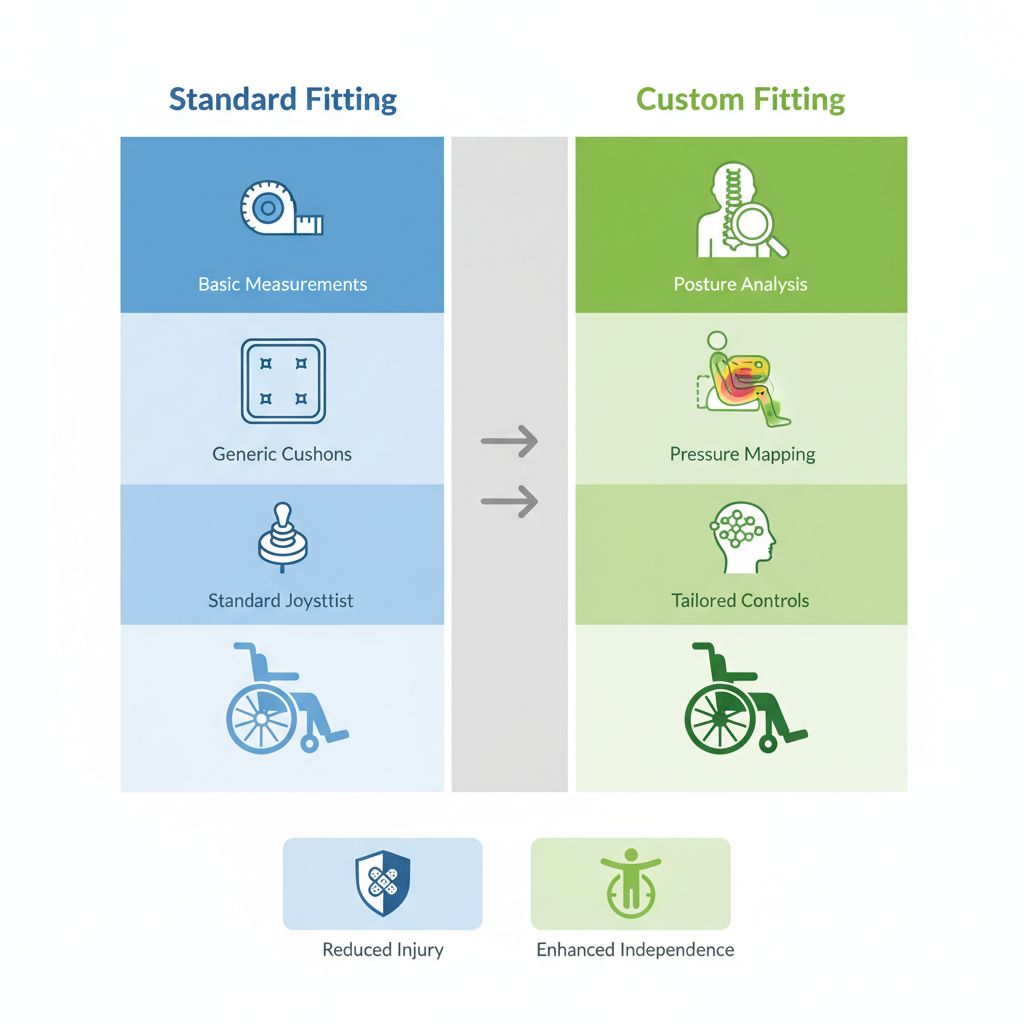
During this visit, our specialist ensures the seat dimensions, leg rests, armrests, and control interfaces are perfectly adjusted to your body and mobility patterns. We demonstrate proper operation and answer any questions so you feel confident using your new equipment. To understand the advantages of a custom motorized wheelchair over a standard model, review the comparison below.
| Feature | Standard Power Wheelchair | Custom Motorized Wheelchair (e.g., MedEquipped) |
|---|---|---|
| Fitting | Generic sizing | Personalized to patient measurements and needs |
| Approval Process | Standard Medicare DME pathway | Requires additional documentation (CMN, evaluation, sometimes prior auth) |
| Turnaround Time | In stock, often same day | 30–60 days (custom order) |
| Medicare Coverage | Covered if criteria met | Covered when medically necessary and proper documentation provided |
| Maneuverability | Limited adjustments | Optimized for patient’s mobility challenges |
As the table shows, custom chairs offer personalized fitting and optimized maneuverability, while standard chairs lack these tailored adjustments. This difference can significantly impact daily comfort and independence. After your custom wheelchair arrives and is fitted, the next section explains how it empowers your daily independence.
Navigating Medicare Billing and Benefits for Custom DME
Once you’ve chosen the right custom motorized wheelchair, understanding how Medicare covers it is the next essential step. Medicare Part B covers custom motorized wheelchairs as durable medical equipment (DME) when a physician deems them medically necessary. But what is DME? According to the Centers for Medicare & Medicaid Services (CMS), DME is equipment that is durable, used for a medical purpose, not useful to a person without disability, and appropriate for use in the home.
To access Medicare DME coverage, a Certificate of Medical Necessity (CMN) and supporting documentation – such as functional limitations and mobility goals – must be submitted. At MedEquipped, we handle this paperwork: we verify your benefits upfront, compile the necessary medical records with your physician, and submit claims on your behalf. Our team ensures all forms are complete and accurate, helping you get your premium custom motorized wheelchair with our quick turnaround of 30 to 60 days. We’re here to help simplify billing so you can focus on greater independence.
Despite careful preparation, denials can occur. Here are common reasons and how MedEquipped helps overcome them.
| Common Denial Reason | What It Means | How to Address It | MedEquipped’s Role |
|---|---|---|---|
| Lack of Medical Necessity | Medicare determined the equipment is not required for the patient’s condition | Obtain detailed documentation from the treating physician, including functional limitations and how the wheelchair will improve mobility. | MedEquipped works with physicians to compile complete medical records and complete a robust CMN. |
| Incomplete Documentation | Missing or incomplete forms, such as no CMN or insufficient medical records | Review the denial letter, gather missing documents, and resubmit. Ensure all signatures are current. | MedEquipped double-checks all paperwork before submission to reduce this risk. |
| Equipment Not Considered DME | Medicare classified the item as not durable or not primarily for medical use | Confirm the product is on the Medicare DME list. Work with a provider that offers Medicare-approved custom wheelchairs. | MedEquipped only provides custom motorized wheelchairs that meet Medicare DME criteria. |
| Supplier Enrollment Issue | The DME supplier is not enrolled in Medicare or has lapsed enrollment | Choose a Medicare-enrolled supplier. MedEquipped is enrolled and accepts Medicare assignment. | MedEquipped maintains active Medicare enrollment and verifies benefits upfront. |
With MedEquipped’s proactive support, many of these issues are avoided or resolved swiftly. Results may vary. Medicare/insurance coverage is not guaranteed; consult your treating healthcare professional for medical necessity determination. In the next section, we’ll walk through what to expect during your personalized fitting and delivery.
Common Questions About Durable Medical Equipment and Medicare Coverage
To help you understand your options, we’ve answered the most common questions below.
What is DME? Durable medical equipment is prescribed by a doctor for a medical reason, is appropriate for use in the home, and is expected to last at least three years. Our team at MedEquipped is experienced in durable medical equipment and can help clarify what qualifies.
Does Medicare cover custom motorized wheelchairs? Medicare Part B may provide coverage under Medicare DME coverage rules for custom motorized wheelchairs when you have a doctor’s prescription and documentation of medical necessity. We assist with benefits verification and handle the paperwork, though coverage is not guaranteed; we recommend you always verify with Medicare and consult your treating healthcare professional.
How can I get help with funding and paperwork? We’re here to help with initial evaluation, personalized fitting, delivery, and setup. We also guide you through funding sources and Medicare billing so you can focus on greater independence with a custom mobility solution.
Getting the Right Custom Mobility Equipment
To understand what DME covers for custom mobility equipment, the journey begins with a thorough patient evaluation. At MedEquipped, we assess your individual needs, mobility goals, and physical requirements to ensure every wheelchair we provide is built specifically for you. Each custom motorized wheelchair is considered durable medical equipment, and our team can verify Medicare DME coverage as part of our commitment to helping you achieve greater independence.
Our personalized fitting process focuses on proper posture, pressure relief, and safety, which are critical for long-term comfort and health. We configure every detail—from seat width and depth to controller type and drive wheel configuration—so your medical equipment matches your exact specifications. This custom-built approach, delivered with a quick turnaround of 30 to 60 days, reflects the premium products and end-to-end support we offer at our clinic in Spring Valley, NY. We’re here to help you navigate paperwork, funding sources, and benefits verification so you can focus on mobility, not administration. With the right equipment selected, our team helps you navigate funding and Medicare verification.
Results may vary. Verify Medicare/insurance coverage; supplier does not guarantee coverage. Consult a treating healthcare professional for medical necessity.