Complex Rehab Technology Delivery Process in Spring Valley: Timeline
Table of Contents Custom Power Wheelchairs for Greater Independence Complex Rehab Technology Delivery at a Glance Recognizing When a Custom Motorized Wheelchair…
Read More
Pressure mapping is a sophisticated clinical tool that provides a visual representation of the pressure between a patient’s body and their support surface. This objective data is crucial for selecting the right equipment during a wheelchair seating and positioning evaluation.
The system uses a flexible mat embedded with thousands of sensors. When a user sits on the mat, the sensors measure the force applied and transmit this data to software that creates a “pressure map” with color-coded high and low-pressure zones.
Therapists analyze peak pressure index, the total contact area, and the center of gravity to identify asymmetrical loading that could lead to postural issues or skin breakdown.
Static mapping captures data while the user is still, whereas dynamic mapping records changes in pressure during activities like reaching, tilting, or driving the power wheelchair.
Now that we understand what pressure mapping involves, let’s explore the key benefits this technology brings to power wheelchair users. For anyone considering a wheelchair pressure mapping evaluation, the advantages extend far beyond a simple measurement—it’s about preventing serious health complications, refining clinical decisions with objective data, and ultimately supporting a more active, comfortable life.
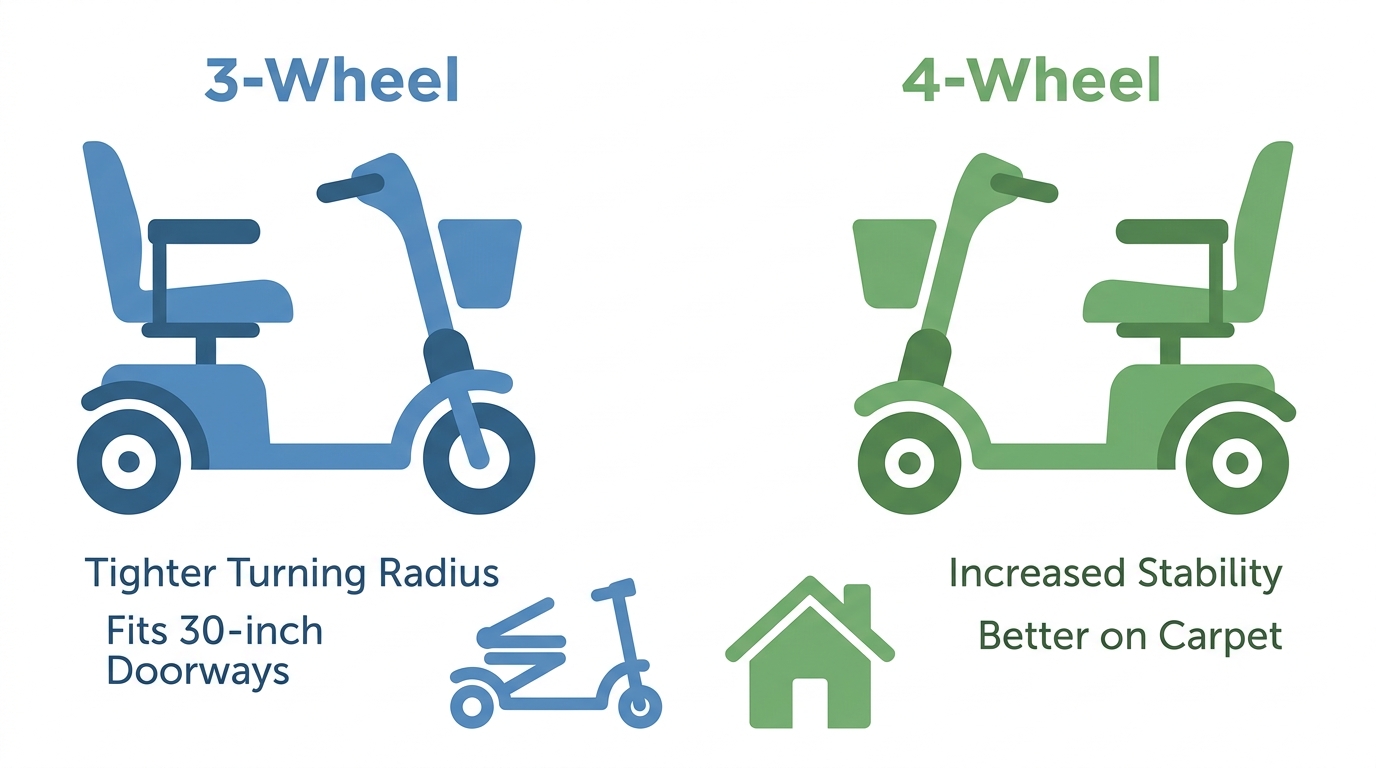
Key benefits of pressure mapping for power wheelchair users in three icons.
Maintaining healthy skin is one of the most critical concerns. A pressure mapping assessment visually identifies sustained high-pressure zones, often over the ischial tuberosities and sacrum, where a pressure ulcer can begin to form. According to industry best practices recognized by RESNA, objective pressure data is essential for preventing these injuries and safeguarding long-term health.
Objective results transform cushion selection from a trial-and-error process into a data-driven decision. During a power wheelchair seating and positioning evaluation, the data guides our certified Assistive Technology Professionals (ATPs) in choosing the ideal material and contour for your support surface.
When pressure is managed effectively, most users experience improved sitting tolerance. This gain in comfort and function is a key outcome of a complex rehab technology seating assessment, as it directly correlates to higher device acceptance. Results may vary; individual outcomes are not guaranteed.
We don’t look at pressure mapping in isolation—it’s one piece of a complete seating evaluation. A wheelchair pressure mapping evaluation adds real-time, objective data to the hands-on clinical assessment.
The mat examination is the hands-on cornerstone. Find findings reveal how your body naturally sits and where structural limitations may create uneven weight-bearing. The mapping data then pinpoints high-pressure zones that the mat exam cannot physically see.
Once data are collected, we combine everything into your documentation package. A thorough complex rehab technology seating assessment requires more than pressure maps—it pairs mapping results with clinical notes to demonstrate medical necessity for Medicare and private payers.
We recommend requesting a session at your initial evaluation to establish a baseline. Remapping is warranted if you experience significant weight change, skin breakdown, or at your annual reassessment. For younger clients, MedEquipped works closely with partners in pediatrics to account for growth.
Preparation begins by reviewing medical history and calculating a Braden Scale score to quantify pressure ulcer risk. Equipment setup includes calibrating the mat and positioning the wheelchair on a level floor.
The session records baseline pressure distribution. We capture how pressure migrates when the user tilts or reclines. This iterative loop—map, tweak, review—captures both objective interface pressure and subjective user feedback.
Assistive technology professionals translate the analysis into recommendations for air-cell, foam, or hybrid cushions. We capture evidence that the ATP’s assistive technology certification held by evaluators legitimizes the recommendations.
This information is for informational purposes only and is not medical advice. Consult a healthcare professional before making clinical decisions.
Ready to experience a truly personalized fit? At MedEquipped, we begin with a comprehensive wheelchair pressure mapping evaluation. Following the assessment and approval steps, your custom motorized wheelchair is typically ready in 30-60 days.
Table of Contents Custom Power Wheelchairs for Greater Independence Complex Rehab Technology Delivery at a Glance Recognizing When a Custom Motorized Wheelchair…
Read More
Table of Contents Understanding Medicare Power Wheelchair Coverage in 2026 2026 Medicare Power Wheelchair Eligibility Rules at a Glance The Face-to-Face Mobility…
Read More
Table of Contents Understanding Medicare Power Wheelchair Coverage in 2026 Prerequisites for Your Medicare Power Wheelchair Application Confirm Your Medical Necessity for…
Read More