MedEquipped

Tag: wheelchair insurance coverage

  • Collision Avoidance Systems: Complete Guide to Smart Wheelchair Tech

    Collision Avoidance Systems: Complete Guide to Smart Wheelchair Tech

    Table of Contents

    Collision Avoidance Systems and Power Wheelchair Safety

    Building on the core safety features that protect power wheelchair users, collision avoidance systems represent a significant leap forward in smart mobility. These sensor-based technologies work continuously to detect obstacles in your path—whether a piece of furniture, a wall, or a person—and can alert you or even automatically apply the brakes to help prevent a collision. By reducing the risk of unexpected bumps and scrapes, collision avoidance technology allows you to move through tight indoor spaces and busy outdoor areas with greater confidence.

    At MedEquipped, we understand that navigating your environment shouldn’t be a source of stress. Integrating collision avoidance into your custom chair reduces the cognitive load required to monitor every angle simultaneously, freeing you to focus on going about your day. This same approach aligns with broader smart wheelchair technology, which aims to make power mobility safer, more intuitive, and better adapted to your life.

    We offer custom power wheelchairs that can be equipped with these advanced features, and because we handle the paperwork and insurance coordination, understanding your coverage options is straightforward. For example, our team can help you determine whether you qualify for a power wheelchair medicare funding pathway for a chair that includes collision avoidance. Our typical 30-60 day processing window means you spend less time waiting and more time enjoying the independence a thoughtfully configured chair provides. Results vary and this information is for educational purposes; please consult a healthcare professional before making clinical decisions about safety equipment.

    How Collision Avoidance Systems Work in Power Wheelchairs

    Building on the expanding world of smart wheelchairs, collision avoidance systems are a transformative addition that uses advanced sensor technology to help you navigate more safely and independently. These systems are designed to detect obstacles in your chair’s path and either warn you or take automatic action to prevent a collision, giving you greater confidence as you move through indoor and outdoor environments. This technology doesn’t replace your driving judgment but acts as an extra set of eyes, offering a helpful safety net for users with limited visibility or slower reaction times.

    At the core of these systems are two primary sensor technologies: ultrasonic and LiDAR. An ultrasonic sensor works much like a bat using echolocation. It emits high-frequency sound waves that bounce off nearby objects, and by measuring how long the echo takes to return, the system calculates the object’s distance. These sensors typically detect obstacles within a range of 0.2 to 4.5 meters with centimeter-level accuracy and function reliably regardless of lighting conditions. Ultrasonic sensors provide a cost-effective solution for basic detection needs, making them a common starting point for collision avoidance in power wheelchairs.

    A LiDAR sensor takes a different approach by using rapid pulses of laser light to create a detailed, millimeter-accurate map of the surroundings. With a detection range that can reach up to 30 meters, LiDAR excels at identifying objects at greater distances and in more complex layouts, giving the system a richer picture of the environment. Like ultrasonic technology, LiDAR remains completely unaffected by dim light or darkness, ensuring dependable performance no matter the time of day. This higher precision typically comes at a higher cost, reflecting the more sophisticated hardware involved.

    Sensor Technologies Comparison
    FeatureUltrasonicLiDAR
    Detection Range 0.2–4.5 meters up to 30 meters
    Accuracy centimeter-level millimeter-level
    Cost lower cost higher cost
    Performance in Dim Light unaffected unaffected

    For many users, the choice between sensor types comes down to balancing budget with the level of environmental detail needed. Ultrasonic sensors deliver reliable close-range protection and simplicity while LiDAR offers expansive, high-resolution awareness that can be especially useful in crowded or dynamic spaces. Regardless of the sensor type the system integrates directly with your wheelchair’s drive controller to interpret incoming data in real time and trigger responses that keep you safer.
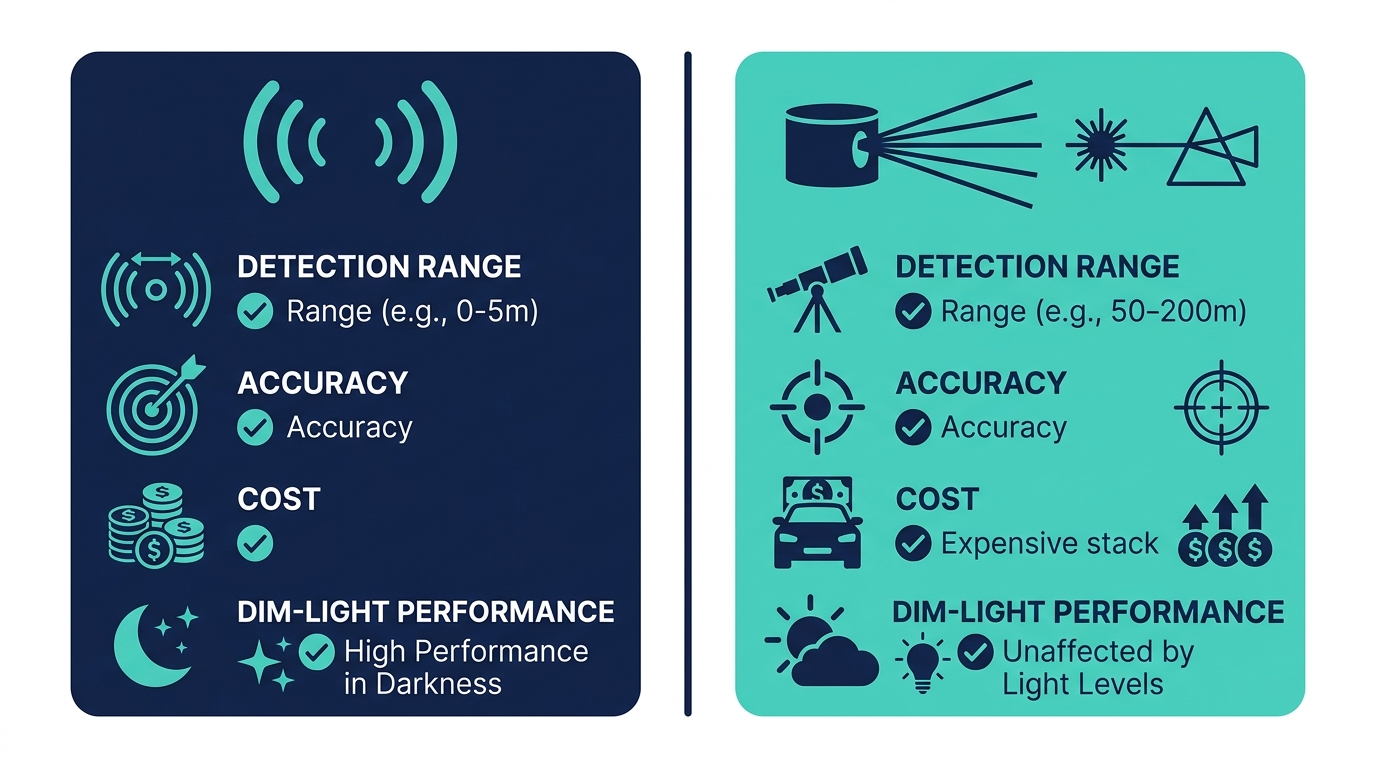
    Side-by-side comparison infographic of ultrasonic and LiDAR sensor technologies used in power wheelchair collision avoidance systems

    Ultrasonic vs LiDAR sensor comparison for power wheelchair safety.

    When a potential collision is detected the system typically provides an auditory alert or haptic feedback such as a vibration in the joystick to get your attention. If you don’t react in time it can go a step further by automatically slowing the chair or applying the brakes to prevent contact. This seamless integration transforms your power chair into a true example of smart wheelchair technology that adapts to its environment. Obstacle detection technology like this makes daily mobility less stressful and more intuitive especially when navigating tight doorways, crowded rooms, or unfamiliar routes.

    According to MedEquipped’s internal product knowledge, collision avoidance systems are an important layer of protection but are not a substitute for safe driving practices. You remain in control of your chair at all times and anti-collision systems are meant to assist rather than replace your awareness. We help you navigate your options when selecting a power wheelchair equipped with these features ensuring the technology matches your daily needs and clinical requirements.

    For expert guidance on finding a reliable safety equipment supplier near me contact our team. We handle the paperwork, insurance navigation, and coordination so you can focus on what matters most: reclaiming your independence and exploring the world with a true partner in mobility freedom.

    Advanced Sensor Fusion and Smart Wheelchair Technology

    Building on the overview of core mobility features, the next frontier in power wheelchair design lies in intelligent environmental awareness. Modern collision avoidance systems transform how you interact with your surroundings, using advanced technology to create a safer, more intuitive driving experience. These systems do not replace attentive driving, but they provide a critical assistive layer, helping you navigate busy corridors, tight doorways, and crowded public spaces with greater confidence. At MedEquipped, we believe this smart wheelchair technology represents a true partnership between user and machine, enhancing independence without taking control away from you.

    How LiDAR and Ultrasonic Sensors Integrate in Multi-Sensor Systems

    The core of any advanced obstacle detection network is sensor fusion. This process combines data from multiple sensor types—primarily LiDAR and ultrasonic—to build a comprehensive, real-time picture of the environment. A single sensor type has inherent weaknesses; for example, ultrasonic sensors can struggle with very soft or angled surfaces, while LiDAR performance can degrade in heavy rain or fog. By fusing their data streams, the wheelchair’s processor compensates for these individual limitations, dramatically improving detection accuracy and reducing false positives.

    LiDAR, or Light Detection and Ranging, uses pulsed laser beams to measure distances with exceptional precision, creating a detailed 3D point cloud of the space ahead. According to MedEquipped’s technical resources, these lasers can map objects at significant ranges, providing crucial early warning for faster-moving chairs. Ultrasonic sensors, in contrast, emit high-frequency sound waves and measure their reflection, excelling at close-range detection of both soft and hard obstacles, like a person walking nearby or a piece of furniture. When these technologies work in tandem, the system cross-references LiDAR’s precise spatial map with the ultrasonic array’s reliable proximity data. This creates a redundant, robust safety net where one sensor type instantly verifies the other’s readings before triggering a response.

    The Role of AI in Obstacle Detection and Avoidance

    The raw data from a sensor array is just information; it takes artificial intelligence to turn that information into action. AI acts as the wheelchair’s brain, processing the fused sensor data in real-time to make split-second decisions. It is not simply reacting to a pre-set distance threshold. Instead, the AI classifies objects—distinguishing a static wall from a moving shopping cart—and predicts their future path, enabling adaptive navigation that feels smooth and natural rather than jarring.

    This intelligent system also learns and adapts to your personal driving style over time. If you prefer wider turns or a slower approach to doorways, the AI can adjust its intervention parameters accordingly. This personalization is a key step toward intuitive alternative driving interfaces, where the chair not only avoids obstacles on its own but also interprets subtle user commands more effectively. The following table highlights several premier models available through MedEquipped that showcase these cutting-edge capabilities, each offering a unique approach to sensor integration.

    Smart Wheelchair Models with Collision Avoidance Capabilities
    ModelSensor TypeDetection RangeAdditional Features
    QUICKIE Q700 M Ultrasonic + optional LiDAR 4.5m ultrasonic Adaptive cruise control
    ROVI X3 360° LiDAR up to 30m Autonomous navigation
    TDX SP2 HD Ultrasonic Proximity 2m range Adjustable sensitivity

    Source: Manufacturer specifications and MedEquipped product database.

    Understanding 360-Degree Collision Protection Systems

    A full-perimeter sensing system provides an invisible safety cocoon around your wheelchair. This is achieved by strategically placing multiple sensors around the base, creating a continuous detection zone that leaves no blind spots. The system constantly monitors this zone, ready to provide an alert, slow your speed, or execute a controlled stop if an obstacle is detected in your path. This is especially critical in dynamic, complex environments where hazards can appear from the side or rear.

    These collision avoidance systems rely on a concept called a ‘danger zone’, which is a digitally mapped area around the chair where objects trigger a response. When you drift too close to a wall or a person approaches from behind, the system can engage automatic braking or, in more advanced models, plot an alternative path around the hazard. For example, if a pedestrian suddenly steps in front of you, the system’s reaction time, measured in milliseconds, can augment your own reflexes, helping to mitigate an impact. Navigating the process of securing one of these advanced chairs can seem complex, but our team simplifies every step. These smart wheelchairs are often covered under wheelchair insurance — learn how we handle the process for you, managing paperwork and funding so you can focus on experiencing the freedom these technologies provide.

    Selecting and Configuring Collision Avoidance Systems for Your Power Wheelchair

    Choosing collision avoidance systems for your power wheelchair begins with a careful look at your daily life. We help you match the right obstacle detection technology to your home, your routines and your personal mobility goals. At MedEquipped, we view these safety sensors as a key part of smart wheelchair technology that gives you greater confidence behind the joystick.

    Evaluating Your Mobility Needs and Environment

    Start by thinking about where you drive most often. Indoor spaces like narrow hallways, tight doorways and crowded kitchens call for precise front and rear sensors. Outdoor environments add uneven terrain, curbs and moving obstacles such as pedestrians or shopping carts, so broader side detection becomes more valuable. We recommend listing your most common routes and noting every potential hazard you encounter.

    Collision avoidance systems come in several forms. Ultrasonic sensors use sound waves to detect objects within a set range and work well for general proximity warnings. Laser based systems offer finer distance measurement, which helps with precise positioning near furniture or doorways. Camera systems give you a visual feed of the surrounding area and can be paired with audible alerts. The right choice depends on whether you mostly navigate cluttered indoor rooms, open outdoor spaces or a mix of both.

    Funding can feel complicated, but we handle that part for you. Insurance coverage varies by payer, and you can check with Maryland state services for potential assistance through Medicaid or other programs.

    Working with a Certified ATP for System Selection

    A certified Assistive Technology Professional evaluates your clinical needs before any equipment decision is made. We coordinate with your ATP to review your posture, functional abilities, vision and reaction time. This step ensures the collision avoidance systems in your wheelchair complement your driving style rather than overwhelming you with unnecessary alerts. Smart wheelchair technology works best when it is tailored to you, not added as a one size fits all solution.

    We work with your ATP throughout the process, bringing our experience with custom motorized wheelchairs and insurance navigation to every case. Our team handles the paperwork, insurance navigation and coordination so you and your ATP can focus on clinical priorities. This partnership leads to a faster timeline from evaluation to delivery, typically within our 30 to 60 day processing window.

    Installation, Calibration, and Post-Delivery Support

    Once your ATP signs off on the recommendation, we move into the installation phase. We begin with a pre evaluation of your wheelchair to plan sensor placement. Our technicians mount the sensors securely and route wiring to avoid pinch points. Calibration follows immediately, adjusting sensitivity and range to match the obstacles identified during your ATP evaluation.

    Real world testing is our final quality check. We ask you to drive through doorways, navigate around furniture and back into your usual parking spot. This hands on validation confirms that the obstacle detection systems work reliably in the spaces you actually use. We fine tune settings on the spot so your chair feels responsive and predictable from day one.

    After delivery, we remain your partner in mobility freedom. Our team provides ongoing adjustments as your driving skills improve or your home environment changes. Proper configuration of your safety sensors keeps everyday driving smooth and sets the stage for the daily use and maintenance habits covered in the next section.

    AI Integration and Autonomous Navigation in Smart Wheelchairs

    Modern smart wheelchairs increasingly rely on artificial intelligence to transform how users navigate their environments, with collision avoidance systems playing a central role in this evolution. At MedEquipped, we see AI integration as the use of machine learning, computer vision, and sensor fusion to enable real-time decision-making and autonomous obstacle handling. Rather than simply reacting to nearby objects, these intelligent systems interpret surroundings, classify potential hazards, and plan the safest, most efficient path forward.

    Standard collision avoidance relies on basic proximity sensors that detect objects only when they are immediately near the chair. This reactive approach leaves the user responsible for manually steering around obstacles. In contrast, AI-enhanced systems use camera and LiDAR data together, allowing the chair to identify what an object is, predict where it might move, and generate an optimal route around it. This shift from reactive to predictive navigation represents a fundamental advance in smart wheelchair technology, offering smoother, safer movement through crowded or dynamic spaces.

    Over time, AI-powered navigation learns from user behavior, adapting to your preferred routes and improving efficiency with repeated use. This capability means the chair becomes more personalized, anticipating turns, doorways, and common stopping points in your home or workplace. For individuals with limited hand function or other physical constraints, alternative driving interfaces such as voice control, head arrays, and sip-and-puff systems can serve as input methods paired with AI navigation. According to MedEquipped, these interfaces integrate with advanced navigation systems to ensure that autonomous obstacle detection and intelligent path planning remain accessible regardless of a user’s physical capabilities.

    These AI capabilities set modern power wheelchairs apart by enhancing both safety and independence, letting you move through daily environments with greater confidence. We believe this technology is a natural extension of our commitment to being a partner in mobility freedom. Information is not medical advice and is for informational purposes only.

    Common Questions About Collision Avoidance for Power Wheelchairs

    You might be wondering how collision avoidance systems actually work in daily life. Here are clear answers to help.

    What is a collision avoidance system for power wheelchairs?
    It’s a smart wheelchair technology that uses sensors to detect nearby obstacles. Depending on the setup, the system can alert you or automatically slow and stop the chair.

    How does collision avoidance technology work?
    Sensors scan the area around your chair. When an object is too close, the system sends a signal to reduce speed or stop, helping prevent bumps and scrapes.

    What are the benefits of collision avoidance for wheelchair users?
    This safety system increases confidence, reduces caregiver stress, and makes navigating tight spaces easier. It’s a helpful aid, not a replacement for your attention.

    Can collision avoidance systems prevent all accidents?
    No. While the technology helps reduce the risk of collisions, user awareness is still essential. Please consult your healthcare professional for personalized advice.

    Does MedEquipped offer this on custom wheelchairs?
    Yes! We include collision avoidance options on our custom motorized wheelchairs. We’re here as your partner in mobility freedom, ready to tailor the right solution for you.

    Partner in Mobility Freedom: MedEquipped’s Commitment to Safety and Independence

    At MedEquipped, we serve as your partner in mobility freedom, delivering custom motorized wheelchairs built around your clinical needs and lifestyle. Our certified ATP evaluators perform thorough assessments so every chair integrates advanced features like collision avoidance systems and smart wheelchair technology to help you move with greater confidence. We handle the paperwork, insurance navigation, and coordination across New York, Georgia, and Michigan, typically completing orders in 30–60 days. If alternative driving interfaces fit your needs, we configure them and provide ongoing support long after delivery because your independence isn’t a one-time transaction, it’s an ongoing journey we walk together.

    Resources

  • Partners in Pediatrics vs Competitors: 2026 Mobility Device Comparison

    Partners in Pediatrics vs Competitors: 2026 Mobility Device Comparison

    Table of Contents

    Choosing the Right Pediatric Mobility Provider

    When it comes to finding the perfect mobility solutions for children facing conditions like cerebral palsy, families often feel overwhelmed by the options. Providers such as Partners in Pediatrics offer valuable services, but selecting one that truly understands your child’s unique needs is crucial. At MedEquipped, we partner in mobility freedom by specializing in custom motorized wheelchairs designed specifically for pediatric power wheelchairs and children’s mobility devices. Our focus on youth wheelchair solutions helps young patients gain independence faster, especially in regions like New York, Georgia, and Michigan where access can vary.

    We at MedEquipped provide an end-to-end service model that sets us apart. Our ATP-certified professionals conduct personalized clinical evaluations to match the best kid-friendly assistive tech to each child’s lifestyle and medical requirements. We handle the paperwork, insurance navigation, and coordination, accepting major insurances including Medicaid and private plans to ease the burden on families. Unlike longer wait times with some national providers, our streamlined process delivers in 30-60 days, ensuring quicker access to essential mobility support. From initial consultations via phone at 845-237-2381 or email at intake@medequipped.com, we guide you through every step, just as outlined on our Become a Patient page.

    This guide will walk you through the fundamentals of pediatric devices and insurance coverage, explore customization options for complex needs, detail our efficient ordering and delivery process, and highlight ongoing support services. Download our medequipped brochures download to learn more about how we make this journey smoother for families seeking reliable pediatric care.

    Basics of Pediatric Power Wheelchairs and Coverage

    Did you know that early access to powered mobility can significantly boost a child’s cognitive and social development? At MedEquipped, we see firsthand how medicare wheelchair coverage and similar programs open doors to these life-changing devices. As your partner in mobility freedom, we specialize in custom motorized wheelchairs designed for young users with complex needs across New York, Georgia, and Michigan.

    Pediatric power wheelchairs form the cornerstone of children’s mobility devices, tailored to support growing bodies and diverse abilities. These youth-powered mobility aids typically feature a sturdy base for stability, customizable seating systems that accommodate growth, and intuitive controls like compact joysticks or alternative interfaces for limited dexterity. Kid-specific wheelchairs adhere to RESNA standards for safety and durability, ensuring they withstand daily adventures while promoting proper posture.

    • RESNA-certified components: Bases and frames built to endure active lifestyles.
    • Adjustable ergonomics: Seating that evolves with the child, preventing discomfort.
    • User-friendly electronics: Controls simplified for young operators.

    We handle the paperwork, insurance navigation, and coordination to deliver these essentials efficiently. For instance, our growth-adjustable seating allows seamless transitions as children develop, fostering long-term use.

    The following table outlines key features of pediatric power wheelchairs and how they benefit kids, along with MedEquipped’s tailored options:

    FeatureBenefit for KidsMedEquipped Option
    Sturdy BaseProvides stability for explorationQUICKIE series with compact designs
    Custom SeatingSupports posture and growthAdjustable systems for evolving needs
    Intuitive ControlsEnhances independenceJoystick or head array for small hands
    Battery SystemEnsures reliable all-day useLightweight, long-lasting power packs

    This comparison highlights how we prioritize features that empower play and learning. By selecting industry-leading models like the ROVI X3, we ensure devices match each child’s unique profile, drawing from certified ATP evaluations to maximize developmental gains.

    Beyond hardware, these devices deliver profound benefits. A study on powered mobility for toddlers showed significant improvements in cognition, receptive vocabulary, and social-emotional skills after just 12 sessions, with increased joyful vocalizations and reduced distress. Children’s mobility devices like ours promote independence, encouraging motor skill enhancement through self-directed movement. We guide families through this journey, helping kids build confidence and engage more fully in family activities and school.

    When it comes to coverage, families often wonder about options compared to providers like Partners in Pediatrics. While national brands may vary, MedEquipped excels with broad acceptance of Medicaid in New York, Georgia, and Michigan, plus major private insurances such as Blue Cross. According to CMS guidelines, coverage requires items to be reasonable and necessary for treating mobility impairments, including a face-to-face evaluation and written order prior to delivery. We streamline this with dedicated navigation, typically achieving approvals in 30-60 days—faster processing than many alternatives.

    Our intake process is simple: Contact us at 845-237-2381 or intake@medequipped.com to start. We coordinate everything, from documentation to billing, so you focus on your child’s progress. Results may vary; consult a healthcare professional for personalized advice.

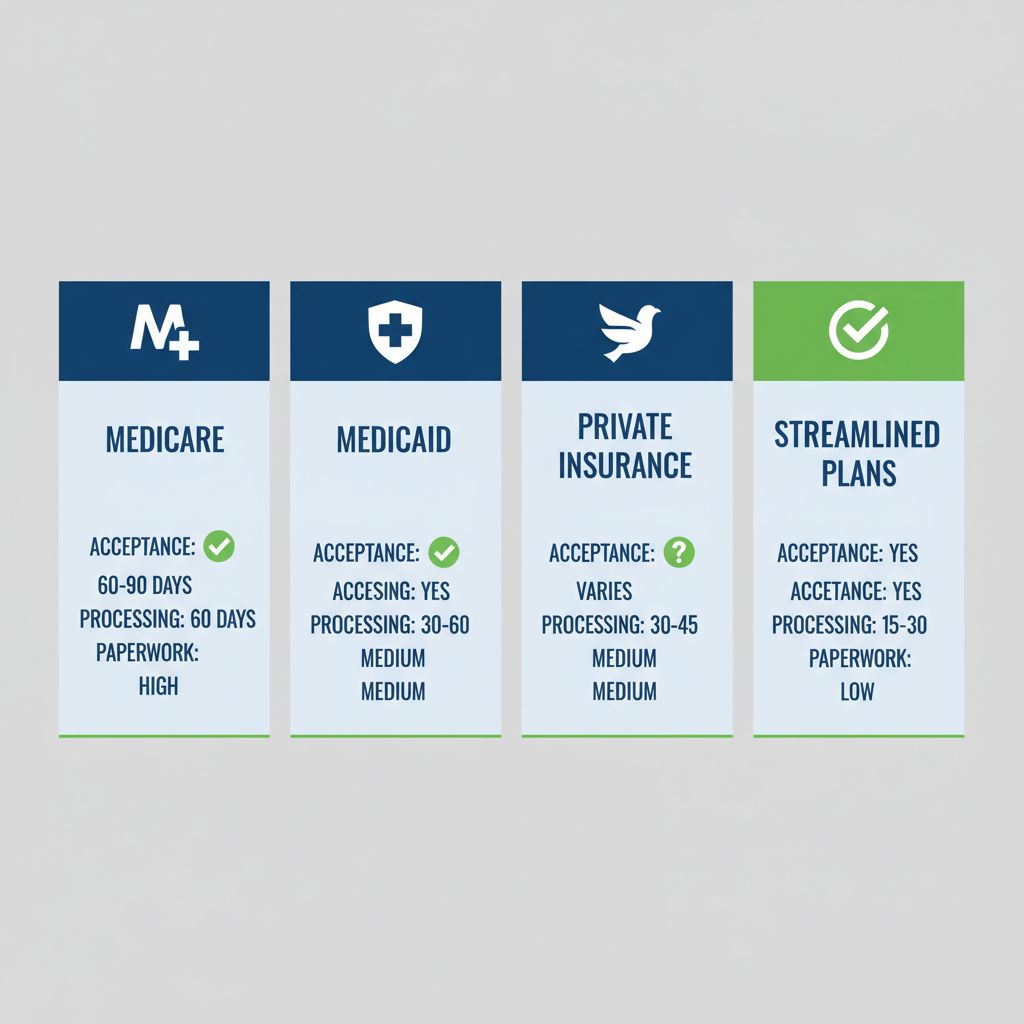
    The table below compares our insurance handling to typical national processes, emphasizing pediatric plans:

    Insurance TypeMedEquipped AcceptanceTypical Processing TimeKey Benefits
    MedicaidFully accepted in NY, GA, MI30-60 daysStreamlined paperwork and approvals
    Private Insurances (e.g., Blue Cross)YesFaster than industry averagePersonalized billing support

    This approach reduces stress and speeds access. Data from CMS and our processes confirm our efficiency, positioning us as a trusted choice for pediatric needs. Looking ahead, our customization services dive deeper into fitting these wheelchairs to individual lifestyles—stay tuned for details.

    Infographic showing insurance coverage options for pediatric power wheelchairs including Medicaid and private plans

    Insurance coverage comparison for pediatric mobility devices

    Insurance coverage comparison for pediatric mobility devices

    In summary, understanding these basics empowers informed decisions. We’re here to support your family’s mobility goals every step of the way.

    Customizing Power Wheelchairs for Children

    At MedEquipped, we understand that every child has unique needs when it comes to mobility. Our team of certified Assistive Technology Professionals (ATPs) specializes in tailoring custom motorized wheelchairs to help young users gain independence. By focusing on pediatric-specific designs, we ensure these devices support growth and daily activities, setting us apart from more generic approaches.

    Assessing Individual Needs

    Our process begins with a thorough clinical evaluation to understand each child’s physical condition, daily routines, and long-term goals. We start with physical exams to measure posture, range of motion, and any specific impairments, ensuring the wheelchair addresses medical requirements right from the start. Next, we conduct lifestyle interviews with families to discuss school, play, and home environments, gathering insights that inform personalized recommendations.

    • Medical History Review: We examine diagnoses like cerebral palsy or muscular dystrophy, referencing standards from RESNA to guarantee compliance and safety.
    • Functional Assessments: Using tools like the Pediatric Evaluation of Disability Inventory (PEDI), we measure current capabilities and potential improvements, drawing from studies on power mobility young children that show up to 21.4% gains in mobility skills.
    • Family Input Sessions: These collaborative discussions help identify preferences, such as lightweight frames for portability.

    This assessment not only customizes the fit but also streamlines insurance approvals by documenting medical necessity clearly. We once assessed a young boy in Georgia who loved outdoor adventures; our detailed report highlighted terrain needs, securing coverage quickly. By tying evaluations to eligibility criteria, families experience less stress during the process.

    The following table compares our customization depth to standard offerings, based on RESNA standards and our clinical practices:

    Customization AspectStandard ProviderMedEquipped ApproachBenefit for Children
    Seating SystemsBasic adjustableCustom ATP-fittedImproved comfort and positioning
    Control InterfacesStandard joysticksPediatric-adapted (e.g., sip-puff)Enhanced independence

    While standard providers like Partners in Pediatrics offer basic adjustments, our ATP-led fittings provide precise adaptations that enhance daily function. For instance, custom seating prevents pressure sores and promotes better posture, leading to measurable improvements in self-care and social engagement as supported by research on early mobility interventions.

    Selecting Components and Brands

    Once needs are assessed, we guide families through selecting the right components and brands, prioritizing those suited for pediatric power wheelchairs. Our expertise ensures choices like robust bases, ergonomic seating, and intuitive controls align with a child’s size and abilities. We favor industry leaders such as the QUICKIE series for their compact, durable designs and the ROVI X3 for advanced stability in active kids.

    • Bases and Frames: Lightweight yet strong models like QUICKIE’s Q6 Edge 3 support varied terrains while remaining maneuverable in tight spaces.
    • Seating and Positioning: Contoured cushions and adjustable backs from trusted suppliers promote upright posture and comfort during long school days.
    • Controls: From joysticks to alternative drives like head arrays, we match interfaces to dexterity levels, integrating sip-puff systems for those with limited hand use.

    To highlight brand suitability, consider this comparison of options we commonly recommend:

    BrandFeaturesPediatric SuitabilityTimeline
    QUICKIE SeriesAdjustable armrests, modular controls, compact baseExcellent for growing youth; customizable growth kits30-60 days
    ROVI X3Heavy-duty frame, all-terrain wheels, integrated techIdeal for active children with higher weight needs30-60 days

    These selections emphasize our faster processing, often completing orders in 30-60 days compared to longer national waits. For a girl in Michigan with spina bifida, we paired a QUICKIE base with pediatric-adapted controls, boosting her classroom participation. Our team handles the paperwork, insurance navigation, and coordination, allowing families to focus on their child. This hands-on approach, backed by RESNA-compliant expertise, ensures tailored youth wheelchairs that foster independence without overwhelming logistics.

    Building on component choices, integrating technology like alternative drives further personalizes the experience. We document every detail for smooth approvals, drawing from our certified team’s knowledge to meet clinical standards efficiently.

    Integration of Growth Features

    As children grow, their children’s mobility devices must adapt to prevent frequent replacements and maintain support. At MedEquipped, we incorporate adjustable elements into every custom build, extending usability over years. Features like expandable frames and modular seating allow height and width adjustments without compromising stability or performance.

    For example, QUICKIE models include growth kits that raise seat heights by up to 4 inches and extend arm supports, accommodating spurts from toddler to teen years. We also add repositionable footplates and backrests that evolve with muscle development, ensuring ongoing comfort. In one case, we fitted an adaptive kid mobility solution for a child in New York, where adjustable components supported her transition through elementary school, reducing family costs and disruptions.

    These integrations align with studies showing sustained mobility benefits, such as 17.5% improvements in social skills from consistent device use. By partnering in mobility freedom, we design for longevity, with our ongoing support handling adjustments post-delivery. This forward-thinking customization not only meets current needs but anticipates future ones, empowering families with reliable, evolving solutions.

    Our Process for Delivering Pediatric Mobility Solutions

    At MedEquipped, we partner in mobility freedom by guiding families through every step of obtaining custom motorized wheelchairs for children with unique needs. Our child-focused delivery systems ensure a seamless experience, from initial contact to long-term support, setting us apart from slower options like Partners in Pediatrics. We handle the paperwork, insurance navigation, and coordination, so you can focus on your child. With certified Assistive Technology Professionals leading the way, we serve families in New York, Georgia, and Michigan, delivering pediatric power wheelchairs that enhance independence and quality of life.

    From Evaluation to Ordering

    We start the custom power wheelchair patient process with a thorough intake when you reach out via phone at 845-237-2381 or email at intake@medequipped.com. Creating an account on our site simplifies this, allowing us to gather essential details about your child’s mobility requirements.

    1. Clinical Assessment: Our certified ATPs conduct an in-home or clinic evaluation, assessing posture, skin integrity, and functional goals. Drawing from CMS guidelines like Medicare Coverage Article 52505, we document medical necessity for features such as custom seating to support growth and prevent pressure sores.
    2. Funding Coordination: We review insurance options, from Medicare to private plans, ensuring compatibility across broad providers. This step involves gathering prescriptions and physician notes to build a strong case for approval.
    3. Custom Ordering: Based on the evaluation, we select and configure pediatric power wheelchairs from trusted brands like QUICKIE or ROVI X3, tailoring controls and bases to fit your child’s lifestyle. Our youth device fulfillment typically wraps up ordering within 30-60 days, faster than industry norms.

    This structured approach results in precisely fitted solutions that promote active participation. Families often share how our proactive steps reduced stress, as one testimonial noted: a custom chair arrived just in time for rehab discharge, transforming daily routines.

    The following table compares our efficient timelines to typical national processes for pediatric devices, highlighting the advantages for busy families:

    Process StepTypical National TimelineMedEquipped TimelineFamily Benefit
    Evaluation to Approval60-90 days30-45 daysQuicker access to mobility
    Delivery and Fitting2-4 weeks post-approval1-2 weeksMinimal disruption

    Drawn from MedEquipped workflows and CMS guidelines, this comparison shows how we shorten wait times, allowing children to engage sooner in school and play without extended delays.

    Delivery and Initial Fitting

    Once approved, we coordinate direct delivery of children’s mobility devices to your home or preferred location in New York, Georgia, or Michigan. Our technicians arrive prepared with tools for on-site adjustments, ensuring everything aligns perfectly from day one.

    We prioritize safety and comfort during fitting. Starting with a hands-on setup, we demonstrate controls, charging, and maintenance basics tailored to your child’s age and abilities. Education sessions cover troubleshooting tips and when to contact us for tweaks, empowering families to use the equipment confidently.

    Post-fitting, we schedule a follow-up within the first week to address any settling-in issues. This personalized touch, as echoed in patient stories, builds lasting trust—one family praised our technician’s patience in explaining features, making their child feel secure and excited about newfound freedom. Our regional focus means quicker response times compared to distant suppliers, minimizing downtime.

    Insurance can feel overwhelming, but we streamline it every step of the way. Referencing CMS Article 52505, we prepare detailed documentation for wheelchair seating and custom features, adding necessary modifiers like KX for medical necessity.

    Our team handles all paperwork, from prior authorizations to appeals, coordinating with insurers to expedite reviews. We typically achieve approvals in 30-45 days, well under standard waits, by leveraging comprehensive evaluations and prescriber input.

    Tips for smoother sailing include providing updated medical records early and designating us as your authorized supplier. This approach not only speeds youth device fulfillment but also maximizes coverage for add-ons like positioning cushions. As one anonymized testimonial shared, our guidance turned a complex Medicaid claim into a swift approval, letting their child receive support without months of uncertainty. Results may vary, so consult your healthcare professional for personalized advice.

    Information is for informational purposes only and not medical advice.

    Advanced Features and Ongoing Support

    At MedEquipped, we’re here for the long haul when it comes to custom motorized wheelchairs. Our pediatric power wheelchairs go beyond basics with advanced features designed for growing kids and complex needs. We partner in mobility freedom by integrating heavy-duty bases like the TDX SP2 HD for stability on uneven terrain and alternative controls such as joystick alternatives or sip-and-puff systems. These options, drawn from our brochures, ensure young users get tailored tech that evolves with them.

    • Heavy-duty bases: Built for active lifestyles, the TDX SP2 HD handles rough surfaces while supporting up to 300 pounds.
    • Tech integrations: Advanced youth mobility tech includes programmable controls and Bluetooth connectivity for app-based adjustments.
    • Custom seating: Adjustable components accommodate growth spurts without full replacements.

    These features shine in real stories from our patients, like one family who appreciated how our delivery team explained operations thoroughly, boosting confidence right away.

    As children grow, ongoing maintenance becomes crucial for children’s mobility devices. Standard providers often fall short, but we offer comprehensive upgrades and repairs covered under insurance for seamless continuity. Our certified technicians handle everything from battery replacements to control recalibrations, tying into your existing coverage for adjustments.

    Pediatric families in New York, Georgia, and Michigan face unique challenges with sustained kid wheelchair care. While Providers like Partners in Pediatrics provide initial setups, they may lack robust follow-ups. The table below compares support options:

    Support TypeStandard ProviderMedEquipped OfferingPediatric Impact
    Repairs and AdjustmentsAs-needed, outsourcedDedicated technicians, 24/7 triageQuick resolutions for growing kids
    Patient EducationBasic manualsPersonalized sessions and resourcesEmpowered family management

    This comparison, informed by MedEquipped testimonies and RESNA guidelines, highlights our edge. One patient shared, “Technician Jim was always available to assist,” underscoring our reliable response times that minimize downtime. Unlike basic maintenance, our 24/7 triage ensures issues are addressed swiftly, often within hours, fostering independence.

    We handle the paperwork, insurance navigation, and coordination for these services, typically within our 30-60 days faster processing timeline. Long-term, this leads to better outcomes, as supported by the powered mobility toddlers study, showing enhanced development through consistent mobility. Families report greater quality of life, with kids engaging more actively in school and play. Results may vary; consult a healthcare professional for personalized advice.

    Frequently Asked Questions About Pediatric Wheelchairs

    We’re addressing common youth wheelchair queries to help families navigate kid mobility FAQs. As your partner in mobility freedom, MedEquipped offers custom motorized wheelchairs with expert support.

    What insurance plans do you accept for pediatric power wheelchairs?

    We accept most major insurances, including those covered by providers like Partners in Pediatrics. We handle the paperwork, insurance navigation, and coordination to simplify approvals. We’re happy to help verify your coverage!

    How long does customization of pediatric power wheelchairs take?

    Our process typically takes 30-60 days for faster processing, from evaluation to delivery. We streamline custom orders to get children’s mobility devices to your child quickly and comfortably.

    How do we maintain these devices?

    Regular cleaning and annual check-ups keep pediatric power wheelchairs running smoothly. Our team provides ongoing support, including repairs and patient education, for lasting performance. We’re here for you!

    What is the eligibility for children’s mobility devices?

    Per RESNA standards, kids with mobility impairments qualify if devices meet WC-2 power wheelchair guidelines for safety and function. Our certified ATPs conduct assessments to ensure eligibility fits clinical needs.

    Where are your services available?

    We serve families in New York, Georgia, and Michigan with clinical evaluations and delivery. Contact us for availability in your area—we’re committed to regional support.

    How can we contact MedEquipped?

    Reach us at 845-237-2381 or intake@medequipped.com during business hours, Monday-Friday. Our team guides you through intake for personalized assistance.

    Empowering Children’s Mobility with MedEquipped

    In summary, choosing MedEquipped over options like Partners in Pediatrics means accessing top-tier pediatric power wheelchairs and children’s mobility devices that truly enhance independence. Our clinical expertise ensures customized fits, while we handle the paperwork, insurance navigation, and coordination for seamless approvals. With faster processing in 30-60 days, families focus on what matters most—empowering youth through mobility.

    As detailed in our About Us page, we’re committed to compassionate care and certifications that support every step. Contact us at (845) 237-2381 or intake@medequipped.com for a consultation. Let’s get your child moving with our family-centered wheelchair solutions and ongoing support for lasting outcomes!

    Resources