

Table of Contents
Understanding Your Assistive Technology Professional Evaluation
To ensure your custom motorized wheelchairs fit perfectly, we begin with an in-depth assistive technology professional evaluation. This clinical assessment, conducted by one of our certified experts, determines the ideal wheelchair configuration and seating system for your unique mobility needs. We analyze your daily activities, functional abilities, and seating requirements to build a complete picture of what will work best for you.
This assistive technology professional evaluation is critical for meeting power wheelchair medical necessity requirements that insurance and funding sources demand. Our team collaborates directly with you, your clinician, and the funding source to ensure the recommended equipment aligns with your lifestyle and goals. Depending on your needs, the complex rehab technology functional assessment may involve trial equipment to validate specific choices, such as front-wheel drive power wheelchairs for superior outdoor navigation and curb climbing.
The evaluation typically lasts 60 to 90 minutes. Afterward, we handle the paperwork, insurance navigation, and coordination, with most custom orders processed within 30 to 60 days. Information is not medical advice and is for informational purposes only.
What to Prepare for Your ATP Evaluation
Now that you understand the purpose of an ATP evaluation, gathering the right documents ensures a smooth start. Your assistive technology professional evaluation begins with medical records that prove your power wheelchair medical necessity requirements—so bring these key items:
- A signed physician’s prescription for a power wheelchair
- Your insurance card and policy information
- Medical records detailing your mobility limitations and prior treatments
- A list of your daily activities and functional needs
- Any referral or authorization forms you’ve received
- A list of questions about the evaluation process and expected timelines
This preparation supports the complex rehab technology functional assessment your ATP will perform, which examines seating, positioning, and the environments where you’ll use your chair. The evaluator uses this information to customize the chair to your life.
We handle the paperwork, insurance navigation, and coordination, so bringing the above documents lets us move forward efficiently. As your partner in mobility freedom, we ensure your wheelchair assessment produces a chair that fits your needs.
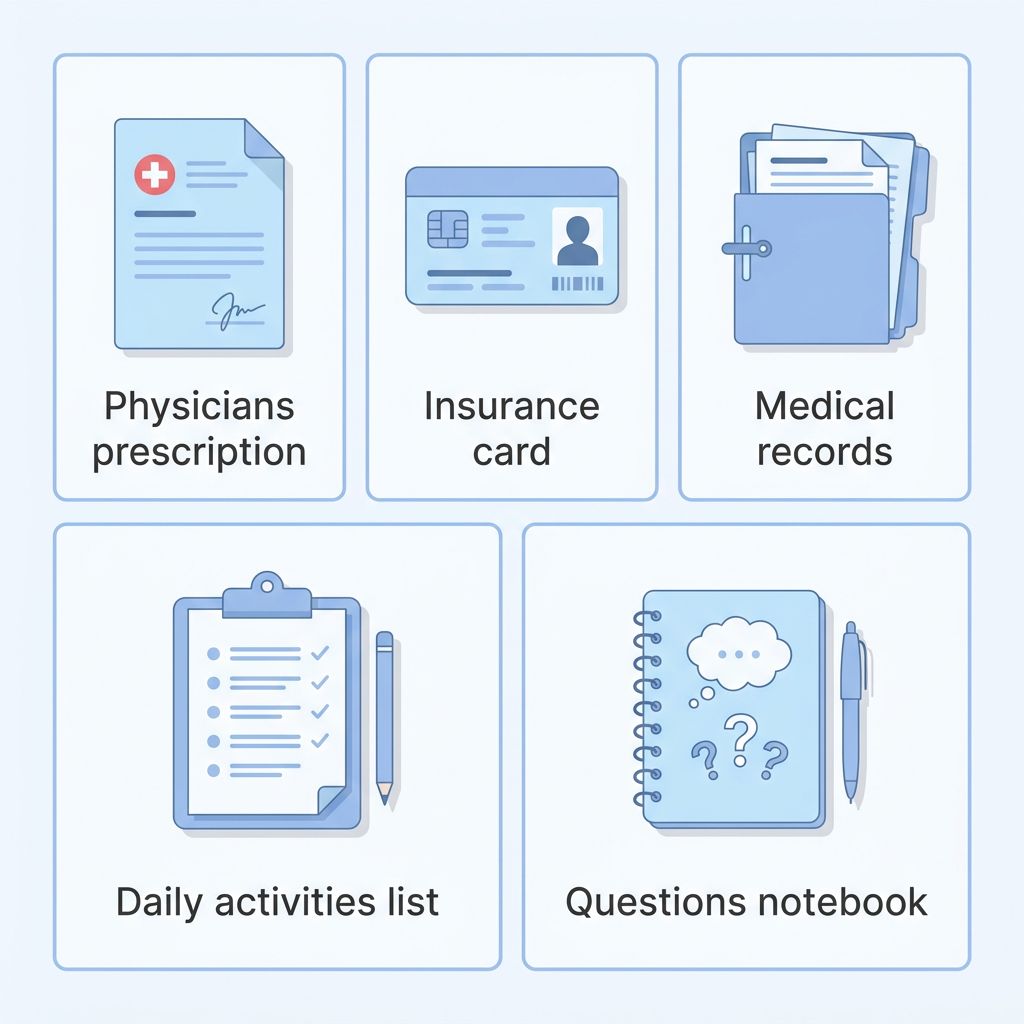
Checklist of essential documents and items for your ATP evaluation at MedEquipped.
With everything ready, your upcoming evaluation will focus on your comfort and safety. The next section walks through what happens during the appointment, turning your preparation into confidence.
Please note: This information is for educational purposes. Consult a healthcare professional before making clinical decisions.
Schedule Your Initial ATP Consultation
Now that you’ve explored custom motorized wheelchairs, the first step toward your personalized mobility solution is an assistive technology professional evaluation. At MedEquipped, this consultation connects you with a certified ATP who conducts a thorough complex rehab technology functional assessment—matching your physical needs, lifestyle, and power wheelchair medical necessity requirements to the right equipment.
We see ourselves as your partner in mobility freedom, so we handle the paperwork, insurance navigation, and coordination from this first visit through final delivery, typically completing custom orders in 30–60 days (faster processing available). This patient-centered assistive technology professional evaluation results in a custom chair from trusted brands like Permobil or Quantum Rehab, without you having to manage the details alone.
After the ATP consultation, the clinical evaluation process begins. In the next section, we’ll walk you through what to expect. Please consult a healthcare professional before making clinical decisions—this information is for educational purposes only.
Gather Required Medical Documentation
Before your assistive technology professional evaluation can begin, gathering the right medical documentation is the essential first step. We help you collect everything needed to demonstrate power wheelchair medical necessity requirements. MedEquipped simplifies the process by guiding you through each requirement.
- A valid physician’s prescription for a custom power wheelchair.
- Medical records detailing your diagnosis, functional limitations, and a statement of medical necessity.
- A complex rehab technology functional assessment to document mobility needs and justify the equipment.
- Supporting documents such as PT/OT evaluations, fall history, and home environment details.
The complex rehab technology functional assessment, required by most insurers, confirms the power wheelchair is the appropriate solution. Our expertise ensures your documentation meets clinical and insurance criteria. As your partner in mobility freedom, we handle the paperwork, insurance navigation, and coordination.
Once everything is gathered, the formal evaluation can begin — we’ll cover that next. Information is not medical advice and is for informational purposes only.
Undergo Functional Mobility Assessment
After your initial inquiry, the next step is a functional mobility assessment—a clinical evaluation performed by a certified Assistive Technology Professional (ATP) in New York, in Georgia, or in Michigan. This assistive technology professional evaluation establishes your unique mobility requirements.
The complex rehab technology functional assessment evaluates your physical abilities, daily routines, home layout, and equipment needs to determine the right seating, drive controls, and power features. This holistic review ensures every aspect of your daily life is considered.
Medicare and many insurers require this assessment to document power wheelchair medical necessity and justify coverage. MedEquipped coordinates the entire process—scheduling, managing paperwork, and communicating with your insurance—so you can focus on what matters most.
The outcomes directly shape your custom wheelchair configuration, from seat dimensions and back support to power seating options. We’ll work closely with you, always keeping your comfort and mobility our top priority.
Disclaimer: This assessment is for mobility equipment needs only and does not constitute medical advice. Please consult your physician for any medical concerns.
Configure Seating and Positioning
Building on your comprehensive evaluation, the assistive technology professional evaluation directly guides how we configure the seating and positioning of your custom motorized wheelchair. This process transforms clinical findings into a personalized setup that addresses your unique needs.
We use a complex rehab technology functional assessment to determine the right pressure relief, postural support, and functional reach for you. The assistive technology professional evaluation makes sure every adjustment—from cushion choice to backrest angle—aligns with your daily activities and clinical goals. We work closely with you and your clinical team to capture these details, because accurate documentation is key to meeting power wheelchair medical necessity requirements and securing funding approval.
Following standards from the Rehabilitation Engineering and Assistive Technology Society of North America (RESNA), our ATP evaluation emphasizes evidence-based configuration that helps ensure both comfort and long-term mobility. The final specifications we develop during this step will directly shape your custom order in the next phase.
Navigate Insurance and Funding Approvals
Securing a custom motorized wheelchair requires insurance approval, but MedEquipped is your partner in mobility freedom throughout the process. We handle the paperwork, insurance navigation, and coordination in New York, Georgia, and Michigan so you can focus on what matters.
The process starts with establishing medical necessity. An assistive technology professional evaluation captures your clinical needs and sets the stage for funding. Often, a complex rehab technology functional assessment is also required to meet power wheelchair medical necessity requirements. Our team guides you through each step and incorporates specialized seating medical necessity documentation based on RESNA standards.
Insurance prior authorization is typical, and we manage it from start to finish. The typical timeline from submission to approval is 30 to 60 days—faster than many large suppliers.
Once approved, we coordinate the custom build and delivery. Results may vary; individual outcomes are not guaranteed.
Finalize Wheelchair Specifications and Order
With your clinical evaluation complete – including your assistive technology professional evaluation and complex rehab technology functional assessment – we now turn those findings into a custom order that reflects the power wheelchair medical necessity requirements documented for you. We take a straightforward approach to finalizing every detail:
- Confirm your measurements – we review seat width, seat depth, back height, armrest style, and footrest type captured during your evaluation.
- Select accessories and controls – choose your cushion, joystick controller, and any positioning aids that best support your daily routine.
- Place your order – once specifications are locked, we handle the paperwork, insurance navigation, and coordination with your provider.
Your custom motorized wheelchair typically arrives in 30–60 days, often faster than many larger suppliers. For pricing, we prepare a personalized quote once your configuration is set; please contact us for an estimate.
As your partner in mobility freedom, we stay with you through delivery and setup, providing ongoing support for every adjustment you need.
Prepare for Delivery and Follow-Up Care
After your assistive technology professional evaluation is complete and your custom motorized wheelchair has been ordered, it’s time to get ready for delivery. We recommend clearing a dedicated, accessible space with a nearby outlet for overnight charging. Our team will provide a delivery window and update you before our technician arrives, so you’ll always know what to expect.
Because every chair is built around the findings of your complex rehab technology functional assessment, the typical processing timeline ranges from 30–60 days (faster processing available). Results may vary; individual outcomes are not guaranteed. Once your wheelchair is in your home, our support continues — we provide follow-up adjustments, troubleshooting, and ongoing care through our network of certified technicians.
No matter what questions come up, we remain your dedicated partner in mobility freedom. From your first fitting to long-term maintenance, you can count on MedEquipped to keep you moving forward.
Common Challenges in the ATP Evaluation Process
While the Assistive Technology Professional (ATP) evaluation serves as a vital step toward obtaining a custom power wheelchair, the process can present several hurdles that patients and their care teams must navigate. From managing complex paperwork to coordinating with multiple parties, the evaluation phase often requires dedicated attention to avoid delays. We have seen how these obstacles can cause frustration, but they are also entirely manageable with the right support.
One of the most time-consuming aspects is insurance and paperwork navigation. A thorough complex rehab technology functional assessment generates significant documentation that must be correctly submitted. Many clinicians and patients feel overwhelmed by these administrative demands; that’s why we handle the paperwork, insurance navigation, and coordination for you, reducing the burden on your care team.
Another challenge is ensuring the evaluation clearly demonstrates medical necessity. When power wheelchair medical necessity is not properly documented during the assistive technology professional evaluation, funding requests may be denied or delayed. Our ATPs work closely with your referring physician and therapist to capture functional deficits and mobility limitations that justify the equipment, helping to prevent setbacks.
Even after a successful evaluation, the timeline from assessment to delivery can feel long. Industry standards often extend several months, but MedEquipped’s streamlined process typically completes within 30 to 60 days. Of course, results may vary; individual outcomes are not guaranteed, yet our focused approach helps accelerate the journey. Understanding these challenges is the first step—next, we’ll explore how MedEquipped directly addresses them to make your experience as seamless as possible.
Your Path to Mobility Freedom with MedEquipped
Your path to mobility freedom starts with MedEquipped, your partner in mobility freedom. We guide you through every stage of obtaining a custom motorized wheelchair, beginning with an assistive technology professional evaluation performed by a certified ATP. From that first step, we prioritize your comfort and safety, making the process straightforward and stress-free. We become your dedicated partner, not just a supplier, helping you regain independence with confidence.
This clinical evaluation, known as a complex rehab technology functional assessment, determines the power wheelchair medical necessity for your custom chair. Using detailed findings, we configure a seating system tailored to your body and lifestyle. We handle the paperwork, insurance navigation, and coordination — so you don’t have to. We also manage communication with your healthcare providers, ensuring all documentation is complete. Serving residents in New York, Georgia, and Michigan, we source chairs from trusted brands and deliver within 30–60 days, often with faster processing for qualified patients.
Our commitment continues after delivery with ongoing support and wheelchair service repair. Whether you need adjustments or routine maintenance, we keep you moving. Our dedicated team is here for you long-term. Let’s walk through what that evaluation looks like.
Results may vary; individual outcomes are not guaranteed.
Resources
- Compare Front-Wheel vs Mid-Wheel Power Wheelchairs
- Find Power Wheelchair Maintenance and Repair Services
- Get Power Wheelchair Services and Repair in New York
- Find Guide to Powered Mobility Devices and Medicare
- Get Power Wheelchair Safety and Positioning Accessories
- Find Jazzy Elite HD Power Wheelchair Specifications and Services
- Get Custom Motorized Wheelchair Services for Multiple States
- Find RESNA Certification and Assistive Technology Resources
