Category: Custom Mobility Solutions

  • What Is the Most Difficult Thing for Wheelchair Users in 2026

    What Is the Most Difficult Thing for Wheelchair Users in 2026

    Table of Contents

    The Most Difficult Challenges for Wheelchair Users in Spring Valley, New York

    One of the most difficult things for wheelchair users in Spring Valley, New York is navigating steep inclines and inconsistent infrastructure. Wheelchair users must contend with slopes that exceed safe design thresholds and public spaces that do not always comply with the Americans with Disabilities Act (ADA).

    The power wheelchair’s incline rate, as MedEquipped’s safety guide explains, defines the maximum grade it can safely ascend from a standstill. Real life often exceeds those limits. The guide references a transit bus boarding study which noted that nearly half (45%) of deployed wheelchair ramps were at steeper angles than ADA recommends (9.5°), rendering accessible transit less reliable for most users.

    Architectural barriers persist in existing facilities in Spring Valley, such as narrow doorways and steep entry ramps, even though the U.S. Department of Justice’s Title II and III mandates accessibility guidelines. The standards set forth under the ADA’s 2010 Standards include door sizes, parking options, and accessible passageways; however, most older buildings in this area have not been reworked to meet these demands. Users who require custom-motorized wheelchairs may benefit from devices that incorporate higher torque motors, lower centers of gravity and anti-tip measures which enable them to travel over uneven ground more safely.

    This really highlights how essential it is that those using wheelchairs have a better understanding of the barriers presented through both the physical environment as well as the more general environment surrounding them in Spring Valley.

    Key Takeaways

    • Physical accessibility barriers are those architectural barriers that exist inside buildings, at entrances to buildings and other public spaces.
    • Wheelchair users have trouble in narrow doorways, uneven sidewalks and other places that make it hard to get around independently on their own power.
    • When someone is in Spring Valley, NY, with a motorized wheelchair, understanding accessible route requirements and entrance specifications is essential for evaluating local destinations.
    • It’s more difficult to get around on the hilly and lumpy sidewalks in Spring Valley with your standard wheelchair.
    • ADA regulations require wheelchair and manually powered mobility aid access to all areas open to public.

    Understanding Physical and Environmental Accessibility Barriers

    Physical accessibility barriers are those architectural barriers that exist inside buildings, at entrances to buildings and other public spaces. These create significant problems for those who cannot walk. Under the ADA, they are defined and regulated and must meet enforceable standards. According to the U.S. Department of Justice, Title III requires private businesses to remove barriers when the action is "readily achievable." State and local programs must ensure overall program access. In addition, under the ADA, both new constructions and major alterations are required to comply with the 2010 ADA Standards for Accessible Design.

    In new construction, at least 60% of public entrances must be accessible to wheelchair users. Door hardware must operate with one hand and without tight grasping, pinching, or twisting—round doorknobs violate this mandate. The push side of doors must have a smooth surface from the floor up to 10 inches, ensuring that wheelchair footrests do not catch. Which version of the ADA Standards applies, 1991 or 2010, depends on the original construction date and any subsequent alterations, as detailed by the Department of Justice.

    Here’s how this works: Three kinds of barriers are listed here along with their solution as dictated in the standard set up by the ADA.

    Barrier TypeDescriptionImpact on Wheelchair UsersPotential Solution
    Door HardwareRound doorknobs require grasping and twisting, violating ADA.Prevents independent entry for users with limited dexterity.Lever handles, push plates, or automatic openers.
    Entrance AccessibilityNew construction must have 60% accessible entrances; older buildings often lack them.Users face longer routes or rely on assistance.Reconfigure to add accessible doors with proper clearances.
    Door Bottom SurfacePush-side doors require smooth surfaces to 10 inches high.Textured surfaces catch footrests, causing trips or damage.Install smooth kickplates.
    Common Physical Accessibility Barriers and Their Impact

    If a store has a round knob on its door, then someone using a wheelchair would have a difficult time going in without help, if at all. If half of a building’s entrances are inaccessible, you may have to navigate busy parking lots or steep ramps to reach the nearest service.
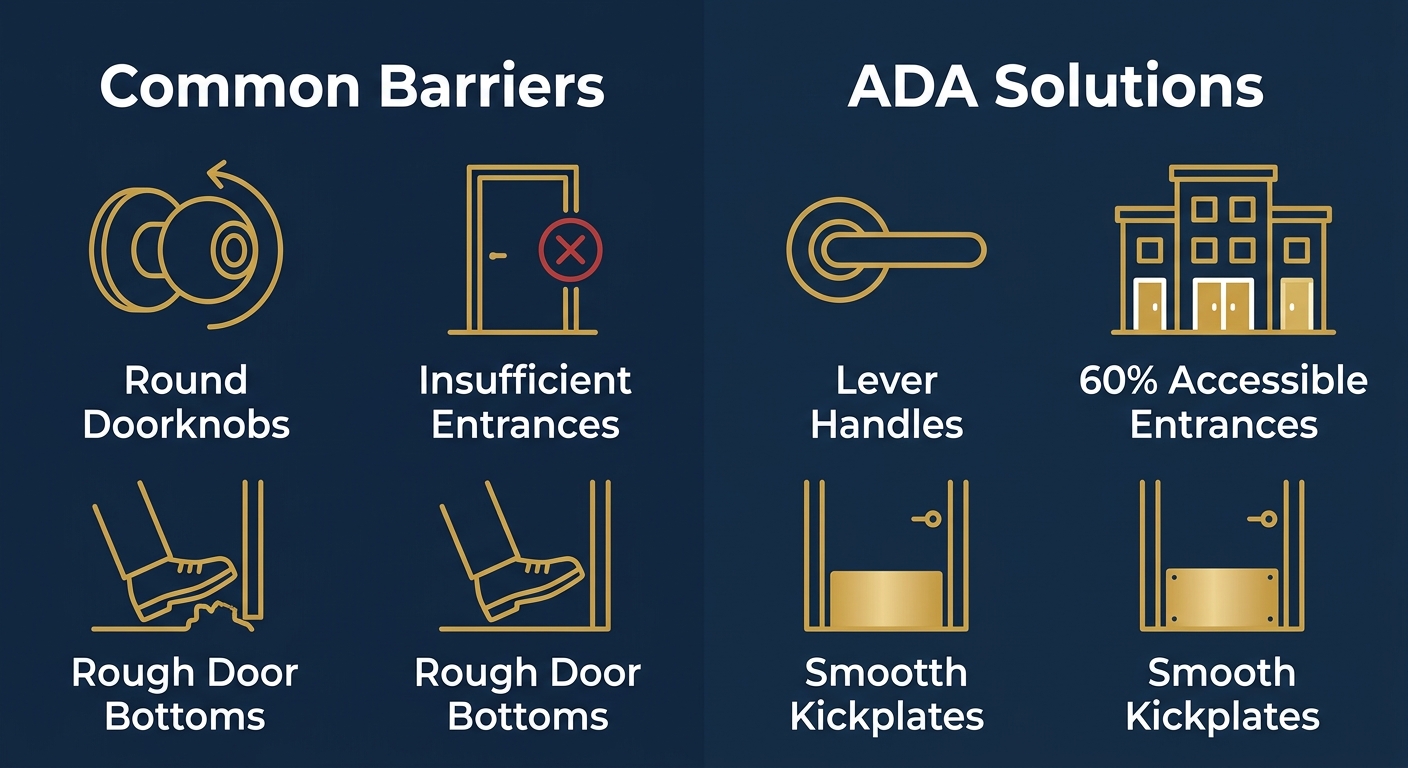
    Infographic comparing common physical barriers to accessibility with ADA compliance solutions. Left column: Round Doorknobs, Insufficient Entrances, Rough Door Bottoms. Right column: Lever Handles, 60% Accessible Entrances, Smooth Kickplates.
    Physical accessibility barriers and ADA-compliant solutions for wheelchair users.

    These physical obstructions also significantly limit independence for wheelchair users in Spring Valley, NY. Custom motorized wheelchairs will help them get over these structural blockages, and give them greater independence. Removing physical obstacles is only half the battle though. There is still plenty of uneven terrain such as slopes, steps and potholes that may cause problems which are explored later on this page.

    How Environmental and Terrain Challenges Affect Motorized Wheelchair Independence

    Wheelchair users have trouble in narrow doorways, uneven sidewalks and other places that make it hard to get around independently on their own power. The ADA and accompanying standards define minimum accessibility requirements, yet real-world conditions often fall short.

    The Impact of Narrow Doorways and Stairs on Wheelchair Accessibility

    Older buildings as well as door hardware that does not comply with accessibility standards provide physical obstacles for motorized wheelchair users. Stairs pose a barrier that most power chairs are unable to navigate over. Thus, if a two-level entrance lacks an elevator, it can prevent people using motorised wheelchairs from entering the premises. In accordance with the ADA Standards established by the US Access Board, a clear opening must be a minimum of 32 inches wide and thresholds should not exceed half an inch high when new construction begins; however, many old entrances have been reduced down to only 28 inches in size or lower.

    The U.S. Access Board requires that manual door hardware be usable with one hand and without tight grabbing, pinching or twisting of the wrist, criteria a round knob cannot meet. Also, the law says you need at least 60% of the entrances into new structures to have them being accessible for folks who need help getting in, though it is not uncommon that the old places don’t follow all these rules.

    The slope rating for a power chair, which is the steepest grade it can climb while standing still, limits where someone using such equipment can travel. According to both the MedEquipped technical guide and RESNA research, if you attempt to drive up a steep hill or on an improperly-deployed ramp above the machine’s slope rating, the wheelchair may tip over. A RESNA study showed that out of all street level bus boarding instances in America, around 45% involved the deployment of ramps at angles greater than the ADA-recommended standard of 9.5 degrees.

    Low centers of gravity, high-torque motors, and custom tire selection allow these latest-generation power chairs to traverse gravel, grass, and broken pavement more securely.

    Terrain TypeCommon ChallengesRequired Wheelchair FeatureSafety Rating
    Steep InclinesTraction loss; backward tipping when grade exceeds incline ratingHigh-torque motors; anti-tip wheelsLow
    GravelLoose surface; vibration; instability during turnsLow center of gravity; all-terrain treaded tiresMedium
    GrassUneven ground; wheel sinkage; hidden obstaclesHeavy-duty suspension; wide tire footprintMedium
    Uneven PavementBumps; jarring; edge drops that can momentarily unload one drive wheelCustom-tuned suspension; solid anti-tip castersHigh
    Outdoor Terrain Difficulty Comparison for Motorized Wheelchairs

    Source: MedEquipped Power Wheelchair Incline Rating Guide.

    Safety drops sharply on steep inclines unless your wheelchair’s incline rating is specifically matched to the slope. Our staff can set up the correct motor/suspension packages to help you maintain confidence on tricky terrain.

    The Role of Public Transportation in Daily Mobility and Social Inclusion

    There are some legal provisions for people who use wheelchairs on buses and trains, but physical access remains inconsistent. According to the Americans With Disabilities Act, public transportation companies had to let anyone who was using a wheelchair get into any area where everyone else could go. They may not ask about the nature of a person’s disability when they board. The RESNA study which uncovered instances where slopes were too steep also reported that power chairs made up around 70.6% of observed boardings.

    If they deploy when the angle exceeds the wheelchair’s rated incline, riders may face unsafe choices that reduce access to employment, medical care, and social activities.

    We’ll help you pick out your customized motorized chair at MedEquipped in Spring Valley, New York, matching each chair to your daily terrain and transit needs to help you move through your world with greater security and autonomy. Find your configuration based on the locations you visit regularly.

    When someone is in Spring Valley, NY, with a motorized wheelchair, understanding accessible route requirements and entrance specifications is essential for evaluating local destinations.

    This table compares typical building types in Spring Valley and their accessibility characteristics, drawing on the ADA Standards for Accessible Design.

    Building TypeTypical BarriersADA Compliance LevelWheelchair Navigation Tips
    Older residential buildings (pre-1991)Narrow doorways (below 32 inches clear width), steps at entrances, steep access paths, high thresholdsPartially compliant; barrier removal may be required if readily achievable under Title IIIRequest barrier removal for entrances; look for accessible parking spaces; use ramps with handrails where rise exceeds 6 inches; confirm door maneuvering clearances
    Modern commercial stores (post-1991)May still have non-compliant hardware, heavy doors, or thresholds up to 3/4 inch in altered areasGenerally meets 1991 standards; renovations must meet 2010 standardsUse automatic door openers where available; check that door hardware operates with 5 lbs of force or less; verify that at least 60% of public entrances are accessible
    Municipal offices (post-2010)Rare major barriers; some older municipal buildings may have limited alterationsRequired to meet 2010 ADA Standards for program accessConfirm accessible routes connect parking to building entrances; assess passing spaces every 200 feet along corridors; ensure handrails are present on ramps with a rise greater than 6 inches
    Accessibility Features of Spring Valley Building Types

    Evaluating Local Accessibility Hotspots in Spring Valley

    An accessible route that connects between parking areas or other site arrival points (sidewalks, etc.) and all accessible building entries has to be provided, and walking surfaces should not exceed a running slope of 1:20 (5% grade). There has to be passing space(s), which is 60 in by 60 in. This passes over every 200 ft or less of longer routes and allows two wheelchairs to go past each other. The handrail needs to be available on both sides of the ramp if the rise is more than six inches. When deciding what part of the standards applies to a facility (such as when to make counters level rather than high and when to provide stalls in restrooms, and what requirements are placed on the door hardware), determine if it follows the 1991 or 2010 ADA Standards.

    Overcoming Barriers in Older Buildings and Facilities

    Older buildings in Spring Valley—converted homes and historic commercial structures—often have narrow entrance doors, high thresholds, and front steps. A door on an accessible route must provide a clear opening width of at least 32 inches when opened to 90 degrees; the bottom surface of push-side doors must be smooth to a height of 10 inches to avoid catching footrests. Title III requires private businesses to remove architectural barriers when removal is “readily achievable,” meaning the change can be made without much difficulty or expense relative to the business’s resources. Where thresholds exceed allowed heights for altered facilities, beveling or other adjustments can reduce obstruction.

    Selecting a Motorized Wheelchair for Spring Valley’s Environment

    Selecting the proper powerchair will be determined according to Spring Valley’s physical landscape. When you come into the office at our clinic located at 747 Chestnut Ridge Road, staff will conduct your assessment of equipment requirements and assist in the selection of the proper powerchair, assist with funding sources and Medicare paperwork, perform personalized fit and adjustment, and verify benefits and handle related documentation. Once ordered, normal turn around time on custom made powerchairs is usually about 30-60 days. To make an evaluation appointment and set out what your mobility needs are, contact us at this phone number (845) 237-2381

    Understanding which wheelchair features suit Spring Valley’s environment sets the stage for more advanced customizations that tackle specific barriers.

    Advanced Custom Motorized Wheelchair Solutions for Complex Accessibility Needs

    It’s more difficult to get around on the hilly and lumpy sidewalks in Spring Valley with your standard wheelchair. This means we’ll have to tailor a unique motorized configuration to meet your demands for navigating the harshness of this area of town.

    Here are some examples of how the custom features solve common mobility challenges in environments like those in Spring Valley:

    ChallengeCustom FeatureBenefitMedEquipped Approach
    Steep inclines exceeding standard wheelchair capacityHigh-torque motors and low center of gravityEnables safe climbing of hills within the wheelchair’s rated incline, reducing tip riskAssess home and community terrain, then specify motor and frame geometry for stability
    Uneven terrain and obstacles (gravel, curbs, etc.)Custom suspension and tire selectionImproved traction and shock absorption for a smoother, more comfortable rideSelect wheel type and suspension based on the patient’s typical usage environment
    Access limitations due to lack of knowledge of rightsWheelchair classification protections under the ADAPeace of mind and confidence to use the wheelchair in all public areasEducate clients on their ADA rights during the fitting and delivery process
    Custom Wheelchair Features Addressing Specific Mobility Challenges

    A power wheelchair’s incline rating defines the maximum grade it can safely climb from a standstill, but real-world conditions often exceed expected limits. Our internal research references a RESNA study showing that 45% of street-level bus ramp deployments surpass the ADA’s 9.5-degree slope guideline. Our Premium products include custom motorized wheelchairs with high-torque motors and a low center of gravity, which can improve stability and reduce tipping risk on non-flat surfaces. A thorough assessment of the user’s home and community landscape ensures the chair’s specifications align with real-world demands.

    Under the ADA, public facilities must permit wheelchairs throughout all public areas, and staff cannot inquire about a person’s disability. Safety rules must pertain only to actual threats and not unfounded biases or generalizations.

    There’s almost a seamless connection between this knowledge and curiosity towards the actual fitting process and how it can be funded.

    Common Questions About Wheelchair Accessibility and Custom Solutions

    ADA regulations require wheelchair and manually powered mobility aid access to all areas open to public. Business establishments as well as government agencies can’t ask about the nature or extent of a person’s disability. What are the ADA requirements for wheelchair accessibility in public places?

    What does the ADA define as building access? In other words, what ADA design standards should be used in buildings. According to the 2010 ADA Standards for Accessible Design, accessible route specifications should be followed when building construction occurs. They apply to state and local government facilities under Title II and to businesses serving the public under Title III. How do ADA design standards apply to building accessibility?

    Can businesses restrict my mobility device for safety reasons? The reason would have to be related to risk, not stereotype or speculation.

    Is a custom powered chair right for you? We do in-depth evaluations, design chairs based on personal assessment, physical need and function, and assist with required funding documentation. How can a custom motorized wheelchair help with daily accessibility?

    FAQ

    How does the lack of accessible public transportation affect the daily mobility and social inclusion of wheelchair users?

    Inconsistent accessible public transportation reduces wheelchair users’ daily mobility by creating unsafe boarding conditions. A study found 45% of bus ramp deployments exceeded the ADA slope guideline of 9.5 degrees. This unreliability limits access to employment, medical care, and social activities, directly impacting social inclusion.

    What are the most common physical accessibility barriers that wheelchair users encounter in public spaces?

    The most common physical accessibility barriers in public spaces are narrow doorways below the required 32-inch clear width, round doorknobs that require grasping and twisting, steep entry ramps, and insufficient accessible entrances. New construction mandates 60% of public entrances be accessible, but older buildings often lack compliant door hardware and smooth door bottom surfaces.

    How do environmental challenges like narrow doorways and stairs impact the independence of motorized wheelchair users?

    Narrow doorways below 32 inches clearance block entry for motorized wheelchair users, and stairs are impassable without an elevator. This forces users to find alternate routes or rely on assistance, significantly reducing their ability to enter buildings and move independently through public spaces.

    What types of outdoor terrain are most difficult for motorized wheelchairs to navigate safely?

    Steep inclines pose the greatest risk, causing traction loss and tipping when a slope exceeds the chair’s incline rating. Gravel surfaces cause instability and vibration, grass can hide obstacles and allow sinkage, and uneven pavement jars the chair, all making navigation without anti-tip wheels, high-torque motors, and a low center of gravity dangerous.

    What are the most significant daily difficulties faced by powered wheelchair users when trying to access older buildings or facilities?

    The most significant daily difficulties when accessing older buildings are narrow entrance doors, which can be as small as 28 inches, high thresholds that obstruct wheels, front steps that motorized chairs cannot climb, and round doorknobs that require grasping and twisting. These barriers often prevent entry without assistance.

    Moving Forward with Confidence in Spring Valley, New York

    For most of their patients, the problem isn’t moving on flat ground, but going up hill. And our Custom Power Wheelchair models have Low CG, and High-Torque Motors that make the uphill trips safer. ADA guarantees the right to use mobility devices in public spaces, and we handle evaluation, fitting, delivery, and Medicare paperwork assistance. In the Spring Valley office call us at (845)237-2381 email: intake@medequipped.com Consultation here. Results MAY vary. Begin a consultation in Spring Valley, New York by calling (845) 237-2381 or emailing intake@medequipped.com; results may vary; verify Medicare/insurance coverage (the supplier does not guarantee coverage) and consult your treating healthcare professional for medical necessity.

    Schedule Your Custom Wheelchair Evaluation

    Now that you understand the physical and environmental barriers that make navigation difficult for wheelchair users, it’s time to consider a custom solution. A motorized wheelchair with a low center of gravity and high-torque motors can safely handle steep inclines and uneven terrain like those in Spring Valley, New York. We specialize in personalizing power wheelchairs to your specific needs, from the initial evaluation through final delivery. We assist with funding sources and Medicare paperwork to simplify the process. To begin your journey toward greater independence, call (845) 237-2381 or visit our office at 747 Chestnut Ridge Road. Schedule your evaluation today.

    Schedule Your Custom Wheelchair Evaluation
    Resources

  • Best Front-Wheel Drive Power Wheelchairs for 2026

    Best Front-Wheel Drive Power Wheelchairs for 2026

    Table of Contents

    Front-Wheel Drive Power Wheelchairs: Built for Real-World Mobility

    Opening Hook & Article Preview

    Front-wheel drive power wheelchairs place the drive wheels at the front, creating a pulling motion that climbs curbs, grips uneven terrain, and navigates obstacles with confidence. This front-drive design makes them among the best power wheelchairs for daily use for anyone who relies on dependable outdoor performance. Unlike mid-wheel drive power wheelchairs, which prioritize tight indoor turning, front-wheel drive models tackle outdoor terrain and curb climbing more effectively because the larger front wheels meet obstacles first.

    At MedEquipped in Spring Valley, NY, we source premium products for Custom Motorized Wheelchairs and offer end-to-end support: initial evaluation, personalized fitting, delivery, and setup. We handle Medicare verification and funding paperwork. We’re here to help with a quick turnaround — most chairs arrive in 30 to 60 days.

    Continue reading to discover the 8 power wheelchair benefits that bring Greater Independence to daily living.

    Superior Curb Climbing

    Opening

    When you approach a curb in one of our custom front-wheel drive power wheelchairs, the drive wheels meet the curb first and pull the chair up, rather than pushing the casters. This pull-over action builds your confidence for daily curb navigation.

    Explanation

    Larger front wheels roll over curbs first, pulling the chair up with traction, while anti-tip casters improve stability. This front-drive design makes our chairs among the best power wheelchairs for daily use. A controlled straight approach handles curbs up to 2 inches, though results vary with terrain and seating angle. Results may vary; a treating healthcare professional must confirm medical necessity. We verify Medicare benefits before ordering; verification does not guarantee coverage. While mid-wheel drive power wheelchairs are popular indoors, our front-wheel drive power wheelchairs give you outdoor confidence.

    Example/Tip

    Approach slowly, line up straight, pause at the curb edge, then apply steady power. Practice on a quiet sidewalk, and let our clinic team in Spring Valley, NY demonstrate during your fitting. We’re here to help you build confidence.

    Better Obstacle Navigation

    Opening

    Which drive type handles obstacles better? For Spring Valley residents, front-wheel drive power wheelchairs in Spring Valley, NY answer that: they meet thresholds and roots first, avoiding the push-back small rear casters cause.

    Explanation

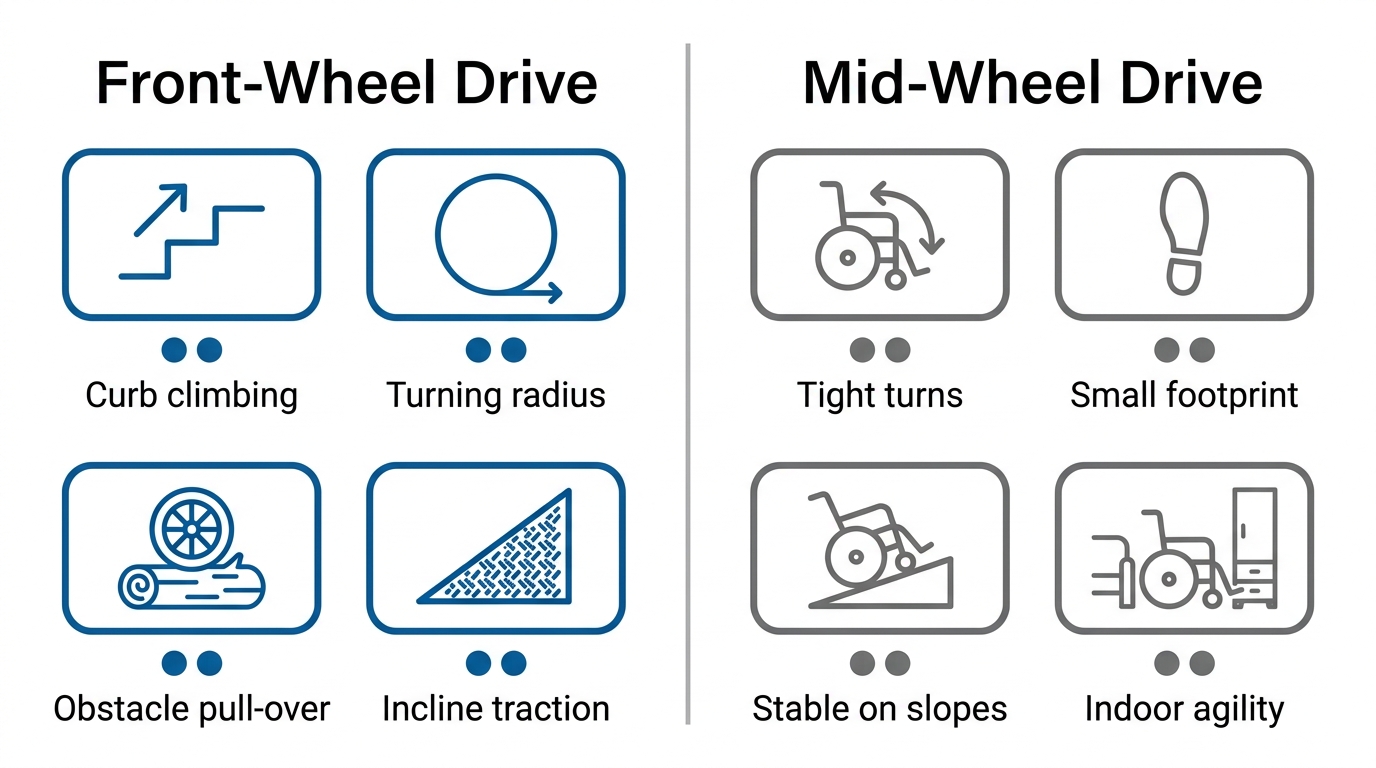
    Mid-wheel drive power wheelchairs excel at tight indoor turns, but their front casters can lose traction on raised edges. In contrast, front-wheel drive power wheelchairs in Spring Valley, NY clear door tracks and sidewalk gaps more reliably, and the lead wheels dig into slopes for incline stability. This route-dependent trade-off—indoor maneuverability versus outdoor obstacle clearance—can be resolved through our initial patient evaluation at MedEquipped, though we recommend consulting your treating healthcare professional for medical necessity. The following table compares the two drive types at a glance:

    Front-Wheel vs Mid-Wheel Drive at a Glance
    FeatureFront-Wheel DriveMid-Wheel Drive
    Curb climbingStrongModerate
    Turning radiusLargerSmaller
    Obstacle pull-overExcellentFair
    Incline tractionStrongGood

    Example/Tip

    We’re here to help: measure the thresholds, ramps, and sidewalk cracks you encounter weekly, and bring those measurements or photos to your personalized fitting. This helps us configure the best power wheelchairs for daily use to handle your real-world obstacles.

    Infografik mit zwei Spalten zum Vergleich von Vorderrad- und Mittelradantrieb bei Motorrollstühlen

    Vorderrad- vs. Mittelradantrieb im Vergleich

    Outdoor Stability and Traction

    Opening

    Our front-wheel drive power wheelchairs keep the powered drive wheels under the front of the chair, giving you visible traction on grass, gravel, wet pavement, mild slopes, and crowned sidewalks. This stability enables Greater Independence during daily outdoor trips.

    Explanation

    Our front-wheel drive power wheelchairs are tested on surfaces common in Spring Valley—gravel, grass, wet pavement—during your evaluation. The forward geometry reduces forward tip-over risk on descents, and the rear casters track more predictably on loose terrain, reducing arm fatigue. As some of the best power wheelchairs for daily use, these models outperform mid-wheel drive power wheelchairs outdoors. We configure tire choice and anti-tip settings to your daily routes. When medical necessity is documented, funding may be Medicare-verified—verify coverage; results vary.

    Example/Tip

    One patient needed reliable access across a gravel lot and grass path to his garden shed. We chose an all-terrain front-wheel drive package after a clinic test course showed the traction advantage. Our tip: report every surface you travel daily, not just occasional outings, so we can match your configuration to real conditions. (Results vary; verify Medicare/insurance coverage; consult your healthcare professional for medical necessity.)

    Smooth Suspension for Daily Travel

    Opening

    Front-wheel drive power wheelchairs deliver smooth daily travel by using coil, spring, or air suspension to isolate vibration before it reaches the frame and seat. We at MedEquipped tailor our Custom Motorized Wheelchairs to your suspension needs (results vary by weight, posture, and routes).

    Explanation

    Front spring forks and rear caster absorption soften sidewalk joints and gravel chatter. For the best power wheelchairs for daily use, adjustable tension lets us tune ride firmness to your weight, posture, and routes; custom seat depth and foam selection complement the suspension to dampen residual vibration. During your personalized fitting at our Spring Valley clinic, we test threshold and speed-bump responses to validate comfort. If a mid-wheel drive power wheelchair better suits your maneuverability, we can discuss that option during the fitting.

    Example/Tip

    Request a test ride over rough pavement; note vibration reaching arms, back, or head, and use that feedback to guide suspension tuning and cushion selection. Consult your healthcare professional, and verify insurance coverage with us—we do not guarantee Medicare coverage.

    Tight-Space Maneuverability

    Opening

    Front-wheel drive power wheelchairs typically have a larger turning radius than mid-wheel drive power wheelchairs, but modern controllers and refined caster steering geometry narrow the practical difference in tight spaces. This design trade-off does not prevent effective indoor mobility.

    Explanation

    Indoor turning ease hinges on rear caster pivot and wheelbase, which we customize with premium components during your evaluation. Our clinicians adjust caster size, wheelbase, and controller sensitivity. A three-point turn technique and swing-away joysticks help with tight halls and desk access. Many of the best power wheelchairs for daily use trade some indoor turning radius for outdoor stability. We measure your doorways at delivery, recommend an optimized wheelbase, and deliver your Custom Motorized Wheelchair with quick turnaround to fit your home and lifestyle.

    Example/Tip

    One patient in a narrow apartment hallway found Greater Independence with smaller casters and a tighter wheelbase, improving indoor maneuverability without sacrificing outdoor curb access. Tip: measure doorways and turn spaces you use daily before ordering. Results may vary; please verify Medicare/insurance coverage with MedEquipped. We’re here to help.

    Custom Comfort for Daily Use

    Opening

    Choosing a daily-use power wheelchair is not a shelf purchase. The best power wheelchairs for daily use in Spring Valley, NY are custom-configured through our prescription adjustment of seat width, depth, back angle, armrest height, and footrest placement. Front-wheel drive power wheelchairs for daily use in Spring Valley, NY offer stable outdoor maneuverability when matched to your routine after an evaluation—that’s the MedEquipped way.

    Explanation

    At MedEquipped, we only order after an initial patient evaluation—equipment selection follows assessment, not the other way around. This prescription-driven approach—for front-wheel or mid-wheel drive power wheelchairs for daily use in Spring Valley, NY—reduces pressure points and improves posture for daily comfort and greater independence. Weight capacity, leg positioning, and cushion choice match your diagnostic needs and lifestyle; consult your healthcare professional for medical necessity. For Medicare, these details justify features—coverage must be verified. Once funded, our Quick turnaround delivers premium chairs in 30–60 days, far faster than industry norms.

    Example/Tip

    Wear your typical clothing and shoes to your measurement appointment—seating angles, not just dimensions, govern comfort. For instance, during a recent fitting we adjusted the backrest angle to better support the spine and relieve lower back pressure. We’re here to help you find your perfect fit.

    Help with Medicare Funding

    Opening

    Front wheel drive power wheelchairs are durable medical equipment (DME), and Medicare can help cover these custom motorized wheelchairs when a treating healthcare professional documents medical necessity. We verify your benefits before an order is placed so you know your coverage status. This step keeps the process straightforward and transparent.

    Explanation

    Medicare requires a face-to-face exam and clinical justification that the chair is medically necessary and among the best power wheelchairs for daily use. We manage the certificate of medical necessity, supporting records, and billing for front wheel drive power wheelchairs, mid-wheel drive power wheelchairs, or any custom configuration. Communication continues through delivery and setup. Coverage is never guaranteed; each claim depends on the individual plan and clinical record, and benefits must be verified. When Medicare doesn’t apply, we explain Medicaid, private insurance, and financing options — we’re here to help.

    Example/Tip

    Example: Many patients arrive with only a prescription — we guide the rest of the paperwork. Tip: Bring your Medicare card, a medication list, and your primary doctor’s contact information to the first visit. With these details, we can verify benefits and move you toward a custom motorized wheelchair with a quick turnaround.

    Premium Products and Fast Delivery

    Because every chair should match clinical needs, we source only Premium products from established manufacturers. We configure components—including front-wheel drive power wheelchairs and mid-wheel drive options—around each patient’s requirements. Delivery, setup, and fitting happen in person at our Spring Valley support center, never by freight drop-off.

    Opening

    Because every chair should match clinical needs, we source only Premium products from established manufacturers. We configure components—including front-wheel drive power wheelchairs and mid-wheel drive options—around each patient’s requirements. Delivery, setup, and fitting happen in person at our Spring Valley support center, never by freight drop-off.

    Explanation

    Our hybrid model: you research chairs online, including front-wheel drive power wheelchairs, mid-wheel drive options, and the best power wheelchairs for daily use, then visit our Spring Valley center for hands-on fitting and testing. Quick turnaround: 30–60 days vs. the six-month industry norm. We offer only custom motorized wheelchairs—no repairs, rentals, or staircase lifts. Our team manages prescription review through final delivery, helping you achieve greater independence. (Results vary; verify coverage; consult your healthcare professional.)

    Example/Tip

    Example: an out-of-state caregiver coordinated a parent’s custom motorized wheelchair via fax and phone support, completing all documents within one week. Tip: call (845) 237-2381 to schedule an evaluation or ask about a front-wheel drive power wheelchair. We’re here to help.

    Conclusion

    At MedEquipped, we are committed to providing Custom Motorized Wheelchairs designed specifically for each patient. Our team performs a thorough evaluation and personalized fitting to ensure your chair matches your diagnostic and functional needs. Whether you need front-wheel drive power wheelchairs for tight indoor spaces or another configuration, we build a solution that fits your lifestyle. We also handle funding paperwork and verify Medicare benefits, so you can focus on mobility. With a 30–60 day turnaround, you won’t wait months for a premium product delivered to your door. We’re here to help you achieve Greater Independence. Contact us today in Spring Valley, NY to schedule your evaluation. Results may vary. Medicare/insurance coverage must be verified; we do not guarantee coverage. Consult your treating healthcare professional for medical necessity.

  • Partners in Pediatrics vs Competitors: 2026 Mobility Device Comparison

    Partners in Pediatrics vs Competitors: 2026 Mobility Device Comparison

    Table of Contents

    Choosing the Right Pediatric Mobility Provider

    When it comes to finding the perfect mobility solutions for children facing conditions like cerebral palsy, families often feel overwhelmed by the options. Providers such as Partners in Pediatrics offer valuable services, but selecting one that truly understands your child’s unique needs is crucial. At MedEquipped, we partner in mobility freedom by specializing in custom motorized wheelchairs designed specifically for pediatric power wheelchairs and children’s mobility devices. Our focus on youth wheelchair solutions helps young patients gain independence faster, especially in regions like New York, Georgia, and Michigan where access can vary.

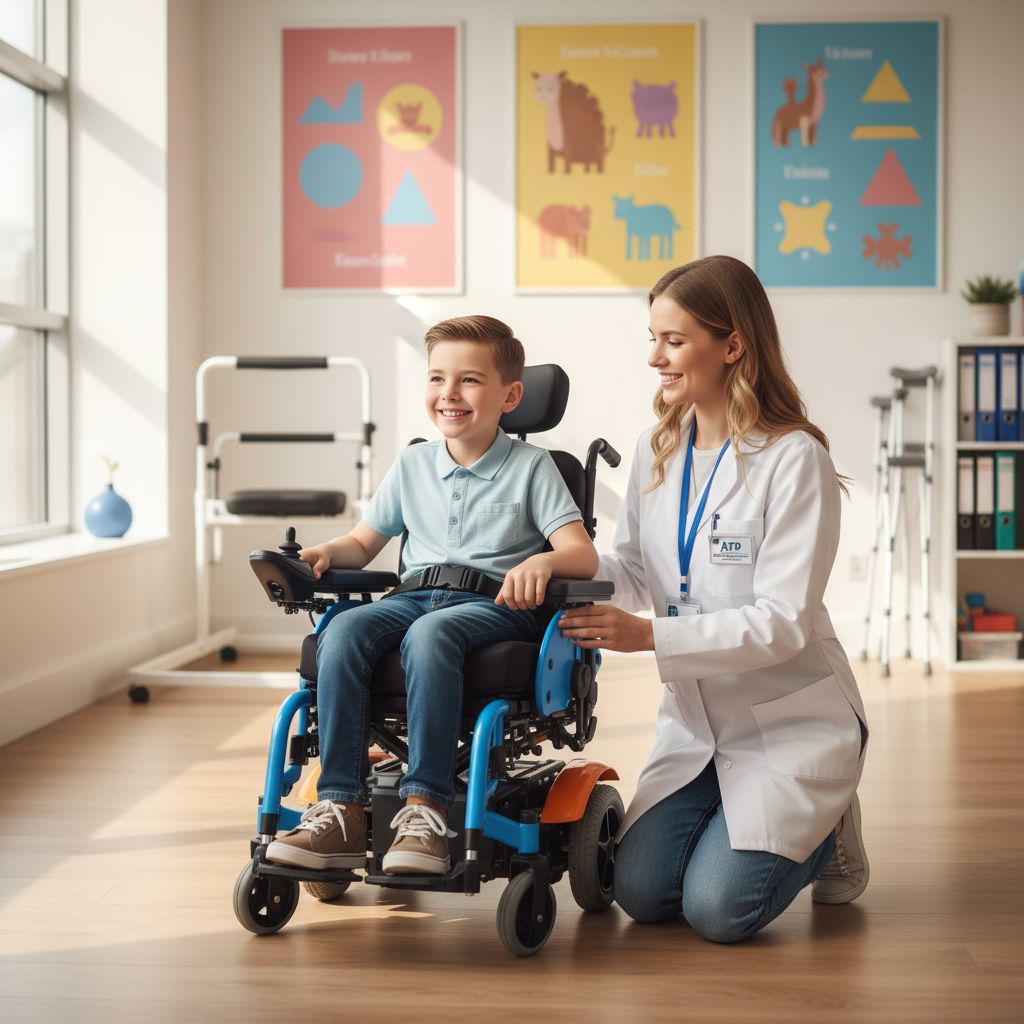
    We at MedEquipped provide an end-to-end service model that sets us apart. Our ATP-certified professionals conduct personalized clinical evaluations to match the best kid-friendly assistive tech to each child’s lifestyle and medical requirements. We handle the paperwork, insurance navigation, and coordination, accepting major insurances including Medicaid and private plans to ease the burden on families. Unlike longer wait times with some national providers, our streamlined process delivers in 30-60 days, ensuring quicker access to essential mobility support. From initial consultations via phone at 845-237-2381 or email at intake@medequipped.com, we guide you through every step, just as outlined on our Become a Patient page.

    This guide will walk you through the fundamentals of pediatric devices and insurance coverage, explore customization options for complex needs, detail our efficient ordering and delivery process, and highlight ongoing support services. Download our medequipped brochures download to learn more about how we make this journey smoother for families seeking reliable pediatric care.

    Basics of Pediatric Power Wheelchairs and Coverage

    Did you know that early access to powered mobility can significantly boost a child’s cognitive and social development? At MedEquipped, we see firsthand how medicare wheelchair coverage and similar programs open doors to these life-changing devices. As your partner in mobility freedom, we specialize in custom motorized wheelchairs designed for young users with complex needs across New York, Georgia, and Michigan.

    Pediatric power wheelchairs form the cornerstone of children’s mobility devices, tailored to support growing bodies and diverse abilities. These youth-powered mobility aids typically feature a sturdy base for stability, customizable seating systems that accommodate growth, and intuitive controls like compact joysticks or alternative interfaces for limited dexterity. Kid-specific wheelchairs adhere to RESNA standards for safety and durability, ensuring they withstand daily adventures while promoting proper posture.

    • RESNA-certified components: Bases and frames built to endure active lifestyles.
    • Adjustable ergonomics: Seating that evolves with the child, preventing discomfort.
    • User-friendly electronics: Controls simplified for young operators.

    We handle the paperwork, insurance navigation, and coordination to deliver these essentials efficiently. For instance, our growth-adjustable seating allows seamless transitions as children develop, fostering long-term use.

    The following table outlines key features of pediatric power wheelchairs and how they benefit kids, along with MedEquipped’s tailored options:

    FeatureBenefit for KidsMedEquipped Option
    Sturdy BaseProvides stability for explorationQUICKIE series with compact designs
    Custom SeatingSupports posture and growthAdjustable systems for evolving needs
    Intuitive ControlsEnhances independenceJoystick or head array for small hands
    Battery SystemEnsures reliable all-day useLightweight, long-lasting power packs

    This comparison highlights how we prioritize features that empower play and learning. By selecting industry-leading models like the ROVI X3, we ensure devices match each child’s unique profile, drawing from certified ATP evaluations to maximize developmental gains.

    Beyond hardware, these devices deliver profound benefits. A study on powered mobility for toddlers showed significant improvements in cognition, receptive vocabulary, and social-emotional skills after just 12 sessions, with increased joyful vocalizations and reduced distress. Children’s mobility devices like ours promote independence, encouraging motor skill enhancement through self-directed movement. We guide families through this journey, helping kids build confidence and engage more fully in family activities and school.

    When it comes to coverage, families often wonder about options compared to providers like Partners in Pediatrics. While national brands may vary, MedEquipped excels with broad acceptance of Medicaid in New York, Georgia, and Michigan, plus major private insurances such as Blue Cross. According to CMS guidelines, coverage requires items to be reasonable and necessary for treating mobility impairments, including a face-to-face evaluation and written order prior to delivery. We streamline this with dedicated navigation, typically achieving approvals in 30-60 days—faster processing than many alternatives.

    Our intake process is simple: Contact us at 845-237-2381 or intake@medequipped.com to start. We coordinate everything, from documentation to billing, so you focus on your child’s progress. Results may vary; consult a healthcare professional for personalized advice.

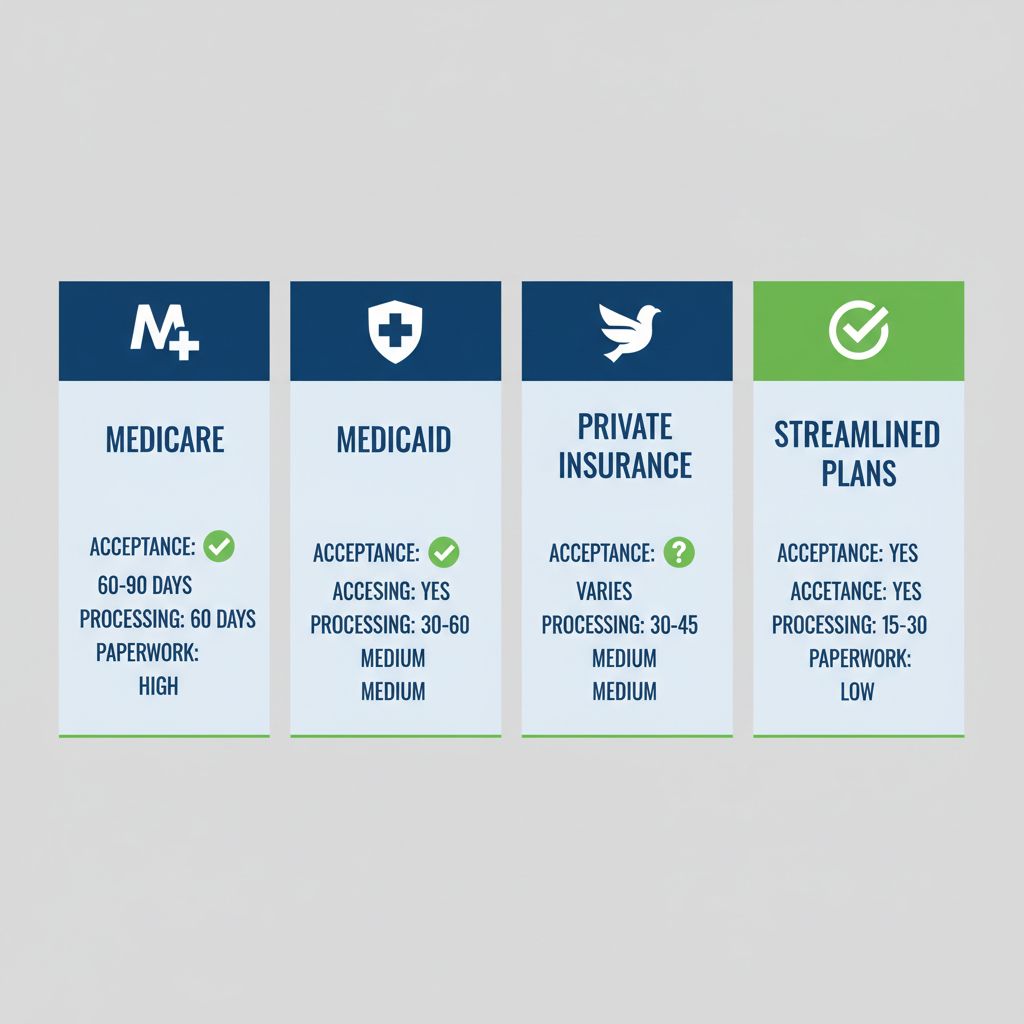
    The table below compares our insurance handling to typical national processes, emphasizing pediatric plans:

    Insurance TypeMedEquipped AcceptanceTypical Processing TimeKey Benefits
    MedicaidFully accepted in NY, GA, MI30-60 daysStreamlined paperwork and approvals
    Private Insurances (e.g., Blue Cross)YesFaster than industry averagePersonalized billing support

    This approach reduces stress and speeds access. Data from CMS and our processes confirm our efficiency, positioning us as a trusted choice for pediatric needs. Looking ahead, our customization services dive deeper into fitting these wheelchairs to individual lifestyles—stay tuned for details.

    Infographic showing insurance coverage options for pediatric power wheelchairs including Medicaid and private plans

    Insurance coverage comparison for pediatric mobility devices

    Insurance coverage comparison for pediatric mobility devices

    In summary, understanding these basics empowers informed decisions. We’re here to support your family’s mobility goals every step of the way.

    Customizing Power Wheelchairs for Children

    At MedEquipped, we understand that every child has unique needs when it comes to mobility. Our team of certified Assistive Technology Professionals (ATPs) specializes in tailoring custom motorized wheelchairs to help young users gain independence. By focusing on pediatric-specific designs, we ensure these devices support growth and daily activities, setting us apart from more generic approaches.

    Assessing Individual Needs

    Our process begins with a thorough clinical evaluation to understand each child’s physical condition, daily routines, and long-term goals. We start with physical exams to measure posture, range of motion, and any specific impairments, ensuring the wheelchair addresses medical requirements right from the start. Next, we conduct lifestyle interviews with families to discuss school, play, and home environments, gathering insights that inform personalized recommendations.

    • Medical History Review: We examine diagnoses like cerebral palsy or muscular dystrophy, referencing standards from RESNA to guarantee compliance and safety.
    • Functional Assessments: Using tools like the Pediatric Evaluation of Disability Inventory (PEDI), we measure current capabilities and potential improvements, drawing from studies on power mobility young children that show up to 21.4% gains in mobility skills.
    • Family Input Sessions: These collaborative discussions help identify preferences, such as lightweight frames for portability.

    This assessment not only customizes the fit but also streamlines insurance approvals by documenting medical necessity clearly. We once assessed a young boy in Georgia who loved outdoor adventures; our detailed report highlighted terrain needs, securing coverage quickly. By tying evaluations to eligibility criteria, families experience less stress during the process.

    The following table compares our customization depth to standard offerings, based on RESNA standards and our clinical practices:

    Customization AspectStandard ProviderMedEquipped ApproachBenefit for Children
    Seating SystemsBasic adjustableCustom ATP-fittedImproved comfort and positioning
    Control InterfacesStandard joysticksPediatric-adapted (e.g., sip-puff)Enhanced independence

    While standard providers like Partners in Pediatrics offer basic adjustments, our ATP-led fittings provide precise adaptations that enhance daily function. For instance, custom seating prevents pressure sores and promotes better posture, leading to measurable improvements in self-care and social engagement as supported by research on early mobility interventions.

    Selecting Components and Brands

    Once needs are assessed, we guide families through selecting the right components and brands, prioritizing those suited for pediatric power wheelchairs. Our expertise ensures choices like robust bases, ergonomic seating, and intuitive controls align with a child’s size and abilities. We favor industry leaders such as the QUICKIE series for their compact, durable designs and the ROVI X3 for advanced stability in active kids.

    • Bases and Frames: Lightweight yet strong models like QUICKIE’s Q6 Edge 3 support varied terrains while remaining maneuverable in tight spaces.
    • Seating and Positioning: Contoured cushions and adjustable backs from trusted suppliers promote upright posture and comfort during long school days.
    • Controls: From joysticks to alternative drives like head arrays, we match interfaces to dexterity levels, integrating sip-puff systems for those with limited hand use.

    To highlight brand suitability, consider this comparison of options we commonly recommend:

    BrandFeaturesPediatric SuitabilityTimeline
    QUICKIE SeriesAdjustable armrests, modular controls, compact baseExcellent for growing youth; customizable growth kits30-60 days
    ROVI X3Heavy-duty frame, all-terrain wheels, integrated techIdeal for active children with higher weight needs30-60 days

    These selections emphasize our faster processing, often completing orders in 30-60 days compared to longer national waits. For a girl in Michigan with spina bifida, we paired a QUICKIE base with pediatric-adapted controls, boosting her classroom participation. Our team handles the paperwork, insurance navigation, and coordination, allowing families to focus on their child. This hands-on approach, backed by RESNA-compliant expertise, ensures tailored youth wheelchairs that foster independence without overwhelming logistics.

    Building on component choices, integrating technology like alternative drives further personalizes the experience. We document every detail for smooth approvals, drawing from our certified team’s knowledge to meet clinical standards efficiently.

    Integration of Growth Features

    As children grow, their children’s mobility devices must adapt to prevent frequent replacements and maintain support. At MedEquipped, we incorporate adjustable elements into every custom build, extending usability over years. Features like expandable frames and modular seating allow height and width adjustments without compromising stability or performance.

    For example, QUICKIE models include growth kits that raise seat heights by up to 4 inches and extend arm supports, accommodating spurts from toddler to teen years. We also add repositionable footplates and backrests that evolve with muscle development, ensuring ongoing comfort. In one case, we fitted an adaptive kid mobility solution for a child in New York, where adjustable components supported her transition through elementary school, reducing family costs and disruptions.

    These integrations align with studies showing sustained mobility benefits, such as 17.5% improvements in social skills from consistent device use. By partnering in mobility freedom, we design for longevity, with our ongoing support handling adjustments post-delivery. This forward-thinking customization not only meets current needs but anticipates future ones, empowering families with reliable, evolving solutions.

    Our Process for Delivering Pediatric Mobility Solutions

    At MedEquipped, we partner in mobility freedom by guiding families through every step of obtaining custom motorized wheelchairs for children with unique needs. Our child-focused delivery systems ensure a seamless experience, from initial contact to long-term support, setting us apart from slower options like Partners in Pediatrics. We handle the paperwork, insurance navigation, and coordination, so you can focus on your child. With certified Assistive Technology Professionals leading the way, we serve families in New York, Georgia, and Michigan, delivering pediatric power wheelchairs that enhance independence and quality of life.

    From Evaluation to Ordering

    We start the custom power wheelchair patient process with a thorough intake when you reach out via phone at 845-237-2381 or email at intake@medequipped.com. Creating an account on our site simplifies this, allowing us to gather essential details about your child’s mobility requirements.

    1. Clinical Assessment: Our certified ATPs conduct an in-home or clinic evaluation, assessing posture, skin integrity, and functional goals. Drawing from CMS guidelines like Medicare Coverage Article 52505, we document medical necessity for features such as custom seating to support growth and prevent pressure sores.
    2. Funding Coordination: We review insurance options, from Medicare to private plans, ensuring compatibility across broad providers. This step involves gathering prescriptions and physician notes to build a strong case for approval.
    3. Custom Ordering: Based on the evaluation, we select and configure pediatric power wheelchairs from trusted brands like QUICKIE or ROVI X3, tailoring controls and bases to fit your child’s lifestyle. Our youth device fulfillment typically wraps up ordering within 30-60 days, faster than industry norms.

    This structured approach results in precisely fitted solutions that promote active participation. Families often share how our proactive steps reduced stress, as one testimonial noted: a custom chair arrived just in time for rehab discharge, transforming daily routines.

    The following table compares our efficient timelines to typical national processes for pediatric devices, highlighting the advantages for busy families:

    Process StepTypical National TimelineMedEquipped TimelineFamily Benefit
    Evaluation to Approval60-90 days30-45 daysQuicker access to mobility
    Delivery and Fitting2-4 weeks post-approval1-2 weeksMinimal disruption

    Drawn from MedEquipped workflows and CMS guidelines, this comparison shows how we shorten wait times, allowing children to engage sooner in school and play without extended delays.

    Delivery and Initial Fitting

    Once approved, we coordinate direct delivery of children’s mobility devices to your home or preferred location in New York, Georgia, or Michigan. Our technicians arrive prepared with tools for on-site adjustments, ensuring everything aligns perfectly from day one.

    We prioritize safety and comfort during fitting. Starting with a hands-on setup, we demonstrate controls, charging, and maintenance basics tailored to your child’s age and abilities. Education sessions cover troubleshooting tips and when to contact us for tweaks, empowering families to use the equipment confidently.

    Post-fitting, we schedule a follow-up within the first week to address any settling-in issues. This personalized touch, as echoed in patient stories, builds lasting trust—one family praised our technician’s patience in explaining features, making their child feel secure and excited about newfound freedom. Our regional focus means quicker response times compared to distant suppliers, minimizing downtime.

    Insurance can feel overwhelming, but we streamline it every step of the way. Referencing CMS Article 52505, we prepare detailed documentation for wheelchair seating and custom features, adding necessary modifiers like KX for medical necessity.

    Our team handles all paperwork, from prior authorizations to appeals, coordinating with insurers to expedite reviews. We typically achieve approvals in 30-45 days, well under standard waits, by leveraging comprehensive evaluations and prescriber input.

    Tips for smoother sailing include providing updated medical records early and designating us as your authorized supplier. This approach not only speeds youth device fulfillment but also maximizes coverage for add-ons like positioning cushions. As one anonymized testimonial shared, our guidance turned a complex Medicaid claim into a swift approval, letting their child receive support without months of uncertainty. Results may vary, so consult your healthcare professional for personalized advice.

    Information is for informational purposes only and not medical advice.

    Advanced Features and Ongoing Support

    At MedEquipped, we’re here for the long haul when it comes to custom motorized wheelchairs. Our pediatric power wheelchairs go beyond basics with advanced features designed for growing kids and complex needs. We partner in mobility freedom by integrating heavy-duty bases like the TDX SP2 HD for stability on uneven terrain and alternative controls such as joystick alternatives or sip-and-puff systems. These options, drawn from our brochures, ensure young users get tailored tech that evolves with them.

    • Heavy-duty bases: Built for active lifestyles, the TDX SP2 HD handles rough surfaces while supporting up to 300 pounds.
    • Tech integrations: Advanced youth mobility tech includes programmable controls and Bluetooth connectivity for app-based adjustments.
    • Custom seating: Adjustable components accommodate growth spurts without full replacements.

    These features shine in real stories from our patients, like one family who appreciated how our delivery team explained operations thoroughly, boosting confidence right away.

    As children grow, ongoing maintenance becomes crucial for children’s mobility devices. Standard providers often fall short, but we offer comprehensive upgrades and repairs covered under insurance for seamless continuity. Our certified technicians handle everything from battery replacements to control recalibrations, tying into your existing coverage for adjustments.

    Pediatric families in New York, Georgia, and Michigan face unique challenges with sustained kid wheelchair care. While Providers like Partners in Pediatrics provide initial setups, they may lack robust follow-ups. The table below compares support options:

    Support TypeStandard ProviderMedEquipped OfferingPediatric Impact
    Repairs and AdjustmentsAs-needed, outsourcedDedicated technicians, 24/7 triageQuick resolutions for growing kids
    Patient EducationBasic manualsPersonalized sessions and resourcesEmpowered family management

    This comparison, informed by MedEquipped testimonies and RESNA guidelines, highlights our edge. One patient shared, “Technician Jim was always available to assist,” underscoring our reliable response times that minimize downtime. Unlike basic maintenance, our 24/7 triage ensures issues are addressed swiftly, often within hours, fostering independence.

    We handle the paperwork, insurance navigation, and coordination for these services, typically within our 30-60 days faster processing timeline. Long-term, this leads to better outcomes, as supported by the powered mobility toddlers study, showing enhanced development through consistent mobility. Families report greater quality of life, with kids engaging more actively in school and play. Results may vary; consult a healthcare professional for personalized advice.

    Frequently Asked Questions About Pediatric Wheelchairs

    We’re addressing common youth wheelchair queries to help families navigate kid mobility FAQs. As your partner in mobility freedom, MedEquipped offers custom motorized wheelchairs with expert support.

    What insurance plans do you accept for pediatric power wheelchairs?

    We accept most major insurances, including those covered by providers like Partners in Pediatrics. We handle the paperwork, insurance navigation, and coordination to simplify approvals. We’re happy to help verify your coverage!

    How long does customization of pediatric power wheelchairs take?

    Our process typically takes 30-60 days for faster processing, from evaluation to delivery. We streamline custom orders to get children’s mobility devices to your child quickly and comfortably.

    How do we maintain these devices?

    Regular cleaning and annual check-ups keep pediatric power wheelchairs running smoothly. Our team provides ongoing support, including repairs and patient education, for lasting performance. We’re here for you!

    What is the eligibility for children’s mobility devices?

    Per RESNA standards, kids with mobility impairments qualify if devices meet WC-2 power wheelchair guidelines for safety and function. Our certified ATPs conduct assessments to ensure eligibility fits clinical needs.

    Where are your services available?

    We serve families in New York, Georgia, and Michigan with clinical evaluations and delivery. Contact us for availability in your area—we’re committed to regional support.

    How can we contact MedEquipped?

    Reach us at 845-237-2381 or intake@medequipped.com during business hours, Monday-Friday. Our team guides you through intake for personalized assistance.

    Empowering Children’s Mobility with MedEquipped

    In summary, choosing MedEquipped over options like Partners in Pediatrics means accessing top-tier pediatric power wheelchairs and children’s mobility devices that truly enhance independence. Our clinical expertise ensures customized fits, while we handle the paperwork, insurance navigation, and coordination for seamless approvals. With faster processing in 30-60 days, families focus on what matters most—empowering youth through mobility.

    As detailed in our About Us page, we’re committed to compassionate care and certifications that support every step. Contact us at (845) 237-2381 or intake@medequipped.com for a consultation. Let’s get your child moving with our family-centered wheelchair solutions and ongoing support for lasting outcomes!

    Resources