Table of Contents
- Motorized Mobility Scooters for Home Use in New York, Georgia, and Michigan
- Understanding Motorized Scooters for Indoor Mobility
- Benefits of Choosing the Right Home Scooter
- How It Works: Evaluating and Selecting a Scooter
- Best Practices for Using a Motorized Scooter at Home
- Your Path to Home Mobility Freedom
Motorized Mobility Scooters for Home Use in New York, Georgia, and Michigan
At MedEquipped, we believe everyone deserves to move through their home with confidence and ease, which is why we are a partner in mobility freedom for clients seeking motorized mobility scooters for home use. We help residents in New York, in Georgia, and in Michigan find home-friendly scooters that make everyday tasks—like navigating from the bedroom to the kitchen or rolling out to the backyard—simpler and more enjoyable. For those with good upper-body strength and trunk control, a motorized scooter offers a practical alternative to a custom motorized wheelchair, providing targeted support for distance mobility without the full postural-support systems built into our power chair options.
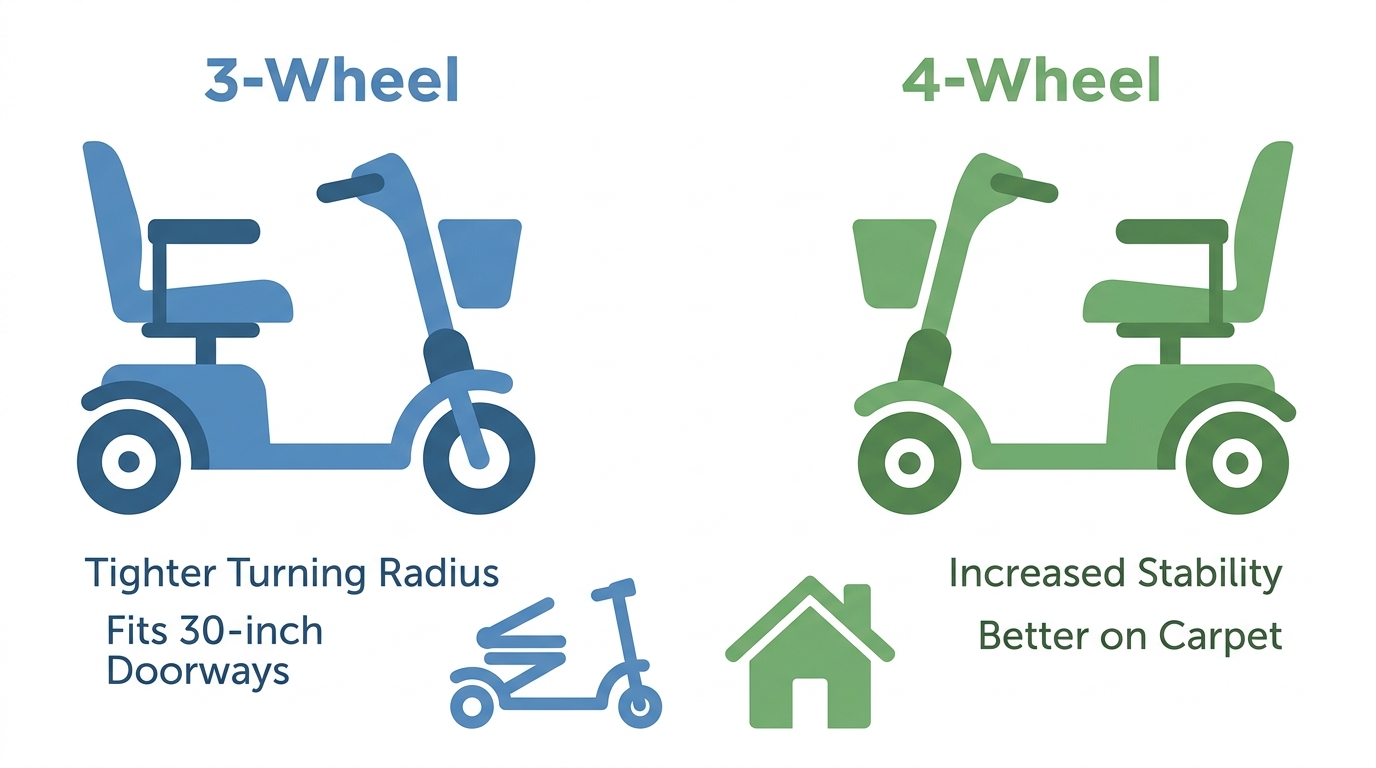
When choosing an indoor mobility scooter, maneuverability is key: 3-wheel mobility scooters typically offer a tighter turning radius that works well in narrow hallways, while 4-wheel models often feel more stable crossing uneven thresholds at home. Many clients also love how folding mobility scooters tuck into a closet or car trunk, making storage effortless between uses. These scooters built for living spaces can directly support mobility related activities of daily living (mradls)—the essential tasks like transferring and moving inside the house that the Assistive Technology Industry Association helps set standards for through its professional network. We handle the paperwork, insurance navigation, and coordination for your scooter procurement in all three states, with a typical processing window of 30–60 days (faster processing).
If your needs require more postural support, our custom motorized wheelchairs may be the right choice. Reach out to our team to explore which mobility solution fits your home best.
Information is not medical advice and is for informational purposes only. Consult a healthcare professional before making clinical decisions.
Understanding Motorized Scooters for Indoor Mobility
While power wheelchairs offer extensive customization for postural needs, motorized scooters provide a more compact option for navigating smaller indoor spaces. For many individuals, motorized mobility scooters for home use provide a convenient balance of maneuverability and comfort. We serve as your partner in mobility freedom, guiding you through the options to find the right indoor scooter.
Key Differences Between Power Wheelchairs and Mobility Scooters
From a structural standpoint, power wheelchairs and mobility scooters are distinct categories. Mobility scooters typically feature a tiller or handlebar for steering, a captain-style seat, and a longer wheelbase. In contrast, custom motorized wheelchairs are controlled by a joystick and are far more customizable for individuals with severe postural needs, offering specialized seating and support systems.
These differences directly affect where each device excels. An indoor scooter is ideal for someone who can sit upright and has adequate arm strength, while a power wheelchair is suited for those needing full postural support and power functions like tilt or recline. Clinically, a assistive technology professional certification holder, such as an ATP from RESNA, conducts a mobility evaluation to ensure the device matches your specific medical and functional needs within your home.
According to MedEquipped’s educational resources, an evaluation looks at how you function in different home areas. A detailed clinical assessment is crucial because it documents your specific in-home mobility challenges, which determines whether a scooter or a power chair is the safest and most effective solution for your daily life.
3-Wheel vs. 4-Wheel Scooters for Tight Spaces
Choosing between a 3-wheel and a 4-wheel scooter will greatly influence your experience in small apartments and narrow hallways. The following comparison provides a quick-reference guide based on your home layout.
| Feature | 3-Wheel Scooter | 4-Wheel Scooter |
|---|---|---|
| Turning Radius | Tighter turning radius (typically 30–40 inches) | Wider turning radius (typically 45–55 inches) |
| Stability on Carpet/Tile | Less stable on uneven surfaces; adequate on firm indoor flooring | More stable on thick carpet and transitions |
| Doorway Clearance | Narrower width (often fits 30-inch doorways) | Wider base (may require 32-inch or wider doors) |
| Best For | Small apartments, tight hallways, indoor-only use | Homes with thicker carpet, larger rooms, or mixed indoor/outdoor use |
As RESNA guidelines confirm, the turning radius for a 3-wheel scooter is typically between 30 and 40 inches, making it excellent for navigating tight spaces. Its narrower width is often compatible with a standard doorway clearance of 30 inches, a critical measurement for any home. Your decision should prioritize the primary environment where the scooter will be used.
For those who will primarily use an indoor scooter in small apartments with narrow doorways and tile floors, 3-wheel mobility scooters offer unmatched agility. However, if your home has thicker plush carpeting or multiple floor transitions, the superior stability of a 4-wheel model is worth the trade-off in turning radius. This stability is key for confidently moving from tile to a carpeted living room.
Folding and Lightweight Scooters for Home Storage
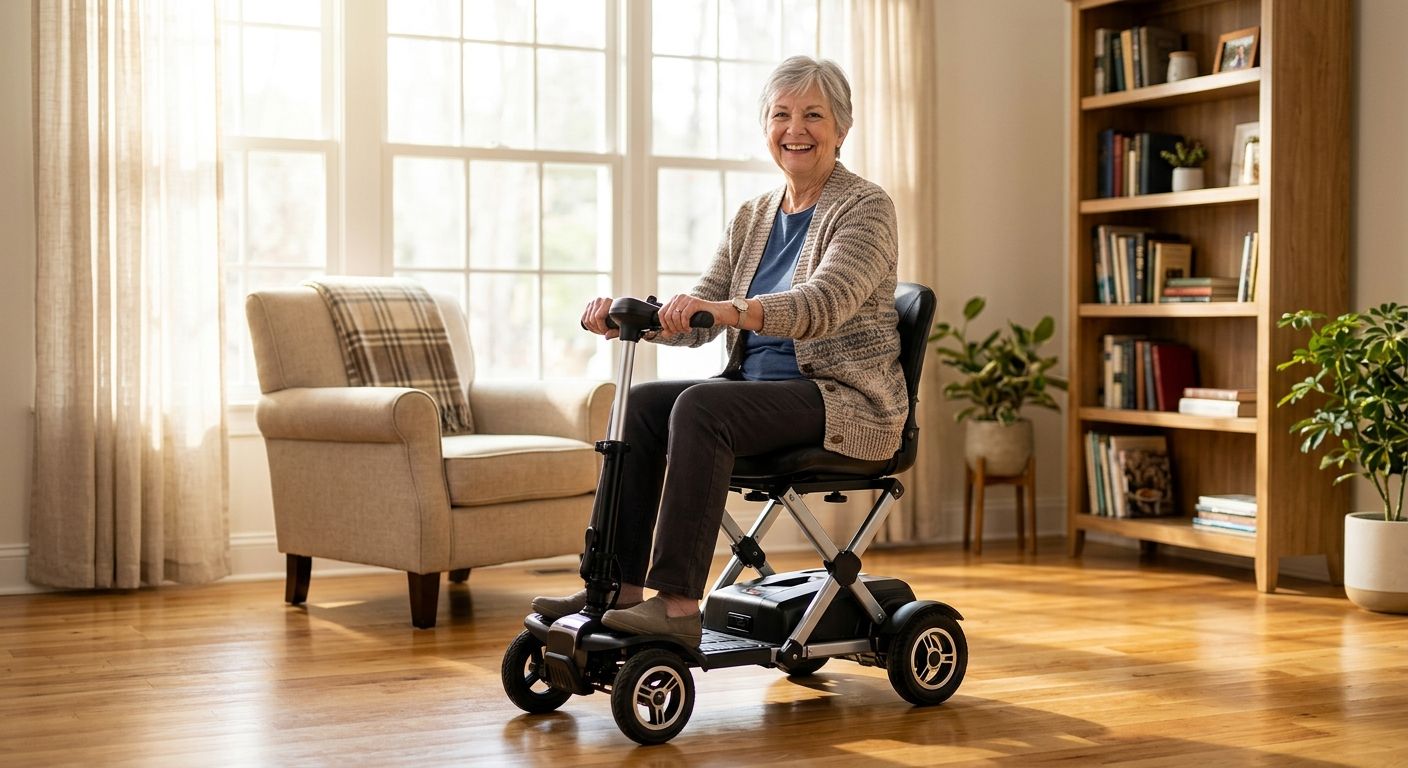
Storage is a common concern, and folding mobility scooters elegantly solve the problem of limited space. These compact mobility scooters typically weigh between 30 and 50 pounds and can be collapsed to a fraction of their assembled size, small enough to store in a closet or a car trunk. Despite their lightweight design, most offer a battery range of 8 to 12 miles, which is more than sufficient for a full day of indoor activities.
We find these models to be an excellent choice for anyone who values convenience without sacrificing essential mobility. A folding scooter’s true advantage is how it facilitates a spontaneous lifestyle in small apartments where every square foot matters. For outdoor or long-distance travel, however, a 4-wheel or heavy-duty scooter may ultimately be more appropriate.
Results may vary; individual outcomes are not guaranteed. Consult a healthcare professional before making clinical decisions. This information is not medical advice and is for informational purposes only. Privacy notice: we do not sell personal information (see Privacy Policy). SMS terms: message and data rates may apply; reply STOP to unsubscribe.
Benefits of Choosing the Right Home Scooter
Once you understand the types of scooters available, the next question is: how will the right one actually improve your daily life? At MedEquipped, we know that selecting ideal motorized mobility scooters for home use transforms everyday routines. The right scooter becomes a seamless part of your home, not an obstacle. From navigating narrow hallways to maintaining independence in daily tasks, it brings freedom and comfort into every corner of your space. Below, we explore three key benefits — better maneuverability, greater independence, and easy storage.
Improved Maneuverability in Tight Spaces
Imagine turning into a narrow bathroom doorway without struggling — that’s what a scooter designed for indoor use can offer. Many home-use scooters feature a tight turning radius of just 27–32 inches, allowing you to glide through standard 32-inch doorways and kitchen galley layouts with ease. This means you can pull up to the bathroom sink, turn around in the kitchen, or enter a closet without repeatedly backing up. Unlike larger outdoor models that require multiple back-and-forth adjustments, a lightweight frame and compact design make repositioning in bedrooms or hallways nearly effortless. 3-wheel mobility scooters often excel here, offering a smaller footprint that handles sharp corners and confined spaces more gracefully. With a lower overall weight, they also reduce the strain on flooring and are easier to maneuver on tile or hardwood. Precise steering and responsive controls let you navigate around furniture and tight corridors without losing momentum, so daily movement feels natural rather than stressful.
Greater Independence in Daily Activities
Choosing a scooter that supports mobility related activities of daily living (mradls), such as moving from the bedroom to the living room or accessing bathroom counters, directly impacts your independence. As defined in our guide on these MRADLs, these essential tasks include transfers, walking, wheeling, and bed mobility — all activities that take place within the home. Instead of struggling with a walker or manual wheelchair, you glide from the bedroom to the breakfast table with ease. With properly fitted motorized mobility scooters for home use, you can reach kitchen countertops to prepare meals, join family at the dinner table, and move between rooms without exhausting transfers. By reducing the physical strain of moving from one spot to another, you preserve energy for the moments that matter most. This independence means you can participate more fully in family life and daily routines. Our team helps match you with a scooter that fits your body and home layout. We handle the paperwork, insurance navigation, and coordination, so you can focus on your mobility freedom.
Convenient Storage and Portability
Folding mobility scooters solve storage challenges in small apartments or senior living suites. Many models fold to about 19 inches high, fitting into a closet or car trunk. We coordinate your order, and your scooter typically arrives within 30–60 days — ready to use and easy to store.
Now, let’s look at which features make these benefits a reality for your home.
How It Works: Evaluating and Selecting a Scooter
Now, let’s walk through exactly how we help you get the right scooter—from evaluation to delivery. Finding the ideal motorized mobility scooters for home use might seem complicated at first, but with MedEquipped, it’s a structured, worry-free process. As your partner in mobility freedom, we truly handle the heavy lifting at every stage so you can focus on what matters most: regaining your independence.
Clinical Assessment and Funding Coordination
Our process begins with a thorough clinical assessment led by a certified Assistive Technology Professional (ATP). This evaluation is the foundation for selecting the perfect device. Our ATPs take precise measurements of your home environment—checking door widths, thresholds, and available turning space—to ensure your new scooter will navigate your daily life seamlessly. We also carefully evaluate key specifications like turning radius and weight capacity. For instance, 3-wheel mobility scooters often provide a tighter turning circle, which can be a game-changer for maneuvering in smaller indoor spaces. Your comfort and safety are our top priorities, and we use these clinical findings to build the foundation for a successful funding application.
Insurance Navigation and Paperwork Support
Once your clinical needs are defined, our team takes over the complex world of insurance. We truly are the partner that handles the paperwork, insurance navigation, and coordination, so you don’t have to manage it alone. Our specialists complete all required insurance forms, obtain pre-authorizations, and coordinate with a wide range of funding sources, from Medicare and Medicaid to private insurance plans. Because every funding situation is unique, we provide a custom quote—much like we do for electric wheelchair cost estimation—to ensure full transparency. Our goal is to secure the necessary approvals efficiently, letting you rest easy while we advocate on your behalf.
Timelines, Delivery, and Ongoing Support
After funding is secured, we order your custom motorized scooter. A custom order typically takes 30–60 days (faster processing) from finalization to delivery. We will coordinate a convenient delivery time, either in your home or at a clinic, where your scooter is hand-fitted to you. Your comfort and ease of use are paramount, and we don’t stop when we hand you the keys. If your selection includes folding mobility scooters for easier transport and storage, we’ll make sure you know exactly how to operate and stow it. Our post-delivery support includes adjustments, user training, and education to ensure you remain confident and mobile for years to come. Once you’ve chosen your scooter, the next step is exploring the features and options available.
Information is not medical advice and is for informational purposes only.
Best Practices for Using a Motorized Scooter at Home
Once you have your scooter, these best practices will help you use it safely and lastingly at home. When using motorized mobility scooters for home use, a little preparation and consistent care go a long way toward maintaining your independence and comfort. We at MedEquipped believe that navigating your living space should feel natural and empowering, and these practical steps are designed to help you do just that.
Preparing Your Home for Safe Scooter Use
A safe home environment is the foundation of independent mobility. The goal is to create clear, accessible pathways between the key areas that support your daily life—the bedroom, bathroom, and kitchen. As our team explains, mobility-related activities of daily living, or MRADLs, are the essential tasks a scooter supports, and your home setup can either enable or hinder them.
Start by removing potential hazards:
- Secure or remove loose rugs that can bunch up and cause a wheel to catch.
- Clear clutter from floors and tuck away electrical cords against baseboards.
- Measure your door widths. Standard scooters typically need about 32 inches of clearance; if your home has narrower openings, users often find 3-wheel mobility scooters easier to turn in tight hallways, or consider how folding mobility scooters can be especially practical for homes with limited storage.
- Map a wide, unobstructed path between frequently used rooms.
These adjustments make daily movement smoother and safer. Remember, these are general tips. Always consult your owner’s manual and your healthcare provider for advice specific to your medical needs and equipment.
Routine Maintenance and Battery Care
A little routine care keeps your power scooter reliable every day. The best charging habit is simple: plug in after each use. Avoid letting the battery drain completely, as deep discharges can shorten its overall lifespan.
A weekly checklist can become second nature:
- Check tire pressure and visually inspect tires for cracks or embedded debris.
- Wipe down the scooter frame, seat, and tiller with a soft, slightly damp cloth to prevent dust and grime buildup.
- Test the lights and horn to ensure they are functioning.
- Confirm that the tiller lock and seat swivel operate freely.
Consistent checks help you catch small issues before they grow, supporting your mobility without interruption. For personalized maintenance schedules, you can always ask our team.
When to Upgrade or Replace Your Scooter
Scooters, like all technology, eventually need an upgrade. Recognizing the right time to make a change can keep you moving comfortably and safely at home. As our resources on power wheelchair types explain, what works today may not be the best fit tomorrow, especially if your in-home needs evolve.
Common signs that an upgrade is worth exploring include:
- A noticeable drop in battery range, requiring more frequent charges to complete your daily routine.
- Difficulty maneuvering in hallways or rooms that once felt spacious.
- An increase in repair needs that disrupts your daily independence.
- A significant change in your mobility level, where you may benefit from a more customized motorized wheelchair.
If you recognize any of these signs, we can help you evaluate your options—just reach out. Upgrading is not about failure; it is about adapting to ensure your equipment continues to support your freedom of movement.
Next, we’ll cover how to maintain your scooter outdoors and on different terrains.
Your Path to Home Mobility Freedom
Getting your custom chair is a simple, guided process. Here is your path to home mobility freedom. We are your partner in mobility freedom, working alongside you every step of the way. While you focus on regaining independence with tools like motorized mobility scooters for home use, we handle the paperwork, insurance navigation, and coordination from start to finish.
- Free Consultation and Coverage Check: Your journey begins with a free, no-obligation consultation. We take the time to understand your daily mobility challenges at home and verify your insurance benefits to set clear expectations.
- In-Home Clinical Evaluation: Our certified Assistive Technology Professionals (ATPs) conduct a thorough in-home assessment. We evaluate your specific needs to determine the best positioning and controls, whether you need the stability of 3-wheel mobility scooters or the portability of folding mobility scooters.
- Insurance Navigation and Approvals: Once your needs are documented, our dedicated team takes over. We submit all required paperwork, manage prior authorizations, and handle any appeals necessary to secure funding.
- Ordering and Fast Manufacturing: After approval, we order your custom-built chair from leading, trusted manufacturers. With our expedited coordination process, your chair is typically built and ready in 30–60 days (faster processing) rather than the industry-standard longer wait.
- Delivery, Fitting, and Training: We deliver your new power wheelchair directly to your home in New York, Georgia, or Michigan. Our team ensures a perfect fit and provides in-person training so you and your family are confident in its safe operation.
After your chair is delivered, our support continues. We remain your dedicated point of contact for any adjustments, service needs, or questions, ensuring you always have a team in your corner.
Results may vary; individual outcomes are not guaranteed.
Resources
- Qualify for a Power Wheelchair with a Walker or Cane
- Get Budget-Friendly Electric Wheelchairs with Medicare Coverage
- Document Mobility Limitations for Power Wheelchair Qualification
- Understand Medicare’s Five Key MRADLs for Wheelchair Eligibility
- Document In-Home Mobility Deficits to Avoid Insurance Denials
- Assess MRADLs for Power Wheelchair Eligibility with Medicare
- Learn Medicare’s MRADL Classes for Power Wheelchair Approval
- Explore the Assistive Technology Industry Association Resources
- Find RESNA Certification for Assistive Technology Professionals