Table of Contents
- Understanding Manual Wheelchairs for Everyday Mobility
- Fundamentals of Manual Wheelchair Selection
- Exploring Manual Wheelchair Options in Depth
- Applying Manual Wheelchair Solutions Practically
- Advanced Considerations for Manual Mobility
- Frequently Asked Questions on Manual Wheelchairs
- Achieving Optimal Mobility with Manual Wheelchairs
Understanding Manual Wheelchairs for Everyday Mobility
At MedEquipped, we believe mobility is key to independence, especially for those navigating daily life in New York, Georgia, and Michigan. Manual wheelchairs offer a reliable solution for everyday mobility, providing lightweight portability and ease of propulsion that make routine activities like shopping or visiting friends more accessible. These self-propelled wheelchairs empower users to maintain control and freedom without relying on batteries or complex mechanics.
We specialize in matching patients with the right basic mobility aids through our certified ATP-led clinical evaluations, ensuring a perfect fit for individual lifestyles and needs. For instance, a patient in New York regained the ability to commute to work independently after we customized a QUICKIE series model, known for its durability and adjustability, as highlighted in our product offerings. Our end-to-end services cover everything from initial intake assessments to delivery and setup, addressing common challenges like uneven sidewalks in urban Georgia areas or long distances in rural Michigan. Drawing on national seating and mobility standards, we guide users through personalized fittings that enhance comfort and safety.
Understanding Medicare coverage is crucial, as it often requires a prescription from a healthcare provider to qualify for manual wheelchairs, which we help navigate seamlessly.
While manual options suit many active users, for those with more complex needs, exploring power wheelchairs models can provide advanced support. We handle the paperwork, insurance navigation, and coordination to get you moving faster, typically in 30-60 days. In the sections ahead, we’ll dive deeper into selection criteria and comparisons to help you choose wisely.
Fundamentals of Manual Wheelchair Selection
Imagine navigating daily life in bustling New York streets or quiet Georgia neighborhoods with the right mobility support. At MedEquipped, we understand how choosing the perfect manual wheelchair can restore independence and comfort. As your partner in mobility freedom, we guide patients through this process, focusing on fundamentals that match your lifestyle in New York, Georgia, and Michigan.
Manual wheelchairs come in several types suited for different needs. Transport chairs prioritize ease for caregivers pushing users over short distances. Self-propelled models allow independent movement with larger rear wheels for better control. Hemi wheelchairs feature low armrests and footplates for users with limited upper body strength to propel themselves. These non-motorized mobility devices emphasize simplicity and portability for everyday home and community use.
Key components make or break a manual wheelchair’s performance. We recommend evaluating frames first: steel offers durability at a heavier weight, ideal for stable indoor use, while aluminum provides lightweight portability without sacrificing strength, as per RESNA guidelines on mobility aids. Wheel configurations matter too—standard 24-inch rear wheels handle smooth surfaces, but larger pneumatic tires tackle uneven terrain in Michigan parks. Basic seating includes foam cushions for pressure relief, and adjustable backrests support posture. Foldability ensures easy transport in cars. For propulsion, push wheelchairs with ergonomic handrims reduce wrist strain during self-use. QUICKIE models stand out for their ultra-light designs, often under 20 pounds, promoting active lifestyles. Regarding seating standards, we align with national seating and mobility best practices to ensure comfort and safety.
Selecting a manual wheelchair involves balancing weight, ease of propulsion, and customizations, especially for Medicare coverage. Consider your daily activities: do you need something foldable for travel or adjustable for prolonged sitting? RESNA position papers stress lightweight frames for reducing user fatigue, quoting standards that recommend models under 25 pounds for active individuals. Medicare eligibility requires documentation of medical necessity, like a doctor’s note on mobility limitations. This criteria helps prioritize features like ergonomic rims to prevent injuries during use. Our evaluations weigh these factors to match entry-level options with your routine, ensuring affordability and function.
| Feature | Standard Model | Lightweight Option | Custom Seating Variant |
|---|---|---|---|
| Weight | 25-35 lbs | 15-25 lbs (ultra-light frame for easier maneuverability) | Adjustable components for varied needs |
| Propulsion | Self-push with standard rims | Ergonomic handrims for reduced strain | Tailored grips for specific user abilities |
| Seating | Basic foam cushion | Contoured for better support | Medicare-eligible custom needs |
This comparison highlights how standard models suit basic indoor needs, while lightweight options enhance maneuverability for outdoor activities, per RESNA data on basic mobility aids. Custom variants allow Medicare-covered adjustments, like specialized cushions, aligning with daily use in varied settings. Emphasizing lightweight models in evaluations ensures Medicare coverage for those needing easier propulsion without excess weight.
Beyond features, Medicare basics are straightforward with proper guidance. Coverage applies to manual wheelchairs deemed medically necessary, requiring a physician’s prescription and functional assessment. Documentation must detail why a power wheelchair isn’t suitable for milder impairments. We handle the paperwork, insurance navigation, and coordination to simplify this, often securing approvals within weeks.
At MedEquipped, our intake process starts with a call to 845-237-2381 or email at intake@medequipped.com. We conduct certified evaluations by Assistive Technology Professionals, reviewing your needs in a comfortable setting. This personalized approach, like helping a Georgia patient choose an aluminum frame for community outings, sets the foundation for success.
While manual options excel for milder needs, comparing them to power wheelchairs reveals when powered assistance might better suit complex mobility challenges. For advanced customizations, explore custom motorized wheelchairs tailored to your unique requirements.
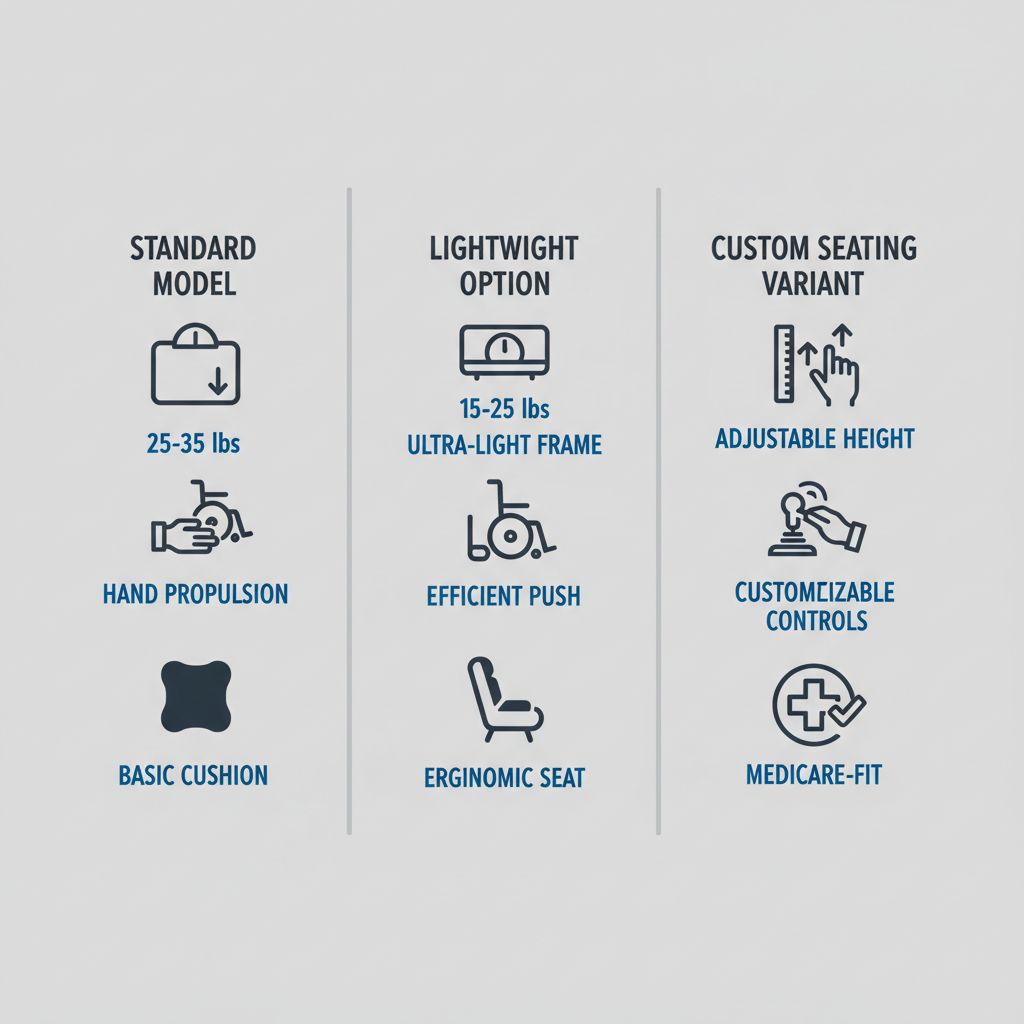
Basic manual wheelchair features comparison for mobility selection
This visual reinforces how thoughtful selection enhances daily independence, transitioning smoothly to deeper customization discussions ahead.
Exploring Manual Wheelchair Options in Depth
When supporting individuals with mobility needs, we often explore manual wheelchairs as a foundational choice for many. These devices offer independence for active users while allowing progression to more advanced options as requirements evolve. In our service areas across New York, Georgia, and Michigan, we guide clients through selections that align with their daily lives, whether navigating urban streets or rural paths. Our clinical team emphasizes features that enhance comfort and efficiency, drawing from established standards to ensure safety and effectiveness.
Key Features for Custom Seating and Propulsion
Custom seating and propulsion are central to optimizing manual wheelchairs for everyday use. We focus on designs that address pressure management and posture, incorporating pressure-relief cushions to prevent skin issues during prolonged sitting. These adaptable push chairs promote better alignment, reducing fatigue for users in demanding environments like busy cities or open countryside. For instance, ergonomic mobility frames allow adjustments for optimal positioning, supporting everything from short commutes to extended outings.
Propulsion mechanisms vary to suit individual strength and terrain. Traditional handrims provide direct control, but lever systems offer mechanical advantage for those with limited upper body power. These aids make uphill pushes easier without sacrificing maneuverability. We recommend propulsion enhancements based on lifestyle, ensuring users maintain autonomy in diverse settings.
Deciding between manual and power options hinges on factors like physical capability, terrain demands, and long-term needs. For active individuals, manual wheelchairs foster self-reliance and portability, often covered under Medicare for custom configurations when prescribed. In contrast, power models suit those with greater fatigue or complex requirements, though they involve battery maintenance and higher costs. Insurance coverage differs: Medicare funds manual wheelchairs for basic mobility with supplier accreditation, while power versions require detailed documentation of medical necessity. Our team navigates these paths, helping clients in Michigan, for example, access funding seamlessly to match their independence goals.
The following table provides a deep dive into manual versus power wheelchair features, aiding decisions on independence and coverage:
| Aspect | Manual Wheelchair | Power Wheelchair |
|---|---|---|
| Propulsion | User-powered with adjustable handrims | Motorized drive |
| Battery Life | N/A – no electronics | Up to 20 miles per charge |
| Custom Seating | Pressure-relief cushions available | Advanced positioning systems |
This comparison highlights how manual wheelchairs excel in simplicity and user control, promoting physical activity per RESNA guidelines, while power wheelchairs extend range for limited stamina. For independence, manual options build strength and portability, ideal for younger or athletic users, but may not suffice as conditions progress. Power models, like our custom power wheelchairs, enhance access to environments but demand charging routines. Medicare emphasizes medical necessity for both, with manual often qualifying faster for everyday needs. We interpret these differences to recommend progressions, ensuring sustained mobility without over-reliance on assistance. A Michigan client we assisted transitioned from manual to power after an evaluation, regaining confidence in daily travel.
Lightweight Models and Their Clinical Benefits
Ultralight manual wheelchairs, often under 20 pounds, transform transport and handling for users. Materials like titanium and carbon fiber reduce weight without compromising durability, making these ideal for car transfers or public transit. The QUICKIE ultralight series stands out for active lifestyles, featuring rigid frames that minimize flex for efficient propulsion.
Clinically, these models boost independence, as noted in the RESNA Wheeled Mobility SIG position paper, which updates evidence on their role in preventing secondary complications like shoulder strain. Reviews praise their balance of lightness and stability, suitable for Medicare-funded customs when addressing specific impairments. We see benefits in rural Georgia settings, where lighter frames ease navigation over uneven ground. Regulatory compliance with FDA standards ensures safety, with features like anti-tippers standard. For complex needs, these align with national seating and mobility history, evolving from basic designs to support prolonged use.
Integrating Evaluations for Personalized Fit
Our ATP-led assessments tailor manual wheelchairs to individual lifestyles and funding criteria. We conduct in-depth reviews of posture, mobility patterns, and environments, ensuring devices meet daily demands in New York offices or Michigan homes.
This process verifies Medicare qualifications, including physician prescriptions and supplier standards. By simulating real-world use, we customize propulsion and seating, preventing mismatches that could hinder function. Clients appreciate how we handle paperwork, aligning with insurance for seamless access. These evaluations underscore our role as a partner in mobility freedom, confirming fits that enhance quality of life while complying with RESNA and FDA regulations.
Applying Manual Wheelchair Solutions Practically
At MedEquipped, we understand that applying manual wheelchair solutions practically can make all the difference in daily life. Whether you’re navigating funding options or learning hands-on usage, our team is here to guide you through every step. We specialize in supporting individuals in New York, Georgia, and Michigan with personalized mobility advice that fits your needs.
Navigating Medicare and Insurance for Acquisition
Securing a manual wheelchair through Medicare or insurance starts with a clear understanding of the requirements. First, obtain a prescription from your healthcare provider demonstrating medical necessity for everyday push mobility. This document outlines how the wheelchair will enhance your independence at home or work. Next, undergo a functional mobility assessment, often involving a therapist to confirm the equipment suits your lifestyle.
We handle the paperwork, insurance navigation, and coordination to simplify this process. For instance, you’ll need to submit detailed documentation, including proof of your current mobility limitations and why alternatives like canes or walkers fall short. In target states like New York and Georgia, our certified team coordinates with suppliers to ensure compliance. Once approved, delivery typically follows within funded wheelchair programs’ timelines.
This overview highlights the key steps, but complexities arise with custom features. Here’s a breakdown to aid your decisions:
| Wheelchair Type | Medicare Requirements | Typical Coverage |
|---|---|---|
| Standard Manual | Prescription and medical necessity | 80-100% with supplier |
| Custom Features | ATP evaluation documentation | Full if clinically justified |
| Lightweight | Functional mobility assessment | Covered for daily use needs |
Aligned with RESNA wheelchair guidelines, this table reflects standard coverage levels. Our role at MedEquipped streamlines approvals by preparing and submitting all necessary forms on your behalf. We’ve helped patients in Michigan expedite their processes, reducing wait times through direct insurer communication. Remember, results may vary; consult your healthcare professional for personalized advice. This support ensures you focus on recovery rather than bureaucracy.
Daily Use Tips and Maintenance for Longevity
Using your manual wheelchair effectively begins with proper propulsion techniques. Start by positioning your hands at the top of the push rims for better control, especially on varied terrain in urban areas like those in Georgia. Lean slightly forward during turns to maintain balance, and practice short bursts of speed to build endurance without strain.
For maintenance, clean the frame weekly with mild soap and water, following FDA safety standards for durable medical equipment. Check tire pressure monthly to prevent flats, and lubricate wheel axles as needed to ensure smooth rolling. One New York patient shared how regular adjustments extended their lightweight model’s life by years, improving comfort during daily outings.
We offer ongoing support, including tips on accessory ordering through trusted partners like national seating and mobility providers. Simple habits, such as storing the chair in a dry space, can maximize durability. Information is not medical advice and is for informational purposes only—always prioritize professional inspections to avoid wear-related issues.
Transitioning from Manual to Power Options
Knowing when to upgrade from manual to power wheelchairs often comes down to increasing fatigue or complex needs. If pushing becomes too taxing for longer distances or uneven surfaces in Michigan, consider an assessment for powered models. Signs include reliance on assistance for basic mobility or worsening conditions that limit arm strength.
Our clinical evaluations help determine the right fit, comparing funding for manual versus power wheelchairs. Medicare may cover power options if clinically justified, similar to manual approvals but with added documentation on progression. We guide you through this in New York, Georgia, and Michigan, handling configurations for comfort.
As your partner in mobility freedom, we provide post-delivery support to ease the switch. Custom motorized wheelchairs from brands like QUICKIE arrive in 30-60 days with faster processing, ensuring seamless integration into your routine.
Advanced Considerations for Manual Mobility
When exploring manual mobility solutions, advanced customizations can significantly enhance user independence and comfort. At MedEquipped, we specialize in tailoring manual wheelchairs in New York, Georgia, and Michigan to meet complex clinical needs. These sophisticated options go beyond basic models, incorporating features like tilt-in-space and recline mechanisms that redistribute pressure and support posture during extended use. For active individuals, ultralight innovations reduce overall weight, making propulsion easier and promoting an energetic lifestyle. We often recommend QUICKIE advanced models for their durable yet lightweight frames, ideal for high-performance push chairs.
In the evolution of national seating and mobility practices, these customizations reflect decades of industry refinement, drawing from expert guidelines to ensure optimal outcomes. Accessory integrations, such as adjustable armrests or specialized cushions, further personalize the setup. Our clinical teams guide clients through these selections, emphasizing how advanced mobility configurations align with daily routines.
For those with seating challenges, features like tilt-in-space allow full posterior support to prevent skin breakdown, while recline options facilitate relaxed positioning for rest. These elements are crucial in clinical applications, addressing issues like spasticity or fatigue common in progressive conditions. We assess each case to integrate such enhancements seamlessly, always prioritizing user safety and efficiency.
The following table outlines key advanced customizations for manual wheelchairs, highlighting their benefits and Medicare compatibility:
| Customization | Benefit | Medicare Fit |
|---|---|---|
| Tilt-in-Space | Pressure redistribution | Covered if documented |
| Recline Options | Posture support | For complex needs |
| Specialty Wheels | Terrain adaptability | ATP evaluation required |
Drawn from RESNA advanced position papers, this comparison underscores how targeted features can transform mobility. Our evaluations ensure clinical justification, aligning with funding criteria to maximize coverage.
Navigating Medicare requires thorough documentation; for instance, tilt-in-space may be covered with evidence of pressure risks, while recline suits documented postural instability. Specialty wheels often necessitate an ATP’s input to justify terrain needs. We handle this verification process, streamlining approvals for eligible clients.
Regulatory standards add another layer, with FDA 510(k) clearances validating safety for these RESNA ultralight wheelchairs paper and similar designs. Certified Assistive Technology Professionals play a pivotal role in complex evaluations, ensuring compliance and fit.
Long-term planning involves monitoring progression; many users transition to power wheelchairs as needs evolve. We partner in mobility freedom by managing custom orders within our 30-60 day timeline, faster than many providers. In a recent Michigan case, we adjusted a client’s manual setup before powering up, maintaining continuity. Our ongoing support includes adjustments and education, fostering sustained independence across our service areas.
Frequently Asked Questions on Manual Wheelchairs
What are the best manual wheelchairs for daily use?Manual wheelchairs, like the lightweight QUICKIE models, offer reliable support for everyday mobility. These foldable daily mobility chairs emphasize ease and portability, ideal for users in New York or Georgia seeking independence. At MedEquipped, we recommend them based on RESNA guidelines for durable, user-friendly designs.
How do custom seating options work for manual wheelchairs?Custom seating involves assessments to fit pressure-relief cushions and backrests to your body. We conduct evaluations in Michigan to ensure comfort and safety, following RESNA standards for personalized fittings as your partner in mobility freedom.
How can I get a manual wheelchair through Medicare?Medicare covers manual wheelchairs if prescribed for medical necessity. We handle the paperwork, insurance navigation, and coordination, streamlining approvals in our service areas to get you moving faster.
What are lightweight manual wheelchair reviews like?Lightweight options, such as QUICKIE 7 series, score high for maneuverability and weight under 30 pounds per RESNA benchmarks. Users praise their balance of strength and portability for active lifestyles.
How do manual wheelchair mobility solutions compare to power wheelchairs?Manual options suit lighter needs, while power wheelchairs provide advanced support for complex mobility. National seating and mobility concepts evolved from basic frames to powered assists; we guide choices based on your daily requirements.
What about the FDA wheelchair 510(k) guidance for standards?FDA wheelchair 510(k) guidance ensures safety testing for manual and power models. RESNA aligns with this for quality assurance. Contact us at intake@medequipped.com for compliant recommendations and quick tips on accessories like armrests, with timelines of 30-60 days for custom setups.
Achieving Optimal Mobility with Manual Wheelchairs
We’ve explored how manual wheelchairs serve as reliable, cost-effective mobility solutions, from basic and transport models to Medicare-covered options that align with national seating and mobility standards. Personalized evaluations ensure the perfect fit, highlighting benefits like lightweight maneuverability and advanced customizations for enhanced comfort and long-term use. Compared to power wheelchairs, these provide simpler control for users with greater upper body strength, promoting independence without complex maintenance.
As your partner in mobility freedom, we’re here to help navigate evaluations and delivery on our 30-60 day timelines, with ongoing support in New York, Georgia, and Michigan. We handle the paperwork, insurance navigation, and coordination so you focus on what matters. Ready for personalized mobility aids? Contact us at 845-237-2381 or intake@medequipped.com to begin your intake process today.
Resources
- Explore MedEquipped Power Wheelchair Models and Features
- Acquire Custom Motorized Wheelchairs with Fast Support
- Obtain Tailored Power Wheelchairs with Quick Delivery
- Understand DME Coverage for Custom Power Wheelchairs
- Discover MedEquipped Custom Wheelchair Solutions Process
- Read MedEquipped Customer Testimonials on Wheelchair Services
- Become a Patient for Custom Power Wheelchair Assistance
- Access RESNA Position Papers on Wheelchair Guidelines
- Review RESNA Draft Paper on Ultralight Wheelchairs
- Prepare FDA 510(k) Guidance for Powered Wheelchairs