MedEquipped

Category: Health & Wellness

  • Understanding Wheelchair Funding: Grants and Resources for 2026

    Understanding Wheelchair Funding: Grants and Resources for 2026

    Table of Contents

    Understanding Wheelchair Funding Essentials

    For many individuals facing mobility challenges, the path to independence can feel overwhelming, especially when high costs stand in the way. Power wheelchairs often exceed $10,000, creating barriers that limit access to essential equipment. This is where wheelchair funding steps in, providing vital financial support to make these life-changing devices attainable.

    At MedEquipped, we serve as your partner in mobility freedom, specializing in wheelchair funding in New York, Georgia, and Michigan. Our certified Assistive Technology Professionals (ATPs) conduct personalized clinical evaluations to match your needs with the right options, like the reliable QUICKIE series models. We handle the paperwork, insurance navigation, and coordination, guiding you through government programs such as Medicaid and Medicare, as well as custom motorized wheelchairs tailored for comfort and performance. Imagine a Georgia resident who, after battling paperwork delays, finally receives their chair in just 30-60 days—our faster processing timeline turns frustration into freedom.

    Understanding these power wheelchair assistance programs is key to unlocking mobility aid financing. From wheelchair grants to veteran wheelchair grants and VA benefits, various avenues exist to bridge financial gaps. Nonprofits and insurance also play crucial roles in easing access. In the sections ahead, we’ll explore eligibility criteria, application steps, and how our end-to-end support ensures a smoother journey toward greater independence and quality of life.

    Core Programs for Wheelchair Funding

    When navigating mobility challenges, understanding core wheelchair funding options can make a significant difference in restoring independence. These foundational government programs, including Medicare, Medicaid, and VA benefits, provide essential support for acquiring power wheelchairs, especially for residents in New York, Georgia, and Michigan. At MedEquipped, we partner in mobility freedom by guiding patients through these wheelchair funding pathways, ensuring they access the right equipment without the overwhelming bureaucracy.

    Medicare Coverage

    Medicare serves as a primary resource for many seniors and individuals with disabilities seeking durable medical equipment like custom power wheelchairs. Under Part B, medicare wheelchair coverage applies when mobility within the home is impaired, requiring a face-to-face medical examination and a written prescription from a doctor to establish medical necessity. This coverage typically handles 80% of the approved amount after the deductible, with patients responsible for the remaining 20%, and suppliers must accept Medicare assignment to avoid excess charges. For power wheelchairs, options include rental for up to 13 months before transitioning to purchase, helping manage costs for complex needs. Consider a senior in Michigan facing indoor mobility limits; our team coordinates the clinical evaluation to meet these criteria, streamlining approval so they can focus on daily life rather than paperwork.

    Federal programs like Medicare set a baseline, but state variations add layers of complexity when comparing options for power wheelchairs. The following table outlines key differences to help you evaluate which might fit your situation best. Data sourced from CMS and VA guidelines ensures accuracy in eligibility and processes.

    ProgramEligibility CriteriaCoverage for Power WheelchairsApplication Process
    MedicaidLow-income individuals, medically necessaryUp to full cost if prescribedState-specific; submit medical documentation
    MedicareSeniors/disabled with Part BDurable medical equipment coverageDoctor’s order required
    VA BenefitsVeterans with service-connected disabilitiesFull coverage for eligible vetsVA medical center application

    This comparison highlights how Medicare emphasizes broad DME access for qualifying beneficiaries, while Medicaid offers flexibility through state waivers, and VA prioritizes service-related needs. Choosing the right program depends on your income, veteran status, and regional rules—factors we assess early to recommend the best path forward.

    Medicaid plays a crucial role in assistive device subsidies, particularly for low-income patients across our service areas. Coverage varies by state: in New York and Michigan, it often funds up to the full cost of prescribed power wheelchairs if deemed medically necessary, with approval rates around 85% when documentation is thorough, per CMS policies. Georgia’s Medicaid includes specific waivers for mobility funding initiatives, covering custom features for complex cases. We handle the paperwork, insurance navigation, and coordination, gathering doctor’s orders, financial statements, and home assessments to prove necessity. This empathetic approach acknowledges the financial stress of mobility loss, ensuring patients in Georgia receive tailored support without delays.

    VA Benefits

    For veterans, VA programs deliver robust wheelchair grants and adaptive equipment, covering full costs for those with service-connected disabilities. Eligibility requires enrollment in VA healthcare and a clinical evaluation confirming need, often through local medical centers. In New York, Georgia, and Michigan, we collaborate with VA providers to facilitate prescriptions and custom configurations, like heavy-duty bases for rugged lifestyles. This seamless integration restores confidence for vets pursuing active lives.

    At MedEquipped, we handle the paperwork, insurance navigation, and coordination from evaluation to delivery, typically within 30-60 days for faster processing. Our certified Assistive Technology Professionals (ATPs) conduct thorough assessments, tying clinical proof to funding requirements across these programs. Whether it’s Medicare’s rental options or Medicaid’s state-specific subsidies, we demystify the process with patient scenarios in mind, like helping a Georgia family secure VA coverage. This end-to-end service empowers you to access custom motorized wheelchairs without hassle, though results may vary and we recommend consulting healthcare professionals for personalized advice.
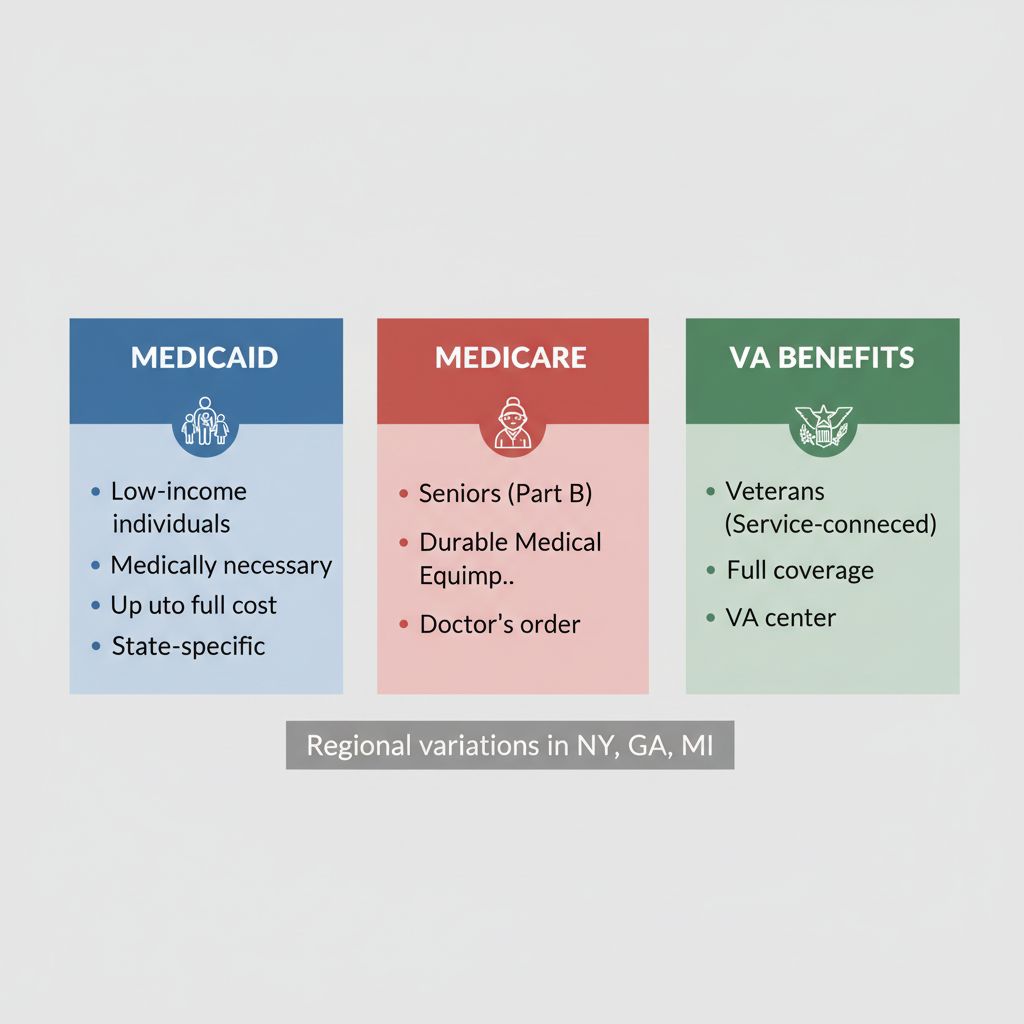
    Infographic comparing Medicaid, Medicare, and VA wheelchair funding programs with eligibility and coverage details

    Comparison of key wheelchair funding programs for mobility assistance

    Beyond these core options, additional wheelchair grants layer on top, offering even more tailored support for unique circumstances.

    Exploring Grants and Nonprofit Options

    When it comes to securing wheelchair funding, many individuals with mobility challenges turn to grants and nonprofit programs to make custom power wheelchairs more accessible. At MedEquipped, we specialize in guiding clients through these options, especially in New York, Georgia, and Michigan, where state-specific resources can significantly ease the financial burden. Our team integrates these funding sources into the clinical evaluation process, ensuring that your needs align with available programs for faster approvals and personalized solutions.

    Federal and State Grant Opportunities

    Federal programs like the section 5310 mobility grants play a vital role in supporting enhanced mobility for seniors and people with disabilities. Administered by the Federal Transit Administration, these grants fund capital costs for equipment such as wheelchair-accessible vehicles and lifts, with up to 80% federal matching for eligible projects. In our service areas, this translates to opportunities for individuals needing power wheelchairs to improve daily independence, often covering $5,000 or more when tied to transportation needs.

    State grants build on federal foundations, tailored to regional priorities. In New York, independence funds through the Office for People With Developmental Disabilities help cover assistive devices, requiring proof of medical necessity via clinical assessments. Georgia’s Division of Rehabilitation Services offers disability equipment subsidies for vocational rehab participants, focusing on work-related mobility. Michigan’s vocational rehabilitation program provides accessibility aid financing for those pursuing employment or education, with funding up to several thousand dollars based on case evaluations. We often help clients in these states connect their clinical needs—assessed by our certified Assistive Technology Professionals—to grant applications, streamlining documentation and highlighting how models like the ROVI X3 fit specific lifestyles.

    Eligibility typically includes being a low-income individual with a documented disability, confirmed by a physician’s letter and income verification under federal poverty guidelines. For instance, Section 5310 prioritizes those where traditional transit falls short, while state programs emphasize functional improvements. Application steps involve submitting needs assessments to designated state agencies, often coordinated with nonprofits; processing can take 60-90 days, but our expertise in paperwork navigation accelerates this.

    The following table compares key aspects of wheelchair grants versus traditional government programs, drawing from Department of Transportation and agency data:

    SourceTypical Funding AmountEligibility FocusProcessing Time
    Federal Grants (e.g., Section 5310)$5,000+ for equipmentSeniors/disabled, medical necessity60-90 days
    Nonprofit GrantsUp to full costLow-income, specific disabilities30-90 days
    Medicaid/MedicareFull/partial coverageIncome/medical necessity60+ days

    This comparison highlights how federal grants like Section 5310 offer substantial support but require coordination, while nonprofits provide quicker, flexible aid. Stacking these with state programs can cover comprehensive costs for power wheelchairs, and we assist in identifying overlaps to maximize benefits without delays.

    Nonprofit Assistance Programs

    Nonprofit organizations fill critical gaps in wheelchair grants, particularly for low-income individuals and those with disabilities seeking basic or specialized mobility aids. Groups like the free wheelchair mission distribute over 176 wheelchairs daily worldwide, focusing on underserved communities, though U.S.-based applicants can access similar domestic networks for power models. Other key players include the National Multiple Sclerosis Society and Easterseals, which offer targeted funding for adaptive equipment, often covering up to the full cost of devices like our QUICKIE Q700 M for enhanced outdoor performance.

    Eligibility centers on financial need and disability impact, with income thresholds around 200% of the federal poverty level and requirements for medical documentation, such as a functional mobility assessment. For example, programs prioritize applicants in rural Georgia or urban Michigan facing barriers to employment, using criteria like inability to self-propel manually. We see many clients qualify through these disability equipment subsidies, especially when paired with veteran benefits or low-income supports; bullet-point requirements often include:

    • Proof of disability via doctor’s certification
    • Household income statements
    • Description of how the wheelchair addresses daily challenges

    In New York, nonprofits coordinate with state aids for seamless applications, reducing hurdles like lengthy waitlists.

    At MedEquipped, our role in coordinating nonprofit assistance is hands-on—we handle the paperwork, insurance navigation, and coordination from initial intake to delivery, typically within 30-60 days for faster processing. For a client needing the TDX SP2 HD heavy-duty base, we gather eligibility proofs, align with Free Wheelchair Mission guidelines for basic funding, and submit on their behalf, ensuring custom features like adjustable seating are grant-eligible. This partnership not only simplifies the process but also educates patients on stacking funds, such as combining nonprofit grants with Medicaid for comprehensive coverage.

    To further illustrate options, here’s a comparison of grant types based on program data:

    Grant TypeTypical Funding AmountKey RequirementsBest For
    Federal$5,000+Medical necessity, state coord.Transportation integration
    State$1,000-$10,000Income proof, vocational goalsRegional needs like work
    NonprofitUp to full costDisability docs, low-income focusQuick aid for daily mobility

    Analyzing these, nonprofits often provide the speediest path for urgent needs, while federal and state layers add depth for complex cases. We encourage stacking where possible, as it empowers greater access to our custom motorized wheelchairs. This approach addresses common application challenges empathetically, helping you focus on mobility freedom rather than bureaucracy.

    Step-by-Step Application Processes

    Navigating wheelchair funding can feel overwhelming, but with clear steps, you can move forward confidently. We at MedEquipped are here as your partner in mobility freedom, handling the paperwork, insurance navigation, and coordination to simplify the process. In this section, we’ll outline general U.S. funding applications and dive into Georgia-specific wheelchair programs, empowering you with actionable guidance tailored to your needs in states like New York, Georgia, and Michigan.

    General US Funding Applications

    Applying for funding assistance for wheelchairs starts with a structured approach to ensure you’re prepared for success. We recommend beginning with a medical evaluation to establish necessity, followed by gathering essential documents. This process applies universally to programs like Medicare, Medicaid, and wheelchair grants, with some variations by state. For low-income individuals, many options prioritize accessibility, and stacking multiple funding sources is often possible to cover costs.

    Here are the seven key steps for general U.S. funding applications:

    1. Schedule a Medical Evaluation: Consult your physician for a face-to-face assessment confirming the need for a custom motorized wheelchair. This includes documenting your mobility limitations and home environment, as required by CMS guidelines for Medicare coverage.
    2. Gather Identification and Income Proof: Collect personal ID, proof of residency, and financial statements. For Medicaid, income verification is crucial, especially for low-income qualifiers.
    3. Obtain a Doctor’s Prescription: Secure a written order prior to delivery (WOPD) specifying the wheelchair type, such as a heavy-duty model for your needs.
    4. Complete Assessment Reports: Work with a certified Assistive Technology Professional (ATP) for a detailed functional evaluation, including photos or measurements of your space.
    5. Research Eligibility and Forms: Check program-specific requirements, like VA disability housing grants for veterans, which offer up to $126,526 for adaptations if you have service-connected disabilities.
    6. Submit the Application: Use online portals, mail, or in-person methods depending on the program. We handle submissions to streamline this.
    7. Follow Up and Track Progress: Monitor status via agency contacts and prepare for appeals if needed, with typical timelines ranging from 30 to 90 days.

    Preparing documentation early can prevent delays. For example, under Medicare, a doctor’s order and medical records are essential, while wheelchair grants for low-income individuals often require a needs statement. The following table compares requirements across programs, drawing from CMS and state guidelines, to help you organize:

    ProgramKey Documents NeededSubmission MethodTypical Approval Time
    MedicareDoctor’s order, medical recordsOnline/physician submit30-60 days
    Georgia MedicaidIncome proof, assessment reportState portal/mail45-90 days
    Nonprofit GrantsApplication form, photos/needs statementOnline/email30-60 days

    This comparison highlights the importance of tailoring your packet to each source. At MedEquipped, we assist with these submissions, often reducing wait times to our standard 30-60 days for processing. Tips for smooth approvals include starting with early clinical fittings to demonstrate urgency and contacting us at 845-237-2381 for personalized checklists. Remember, results may vary; individual outcomes are not guaranteed. For veterans, VA applications through regional offices can cover wheelchair-related home modifications, with eligibility based on service-connected conditions like limb loss.

    Funding amounts from wheelchair grants vary, but programs like those from nonprofits can provide $1,000 to $5,000, while federal options scale higher for complex needs. Always consult a healthcare professional for advice tailored to your situation.

    Georgia-Specific Wheelchair Programs

    In Georgia, state resources through the Department of Community Health offer robust support for wheelchair funding, particularly via Medicaid waivers for mobility aids. These programs focus on eligible residents with disabilities, emphasizing low-income access and timely processing. As a key service state for us at MedEquipped, we coordinate closely with local agencies to expedite approvals, making Georgia wheelchair programs more accessible.

    Eligibility typically requires Georgia residency, a qualifying disability, and income under state thresholds for Medicaid. For wheelchair grants, low-income individuals can access up to $10,000 through state-funded initiatives, though amounts depend on needs assessments. Grant qualification steps mirror federal ones but include state-specific forms like the Medicaid Waiver Application.

    Here’s a streamlined process for Georgia applications:

    1. Initial Intake with State Resources: Contact the Georgia Department of Community Health for a preliminary eligibility screening, providing basic ID and medical history.
    2. Medical and Functional Assessment: Undergo an in-home evaluation by a licensed provider to justify the custom motorized wheelchair.
    3. Compile State-Specific Documents: Include income proof, a physician’s certification, and details on daily living impacts, as outlined in state guidelines.
    4. Submit via Georgia Portals: Use the state’s online system or mail to the Division of Medicaid Services, often with our assistance for completeness.
    5. Await Review and Follow Up: Expect state reviews within 45 days; we track progress and handle any supplemental requests.
    6. Integrate Federal Stacking: Combine with Medicare or VA funds if applicable, maximizing coverage without duplication.

    We make the Georgia application straightforward by serving as your central coordinator. Our team at MedEquipped manages funding applications in Georgia, from document review to submission, leveraging our expertise to cut typical delays. For instance, while federal Medicaid might take 90 days, state processing often aligns closer to 45-60 days with our involvement. Reach out to intake@medequipped.com for a free consultation.

    To illustrate differences, consider this table on state versus federal timelines:

    Timeline AspectFederal Programs (e.g., Medicare)Georgia State Programs
    Initial Review30 days15-30 days
    Full Approval60-90 days45-75 days
    With Assistance30-60 days (via MedEquipped)30-45 days

    Post-approval tips include scheduling delivery fittings promptly. Information is for informational purposes only and not medical advice. We’re committed to your mobility journey in Georgia and beyond.

    Veteran and Advanced Funding Strategies

    Veterans facing mobility challenges deserve accessible paths to independence, and wheelchair funding plays a crucial role in achieving that. At MedEquipped, we specialize in guiding veterans through specialized options like VA programs and nonprofit grants, tailored for states such as New York, Georgia, and Michigan. These resources can cover custom motorized wheelchairs, ensuring you get the right fit for your needs.

    VA programs offer robust support for veterans with service-connected disabilities rated at 10% or higher. Programs like the Specially Adapted Housing (SAH) grant and CHAMPVA provide funding for adaptive equipment, including power wheelchairs essential for daily living. Eligibility typically requires proof of a qualifying disability, such as limb loss or severe vision impairment, and ownership or intent to purchase a home. We handle the paperwork, insurance navigation, and coordination to streamline applications, drawing from official VA guidelines that emphasize medical necessity. For instance, the SAH grant covers up to $126,526 for FY 2026, usable for multiple lifetime adaptations. Applications involve submitting service records and physician prescriptions through VA centers, with processing times around 30-60 days according to VA data. This veteran wheelchair grants pathway ensures comprehensive coverage for full adaptive setups, helping you regain mobility without financial strain.

    Many veterans encounter delays or gaps in standard funding, navigating bureaucratic hurdles while managing health needs. This is where comparing options becomes key to finding the best fit.

    OptionEligibilityCoverage DetailsApplication Timeline
    VA ProgramsService-connected disabilityFull adaptive equipmentVA center processing, 30-60 days
    Nonprofit Veteran GrantsHonorably discharged, need-basedSupplemental funding up to $5,000Online apps, 45 days avg

    As shown in the table, VA options provide deeper coverage but may take longer, while nonprofits offer quicker supplemental aid sourced from organizations supporting disabled vets. Sourced from VA and nonprofit resources, this comparison highlights how to layer funds effectively.

    Building on VA benefits, stacking with Medicaid can cover remaining costs for enhanced setups. For example, after VA approval, Medicaid in New York or Georgia might fund accessories not fully reimbursed. Nonprofits like those for military mobility assistance fill gaps, providing up to $5,000 for wheelchairs based on honorably discharged status and financial need. Applications are straightforward online, averaging 45 days, and often require basic documentation like DD-214 forms.

    At MedEquipped, we honor veterans by offering ATP evaluations compliant with VA standards, customizing power wheelchair models like the heavy-duty TDX SP2 HD for complex cases. Our 30-60 days processing ensures faster access. Here are key strategies:

    • Gather service records and medical notes early to speed eligibility.
    • Combine veteran adaptive funding with state Medicaid for full coverage.
    • Partner with us for ongoing support, from delivery to adjustments.

    We provide veteran-specific guidance, answering common questions on timelines and applications to ease your journey toward mobility freedom. Consult a healthcare professional for personalized advice; results may vary.

    Frequently Asked Questions on Funding

    We understand wheelchair funding can feel overwhelming, so here are answers to common queries to guide you through the process in New York, Georgia, and Michigan.

    What are the eligibility requirements for wheelchair grants? Medicare Part B covers medically necessary power wheelchairs after a doctor’s exam and prescription. We verify coverage and handle paperwork to simplify eligibility.

    How long are Medicaid wait times for wheelchair funding in Georgia? Wait times vary by state but typically range from 30-60 days; we expedite processing with evaluations to get you moving faster.

    What if my grant denial for wheelchair funding is appealed? Appeals require detailed medical documentation; our team assists with resubmissions, often resolving issues within weeks—contact us at intake@medequipped.com.

    Can I combine funds for wheelchair grants and insurance? Yes, blending Medicare, Medicaid, or private sources is common; we coordinate multiple payers to cover medequipped custom wheelchairs tailored to your needs.

    What tips help low-income patients access veteran wheelchair grants? Prioritize VA certifications and explore state aids; for veterans in Michigan, we guide applications and provide low-cost evaluation options.

    Are there deadlines for wheelchair funding in New York? Applications should start early to meet insurer timelines; our 30-60 day process ensures prompt delivery—reach us at (845) 237-2381 for help.

    In wrapping up your wheelchair funding journey, we’ve explored key options like Medicaid, wheelchair grants, and veteran wheelchair grants to secure the mobility you need. Whether navigating steps in New York, funding in Georgia, or services in Michigan, clinical evaluations ensure the perfect fit, while we handle the paperwork, insurance navigation, and coordination for a smoother process. Our 30-60 days faster processing gets you moving sooner.

    As your partner in mobility freedom, we’re here to provide personalized guidance toward independence. Contact us today at 845-237-2381 or intake@medequipped.com to start your custom motorized wheelchair path—we look forward to supporting you every step of the way.

    Resources

  • Top Manual Wheelchairs for 2026: Compare Features and Prices

    Top Manual Wheelchairs for 2026: Compare Features and Prices

    Table of Contents

    Understanding Manual Wheelchairs for Everyday Mobility

    At MedEquipped, we believe mobility is key to independence, especially for those navigating daily life in New York, Georgia, and Michigan. Manual wheelchairs offer a reliable solution for everyday mobility, providing lightweight portability and ease of propulsion that make routine activities like shopping or visiting friends more accessible. These self-propelled wheelchairs empower users to maintain control and freedom without relying on batteries or complex mechanics.

    We specialize in matching patients with the right basic mobility aids through our certified ATP-led clinical evaluations, ensuring a perfect fit for individual lifestyles and needs. For instance, a patient in New York regained the ability to commute to work independently after we customized a QUICKIE series model, known for its durability and adjustability, as highlighted in our product offerings. Our end-to-end services cover everything from initial intake assessments to delivery and setup, addressing common challenges like uneven sidewalks in urban Georgia areas or long distances in rural Michigan. Drawing on national seating and mobility standards, we guide users through personalized fittings that enhance comfort and safety.

    Understanding Medicare coverage is crucial, as it often requires a prescription from a healthcare provider to qualify for manual wheelchairs, which we help navigate seamlessly.

    While manual options suit many active users, for those with more complex needs, exploring power wheelchairs models can provide advanced support. We handle the paperwork, insurance navigation, and coordination to get you moving faster, typically in 30-60 days. In the sections ahead, we’ll dive deeper into selection criteria and comparisons to help you choose wisely.

    Fundamentals of Manual Wheelchair Selection

    Imagine navigating daily life in bustling New York streets or quiet Georgia neighborhoods with the right mobility support. At MedEquipped, we understand how choosing the perfect manual wheelchair can restore independence and comfort. As your partner in mobility freedom, we guide patients through this process, focusing on fundamentals that match your lifestyle in New York, Georgia, and Michigan.

    Manual wheelchairs come in several types suited for different needs. Transport chairs prioritize ease for caregivers pushing users over short distances. Self-propelled models allow independent movement with larger rear wheels for better control. Hemi wheelchairs feature low armrests and footplates for users with limited upper body strength to propel themselves. These non-motorized mobility devices emphasize simplicity and portability for everyday home and community use.

    Key components make or break a manual wheelchair’s performance. We recommend evaluating frames first: steel offers durability at a heavier weight, ideal for stable indoor use, while aluminum provides lightweight portability without sacrificing strength, as per RESNA guidelines on mobility aids. Wheel configurations matter too—standard 24-inch rear wheels handle smooth surfaces, but larger pneumatic tires tackle uneven terrain in Michigan parks. Basic seating includes foam cushions for pressure relief, and adjustable backrests support posture. Foldability ensures easy transport in cars. For propulsion, push wheelchairs with ergonomic handrims reduce wrist strain during self-use. QUICKIE models stand out for their ultra-light designs, often under 20 pounds, promoting active lifestyles. Regarding seating standards, we align with national seating and mobility best practices to ensure comfort and safety.

    Selecting a manual wheelchair involves balancing weight, ease of propulsion, and customizations, especially for Medicare coverage. Consider your daily activities: do you need something foldable for travel or adjustable for prolonged sitting? RESNA position papers stress lightweight frames for reducing user fatigue, quoting standards that recommend models under 25 pounds for active individuals. Medicare eligibility requires documentation of medical necessity, like a doctor’s note on mobility limitations. This criteria helps prioritize features like ergonomic rims to prevent injuries during use. Our evaluations weigh these factors to match entry-level options with your routine, ensuring affordability and function.

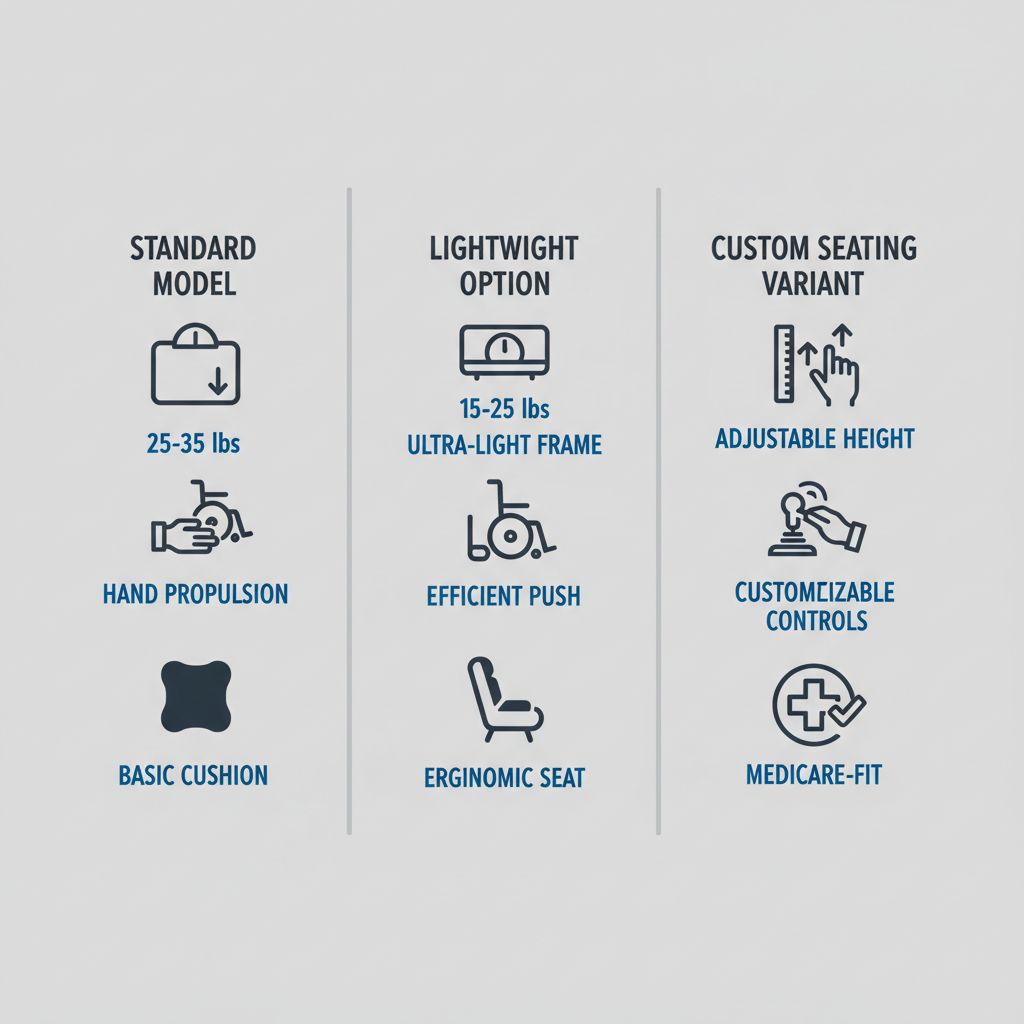
    FeatureStandard ModelLightweight OptionCustom Seating Variant
    Weight25-35 lbs15-25 lbs (ultra-light frame for easier maneuverability)Adjustable components for varied needs
    PropulsionSelf-push with standard rimsErgonomic handrims for reduced strainTailored grips for specific user abilities
    SeatingBasic foam cushionContoured for better supportMedicare-eligible custom needs

    This comparison highlights how standard models suit basic indoor needs, while lightweight options enhance maneuverability for outdoor activities, per RESNA data on basic mobility aids. Custom variants allow Medicare-covered adjustments, like specialized cushions, aligning with daily use in varied settings. Emphasizing lightweight models in evaluations ensures Medicare coverage for those needing easier propulsion without excess weight.

    Beyond features, Medicare basics are straightforward with proper guidance. Coverage applies to manual wheelchairs deemed medically necessary, requiring a physician’s prescription and functional assessment. Documentation must detail why a power wheelchair isn’t suitable for milder impairments. We handle the paperwork, insurance navigation, and coordination to simplify this, often securing approvals within weeks.

    At MedEquipped, our intake process starts with a call to 845-237-2381 or email at intake@medequipped.com. We conduct certified evaluations by Assistive Technology Professionals, reviewing your needs in a comfortable setting. This personalized approach, like helping a Georgia patient choose an aluminum frame for community outings, sets the foundation for success.

    While manual options excel for milder needs, comparing them to power wheelchairs reveals when powered assistance might better suit complex mobility challenges. For advanced customizations, explore custom motorized wheelchairs tailored to your unique requirements.

    Infographic comparing features of standard, lightweight, and custom manual wheelchairs including weight, propulsion, and seating specs.

    Basic manual wheelchair features comparison for mobility selection

    This visual reinforces how thoughtful selection enhances daily independence, transitioning smoothly to deeper customization discussions ahead.

    Exploring Manual Wheelchair Options in Depth

    When supporting individuals with mobility needs, we often explore manual wheelchairs as a foundational choice for many. These devices offer independence for active users while allowing progression to more advanced options as requirements evolve. In our service areas across New York, Georgia, and Michigan, we guide clients through selections that align with their daily lives, whether navigating urban streets or rural paths. Our clinical team emphasizes features that enhance comfort and efficiency, drawing from established standards to ensure safety and effectiveness.

    Key Features for Custom Seating and Propulsion

    Custom seating and propulsion are central to optimizing manual wheelchairs for everyday use. We focus on designs that address pressure management and posture, incorporating pressure-relief cushions to prevent skin issues during prolonged sitting. These adaptable push chairs promote better alignment, reducing fatigue for users in demanding environments like busy cities or open countryside. For instance, ergonomic mobility frames allow adjustments for optimal positioning, supporting everything from short commutes to extended outings.

    Propulsion mechanisms vary to suit individual strength and terrain. Traditional handrims provide direct control, but lever systems offer mechanical advantage for those with limited upper body power. These aids make uphill pushes easier without sacrificing maneuverability. We recommend propulsion enhancements based on lifestyle, ensuring users maintain autonomy in diverse settings.

    Deciding between manual and power options hinges on factors like physical capability, terrain demands, and long-term needs. For active individuals, manual wheelchairs foster self-reliance and portability, often covered under Medicare for custom configurations when prescribed. In contrast, power models suit those with greater fatigue or complex requirements, though they involve battery maintenance and higher costs. Insurance coverage differs: Medicare funds manual wheelchairs for basic mobility with supplier accreditation, while power versions require detailed documentation of medical necessity. Our team navigates these paths, helping clients in Michigan, for example, access funding seamlessly to match their independence goals.

    The following table provides a deep dive into manual versus power wheelchair features, aiding decisions on independence and coverage:

    AspectManual WheelchairPower Wheelchair
    PropulsionUser-powered with adjustable handrimsMotorized drive
    Battery LifeN/A – no electronicsUp to 20 miles per charge
    Custom SeatingPressure-relief cushions availableAdvanced positioning systems

    This comparison highlights how manual wheelchairs excel in simplicity and user control, promoting physical activity per RESNA guidelines, while power wheelchairs extend range for limited stamina. For independence, manual options build strength and portability, ideal for younger or athletic users, but may not suffice as conditions progress. Power models, like our custom power wheelchairs, enhance access to environments but demand charging routines. Medicare emphasizes medical necessity for both, with manual often qualifying faster for everyday needs. We interpret these differences to recommend progressions, ensuring sustained mobility without over-reliance on assistance. A Michigan client we assisted transitioned from manual to power after an evaluation, regaining confidence in daily travel.

    Lightweight Models and Their Clinical Benefits

    Ultralight manual wheelchairs, often under 20 pounds, transform transport and handling for users. Materials like titanium and carbon fiber reduce weight without compromising durability, making these ideal for car transfers or public transit. The QUICKIE ultralight series stands out for active lifestyles, featuring rigid frames that minimize flex for efficient propulsion.

    Clinically, these models boost independence, as noted in the RESNA Wheeled Mobility SIG position paper, which updates evidence on their role in preventing secondary complications like shoulder strain. Reviews praise their balance of lightness and stability, suitable for Medicare-funded customs when addressing specific impairments. We see benefits in rural Georgia settings, where lighter frames ease navigation over uneven ground. Regulatory compliance with FDA standards ensures safety, with features like anti-tippers standard. For complex needs, these align with national seating and mobility history, evolving from basic designs to support prolonged use.

    Integrating Evaluations for Personalized Fit

    Our ATP-led assessments tailor manual wheelchairs to individual lifestyles and funding criteria. We conduct in-depth reviews of posture, mobility patterns, and environments, ensuring devices meet daily demands in New York offices or Michigan homes.

    This process verifies Medicare qualifications, including physician prescriptions and supplier standards. By simulating real-world use, we customize propulsion and seating, preventing mismatches that could hinder function. Clients appreciate how we handle paperwork, aligning with insurance for seamless access. These evaluations underscore our role as a partner in mobility freedom, confirming fits that enhance quality of life while complying with RESNA and FDA regulations.

    Applying Manual Wheelchair Solutions Practically

    At MedEquipped, we understand that applying manual wheelchair solutions practically can make all the difference in daily life. Whether you’re navigating funding options or learning hands-on usage, our team is here to guide you through every step. We specialize in supporting individuals in New York, Georgia, and Michigan with personalized mobility advice that fits your needs.

    Securing a manual wheelchair through Medicare or insurance starts with a clear understanding of the requirements. First, obtain a prescription from your healthcare provider demonstrating medical necessity for everyday push mobility. This document outlines how the wheelchair will enhance your independence at home or work. Next, undergo a functional mobility assessment, often involving a therapist to confirm the equipment suits your lifestyle.

    We handle the paperwork, insurance navigation, and coordination to simplify this process. For instance, you’ll need to submit detailed documentation, including proof of your current mobility limitations and why alternatives like canes or walkers fall short. In target states like New York and Georgia, our certified team coordinates with suppliers to ensure compliance. Once approved, delivery typically follows within funded wheelchair programs’ timelines.

    This overview highlights the key steps, but complexities arise with custom features. Here’s a breakdown to aid your decisions:

    Wheelchair TypeMedicare RequirementsTypical Coverage
    Standard ManualPrescription and medical necessity80-100% with supplier
    Custom FeaturesATP evaluation documentationFull if clinically justified
    LightweightFunctional mobility assessmentCovered for daily use needs

    Aligned with RESNA wheelchair guidelines, this table reflects standard coverage levels. Our role at MedEquipped streamlines approvals by preparing and submitting all necessary forms on your behalf. We’ve helped patients in Michigan expedite their processes, reducing wait times through direct insurer communication. Remember, results may vary; consult your healthcare professional for personalized advice. This support ensures you focus on recovery rather than bureaucracy.

    Daily Use Tips and Maintenance for Longevity

    Using your manual wheelchair effectively begins with proper propulsion techniques. Start by positioning your hands at the top of the push rims for better control, especially on varied terrain in urban areas like those in Georgia. Lean slightly forward during turns to maintain balance, and practice short bursts of speed to build endurance without strain.

    For maintenance, clean the frame weekly with mild soap and water, following FDA safety standards for durable medical equipment. Check tire pressure monthly to prevent flats, and lubricate wheel axles as needed to ensure smooth rolling. One New York patient shared how regular adjustments extended their lightweight model’s life by years, improving comfort during daily outings.

    We offer ongoing support, including tips on accessory ordering through trusted partners like national seating and mobility providers. Simple habits, such as storing the chair in a dry space, can maximize durability. Information is not medical advice and is for informational purposes only—always prioritize professional inspections to avoid wear-related issues.

    Transitioning from Manual to Power Options

    Knowing when to upgrade from manual to power wheelchairs often comes down to increasing fatigue or complex needs. If pushing becomes too taxing for longer distances or uneven surfaces in Michigan, consider an assessment for powered models. Signs include reliance on assistance for basic mobility or worsening conditions that limit arm strength.

    Our clinical evaluations help determine the right fit, comparing funding for manual versus power wheelchairs. Medicare may cover power options if clinically justified, similar to manual approvals but with added documentation on progression. We guide you through this in New York, Georgia, and Michigan, handling configurations for comfort.

    As your partner in mobility freedom, we provide post-delivery support to ease the switch. Custom motorized wheelchairs from brands like QUICKIE arrive in 30-60 days with faster processing, ensuring seamless integration into your routine.

    Advanced Considerations for Manual Mobility

    When exploring manual mobility solutions, advanced customizations can significantly enhance user independence and comfort. At MedEquipped, we specialize in tailoring manual wheelchairs in New York, Georgia, and Michigan to meet complex clinical needs. These sophisticated options go beyond basic models, incorporating features like tilt-in-space and recline mechanisms that redistribute pressure and support posture during extended use. For active individuals, ultralight innovations reduce overall weight, making propulsion easier and promoting an energetic lifestyle. We often recommend QUICKIE advanced models for their durable yet lightweight frames, ideal for high-performance push chairs.

    In the evolution of national seating and mobility practices, these customizations reflect decades of industry refinement, drawing from expert guidelines to ensure optimal outcomes. Accessory integrations, such as adjustable armrests or specialized cushions, further personalize the setup. Our clinical teams guide clients through these selections, emphasizing how advanced mobility configurations align with daily routines.

    For those with seating challenges, features like tilt-in-space allow full posterior support to prevent skin breakdown, while recline options facilitate relaxed positioning for rest. These elements are crucial in clinical applications, addressing issues like spasticity or fatigue common in progressive conditions. We assess each case to integrate such enhancements seamlessly, always prioritizing user safety and efficiency.

    The following table outlines key advanced customizations for manual wheelchairs, highlighting their benefits and Medicare compatibility:

    CustomizationBenefitMedicare Fit
    Tilt-in-SpacePressure redistributionCovered if documented
    Recline OptionsPosture supportFor complex needs
    Specialty WheelsTerrain adaptabilityATP evaluation required

    Drawn from RESNA advanced position papers, this comparison underscores how targeted features can transform mobility. Our evaluations ensure clinical justification, aligning with funding criteria to maximize coverage.

    Navigating Medicare requires thorough documentation; for instance, tilt-in-space may be covered with evidence of pressure risks, while recline suits documented postural instability. Specialty wheels often necessitate an ATP’s input to justify terrain needs. We handle this verification process, streamlining approvals for eligible clients.

    Regulatory standards add another layer, with FDA 510(k) clearances validating safety for these RESNA ultralight wheelchairs paper and similar designs. Certified Assistive Technology Professionals play a pivotal role in complex evaluations, ensuring compliance and fit.

    Long-term planning involves monitoring progression; many users transition to power wheelchairs as needs evolve. We partner in mobility freedom by managing custom orders within our 30-60 day timeline, faster than many providers. In a recent Michigan case, we adjusted a client’s manual setup before powering up, maintaining continuity. Our ongoing support includes adjustments and education, fostering sustained independence across our service areas.

    Frequently Asked Questions on Manual Wheelchairs

    What are the best manual wheelchairs for daily use?Manual wheelchairs, like the lightweight QUICKIE models, offer reliable support for everyday mobility. These foldable daily mobility chairs emphasize ease and portability, ideal for users in New York or Georgia seeking independence. At MedEquipped, we recommend them based on RESNA guidelines for durable, user-friendly designs.

    How do custom seating options work for manual wheelchairs?Custom seating involves assessments to fit pressure-relief cushions and backrests to your body. We conduct evaluations in Michigan to ensure comfort and safety, following RESNA standards for personalized fittings as your partner in mobility freedom.

    How can I get a manual wheelchair through Medicare?Medicare covers manual wheelchairs if prescribed for medical necessity. We handle the paperwork, insurance navigation, and coordination, streamlining approvals in our service areas to get you moving faster.

    What are lightweight manual wheelchair reviews like?Lightweight options, such as QUICKIE 7 series, score high for maneuverability and weight under 30 pounds per RESNA benchmarks. Users praise their balance of strength and portability for active lifestyles.

    How do manual wheelchair mobility solutions compare to power wheelchairs?Manual options suit lighter needs, while power wheelchairs provide advanced support for complex mobility. National seating and mobility concepts evolved from basic frames to powered assists; we guide choices based on your daily requirements.

    What about the FDA wheelchair 510(k) guidance for standards?FDA wheelchair 510(k) guidance ensures safety testing for manual and power models. RESNA aligns with this for quality assurance. Contact us at intake@medequipped.com for compliant recommendations and quick tips on accessories like armrests, with timelines of 30-60 days for custom setups.

    Achieving Optimal Mobility with Manual Wheelchairs

    We’ve explored how manual wheelchairs serve as reliable, cost-effective mobility solutions, from basic and transport models to Medicare-covered options that align with national seating and mobility standards. Personalized evaluations ensure the perfect fit, highlighting benefits like lightweight maneuverability and advanced customizations for enhanced comfort and long-term use. Compared to power wheelchairs, these provide simpler control for users with greater upper body strength, promoting independence without complex maintenance.

    As your partner in mobility freedom, we’re here to help navigate evaluations and delivery on our 30-60 day timelines, with ongoing support in New York, Georgia, and Michigan. We handle the paperwork, insurance navigation, and coordination so you focus on what matters. Ready for personalized mobility aids? Contact us at 845-237-2381 or intake@medequipped.com to begin your intake process today.

    Resources

  • Best Orthotics Near Me for 2026: Top Recommendations

    Best Orthotics Near Me for 2026: Top Recommendations

    Table of Contents

    Finding Orthotics Near Me in New York, Georgia, and Michigan

    Struggling with foot pain from plantar fasciitis or alignment issues? Orthotics near me can provide the support you need for better mobility in New York, Georgia, and Michigan. These personalized foot supports nearby address common challenges like arch support deficiencies, helping individuals maintain daily activities with greater comfort.

    At MedEquipped, we integrate custom motorized wheelchairs with orthotic evaluations conducted by our certified ATP professionals. As your partner in mobility freedom, we handle the paperwork, insurance navigation, and coordination across these states, offering faster processing in 30-60 days for comprehensive care that includes custom orthotics near me and foot orthotics near me.

    Explore our regional overview, availability details, key considerations, and next steps below. Contact us at 845-237-2381 or intake@medequipped.com to start your personalized assessment today.

    Orthotics Availability Across New York, Georgia, and Michigan

    When searching for orthotics near me in bustling areas like New York City or Atlanta, you’ll find a range of options tailored to high foot traffic and medical needs. In contrast, rural spots in Michigan may offer fewer on-site fittings but connect to broader networks. We at MedEquipped understand these differences, serving as a reliable hub for custom solutions that integrate with mobility aids across these states. Demand surges in urban centers due to active lifestyles and conditions like plantar fasciitis, while rural areas focus on accessible basics.

    Provider types vary: urban clinics and specialized firms like ours provide high customization, hospitals in Detroit handle complex cases, and regional specialists in Georgia offer medium-level options. State regulations ensure quality; for example:

    • New York requires licensed fittings by certified professionals, emphasizing ATP-led evaluations.
    • Georgia mandates insurance-verified orthotics for Medicare approvals.
    • Michigan enforces APMA Seal standards for foot health products, promoting support and safety as quoted from their program guidelines.

    Factors like timeline, customization, and insurance support influence your choice of provider, especially when seeking custom orthotics near me for daily comfort.

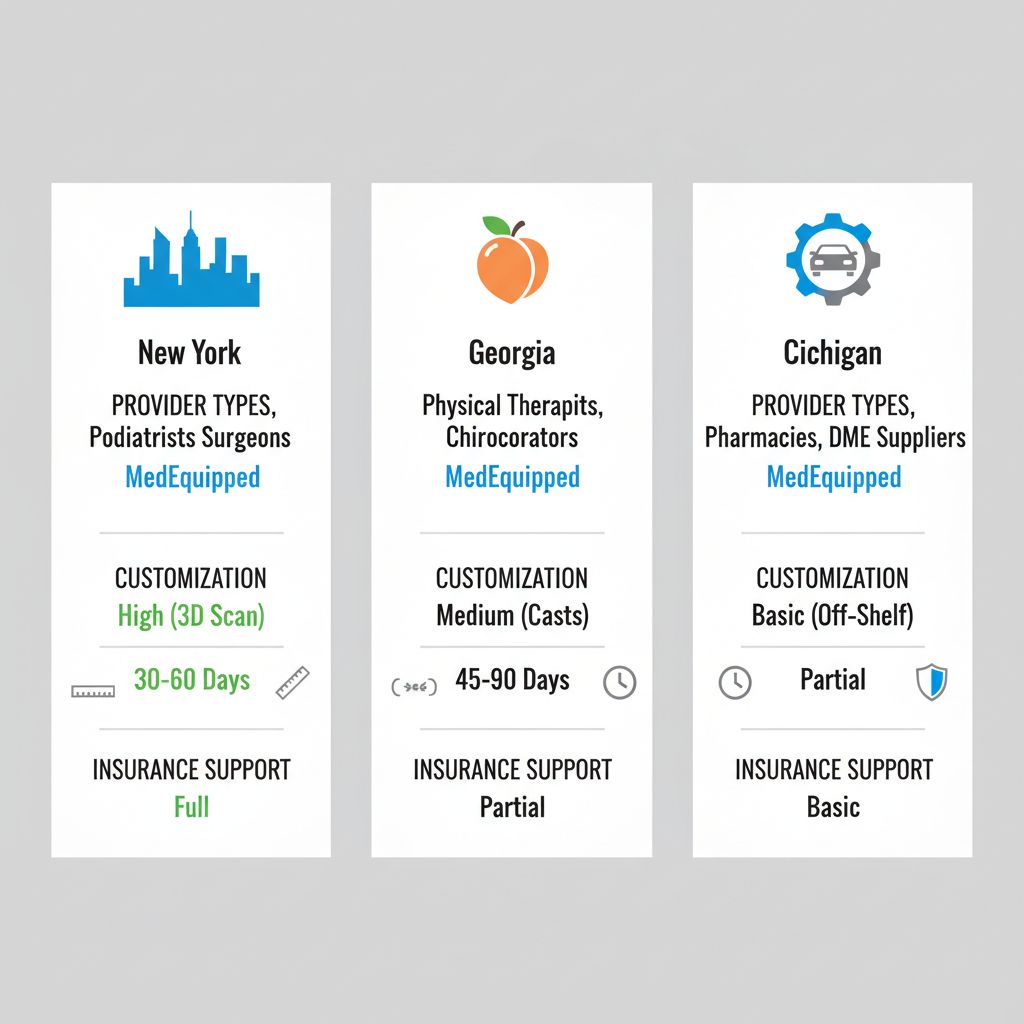
    Region/City Provider Type Customization Level Timeline (Days) Insurance Navigation
    New York (Nanuet/NYC Area) MedEquipped & Local Clinics High (ATP-Led) 30-60 Full Coordination
    Georgia (Atlanta) Regional Specialists Medium 45-90 Partial
    Michigan (Detroit) Hospital-Affiliated High 60-120 Basic

    Data sourced from regional provider directories and MedEquipped service metrics. This table highlights key differences, with New York options standing out for speed.

    MedEquipped excels in faster processing, often within 30-60 days, thanks to our streamlined approach. We handle the paperwork, insurance navigation, and coordination, making nearby orthotic fittings seamless. For instance, in Detroit, foot orthotics near me might take longer through hospitals, but our extensions ensure local custom inserts align with your needs. Our ATP-certified team draws from APMA-endorsed standards to deliver quality.

    As your partner in mobility freedom, we integrate orthotics with custom power wheelchairs for comprehensive support. Whether in New York, Georgia, or Michigan, our services bridge gaps in availability, focusing on personalized care without the wait.

    Infographic comparing orthotics providers in New York, Georgia, and Michigan with regional icons and service metrics

    Regional comparison of orthotics providers and services in NY, GA, MI

    This overview empowers you to explore options confidently, knowing we prioritize efficiency and expertise in every state we serve.

    Available Orthotic Services in Your Region

    At MedEquipped, we understand how important it is to find reliable orthotics near me in your local area, whether you’re in New York, Georgia, or Michigan. We specialize in offering a range of orthotic services tailored to enhance mobility and comfort, particularly for those using power wheelchairs. Our team provides both custom and off-the-shelf options to meet diverse needs. Custom orthotics near me in Atlanta, for instance, involve personalized molding to address specific foot conditions, while standard inserts offer quick, affordable solutions for everyday support. We partner with certified providers who adhere to high standards, including those endorsed by the Pedorthic Footcare Association, ensuring quality seals like the APMA for trusted brands.

    The clinical evaluation process begins with a thorough assessment by our Assistive Technology Professionals (ATPs). We start with a detailed consultation to understand your foot health and mobility challenges. Next, we conduct gait analysis and measurements to determine the best orthotic type. For insurance-covered services, we handle the paperwork, insurance navigation, and coordination to secure approvals under Medicare guidelines for durable medical equipment. If out-of-pocket options are preferred, we guide you through affordable alternatives without compromising care. This personalized approach typically fits within our 30-60 day timelines, faster than many industry norms, making accessible foot care solutions more attainable.

    We excel in integrating foot orthotics near me in Michigan with power wheelchair fittings, creating seamless seating solutions that promote stability and independence. Our experts customize orthotics to complement wheelchair configurations, drawing from proven strategies like those on our powered wheelchairs resources.

    Our support doesn’t end at delivery; we offer follow-up adjustments and maintenance to ensure long-term comfort as your partner in mobility freedom.

    Key Local Factors for Orthotics Selection

    When searching for orthotics near me, local factors play a crucial role in ensuring the right fit for your needs. At MedEquipped, we consider these elements during our tailored evaluations to provide area-specific foot supports that enhance mobility across New York, Georgia, and Michigan.

    Climate and urban accessibility significantly influence orthotic choices. In humid Georgia summers, materials must resist moisture to prevent degradation, while 3D printed orthoses plantar fasciitis offer innovative adaptations for such conditions, showing high satisfaction in studies. Michigan’s harsh winters demand durable foot orthotics near me in cold weather to support stability on icy surfaces. Urban areas like New York City provide easier access to fittings, but rural spots in Georgia face longer travel times—we guide patients through these challenges.

    Insurance variances also vary by state, affecting coverage for custom orthotics near me in New York versus Georgia’s Medicaid options or Michigan’s provider networks. We handle the paperwork, insurance navigation, and coordination to streamline approvals and reduce wait times to our standard 30-60 days.

    Finally, lifestyle ties matter: active New Yorkers might need robust supports for walking, while sedentary Michigan residents benefit from comfort-focused designs. Our certified ATPs integrate regional therapy services, like those from St. Joseph’s/Candler, ensuring localized orthotic choices align with daily routines for optimal outcomes.

    Steps to Obtain Orthotics in Your Area

    Starting your local orthotic journey for orthotics near me in New York, Georgia, or Michigan begins with a simple outreach to trusted providers like us at MedEquipped. We guide you through every step, ensuring an accessible fitting process tailored to your mobility needs. One patient shared how our representative quickly coordinated their evaluation, making the start smooth and stress-free, just like many others in our testimonials.

    1. Contact Us for Consultation: Reach out via phone at 845-237-2381 or email intake@medequipped.com to discuss custom orthotics near me in your area. We’ll answer questions like who makes orthotics near me and where to get them made. Our team schedules an initial intake within days, often leading to a full evaluation in 1-2 weeks.
    2. Prepare Documentation for Insurance: Gather medical referrals, prescriptions, and insurance details. We handle the paperwork, insurance navigation, and coordination to streamline approvals. For where can I get orthotics near me, this step ensures coverage without hassle.
    3. Attend Fitting Appointment: Prepare for your visit by noting any specific foot concerns; we’re experts in foot orthotics near me in Georgia or Michigan. Bring comfortable shoes and discuss options like APMA Seal insoles for quality assurance. Fittings typically occur 2-4 weeks after intake.

    Our custom orders process in 30-60 days for faster delivery than industry standards. Post-order, we provide ongoing support for adjustments. Contact us today to partner in mobility freedom—your comfort awaits!

    Your Path to Better Mobility with Local Orthotics

    Finding orthotics near me has never been easier in New York, Georgia, or Michigan, where we offer custom orthotics near me tailored to your needs. Our foot orthotics near me provide personalized support options for enhanced comfort and stability as local mobility aids.

    At MedEquipped, we partner in mobility freedom by handling insurance navigation and paperwork, delivering custom power wheelchair solutions in just 30-60 days. Contact us today at intake@medequipped.com or (845) 237-2381 for a free evaluation and step toward better mobility.

    Resources